
Smart Home World showcases how Ultra Short Throw Projectors are growing in popularity, what the prominent brands have to offer and what they foresee for this fast-growing category.
What if your living room wall could be transformed from minimalist decor to a 150-inch cinema in seconds without bulky screens, ceiling mounts, or visual clutter?
That’s exactly what Ultra Short Throw projectors deliver.
UST Projectors are emerging as the preferred alternative to large televisions, combining minimal footprint, flexible placement, powerful optics and advanced smart features like HDR, AI-based image correction, smart OS integration, and seamless connectivity to name a few technical features.
The Wall as the new Screen
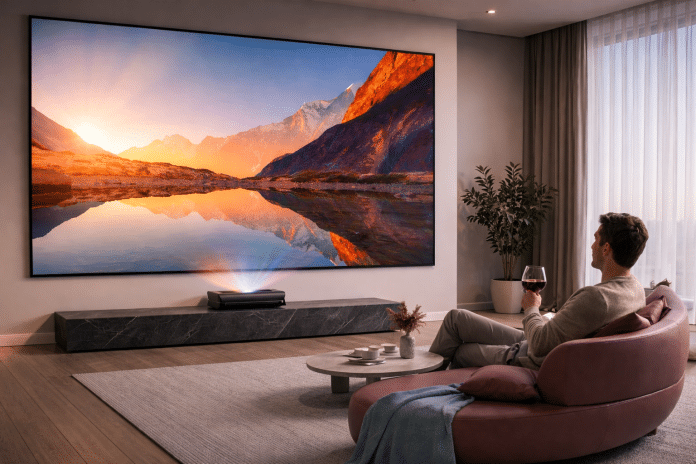
UST projectors are the preferred options for those who want to achieve immersive viewing without sacrificing aesthetics. Traditional TVs dominate wall space even when switched off, while long-throw projectors demand ceiling mounts, visible cabling, and controlled lighting. USTs, by contrast, integrate seamlessly into media consoles, credenzas, or custom cabinetry, allowing the wall to remain visually uncluttered. Paired with Ambient Light Rejecting (ALR) screens or even treated walls and they seamlessly merge technology and interior design.
For design-conscious homeowners and architects, this flexibility is key as a 100–150-inch image can appear when needed and disappear when not in use. restoring the living space to its original intent.
Another important consideration is the trade-off between convenience and quality. UST projectors deliver performance that meets serious cinematic expectations. Laser light sources ensure consistent brightness, longer lifespan, and instant On/Off functionality. Native 4K resolution, HDR10+, Dolby Vision support, and wide colour gamuts bring depth, contrast, and realism that elevate everyday viewing.
Advanced optics allow sharp focus across massive screen sizes from just a few inches away, while ultra-low latency modes and high refresh rates make USTs increasingly viable for console gaming, an area once dominated by high-end TVs.
Smart features are accelerating UST adoption. AI-driven image correction automatically adjusts keystone, focus, and colour based on the wall surface and ambient light. Integrated smart operating systems like Android TV, Google TV, or proprietary platforms turn USTs into standalone entertainment hubs, eliminating the need for external streaming devices.
Voice assistants, seamless connectivity with smart home ecosystems, and wireless content sharing further position UST projectors as central lifestyle devices rather than niche AV products.
Brand heads discuss their offerings, outlining the functional strengths and strategic advantages of their range.
Vijay Sharma, Managing Director, Optoma Technology India Pvt. Ltd.
Could you highlight your brand’s UST portfolio and key differentiating features?
Optoma has long been a pioneer in the Ultra Short Throw (UST) projection category, consistently shaping how large-format viewing can be delivered in space-constrained environments. Our UST journey began with acclaimed 4K UHD laser projection TVs such as the P1 and P2, which set benchmarks for the category with exceptional colour accuracy, smart home integration, and true ultra-short throw convenience—delivering immersive large-screen experiences at brightness levels of up to 3000 ANSI lumens.
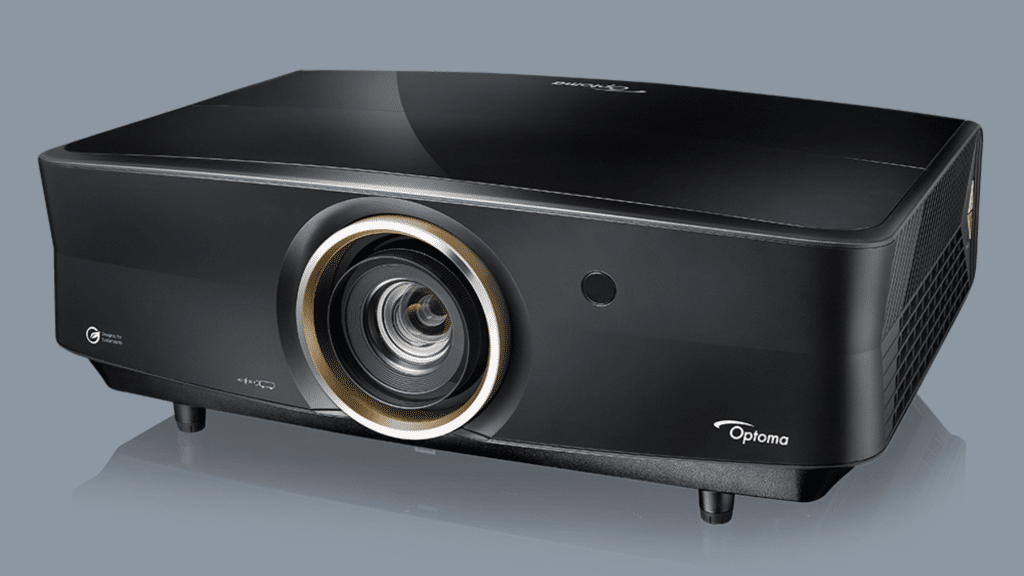
Building on this strong foundation, Optoma’s UST portfolio has evolved significantly with the introduction of WAVE 320UK and AZH430UST. These next-generation models raise the bar with a powerful 4000-lumen output, ensuring vibrant, high-contrast visuals even in brightly lit environments—an area where UST solutions traditionally face challenges.
Despite the substantial boost in performance, these models retain Optoma’s hallmark compact and non-bulky design, reflecting our engineering leadership in balancing brightness, form factor, and installation flexibility.
This expanded UST lineup underscores Optoma’s commitment to innovation across both home entertainment and professional applications, reinforcing our position as a category leader delivering high-performance, design-forward Ultra Short Throw projection solutions.
What are the biggest misconceptions consumers have about UST projectors?
One of the biggest misconceptions around Ultra Short Throw (UST) projectors is that they are inherently large, bulky, and impractical once installed. Another widely held belief is that UST solutions compromise on brightness and are only suitable for dark rooms.
As a pioneer in the UST projection category, Optoma has consistently worked to redefine these perceptions. Our UST models from earlier innovations to the latest generation, demonstrate that high performance and compact design can coexist. Optoma’s UST projectors deliver powerful brightness levels suitable for everyday, well-lit environments, while maintaining a sleek, space-efficient form factor that is easy to install, reposition, and integrate into modern interiors.
By combining advanced laser light sources, efficient optical engineering, and user-centric design, Optoma continues to challenge outdated assumptions—proving that today’s UST projectors can be bright, compact, flexible, and effortless to use, without compromise.
How do you foresee the next wave of innovation in UST projection—AI-driven auto-setup, modular optics, gaming enhancements, or 8K upgrade?
The next wave in Ultra Short Throw (UST) projection will not be driven by a single breakthrough, but by practical innovation that improves everyday usability, performance, and immersion. The momentum will clearly favour some over others.
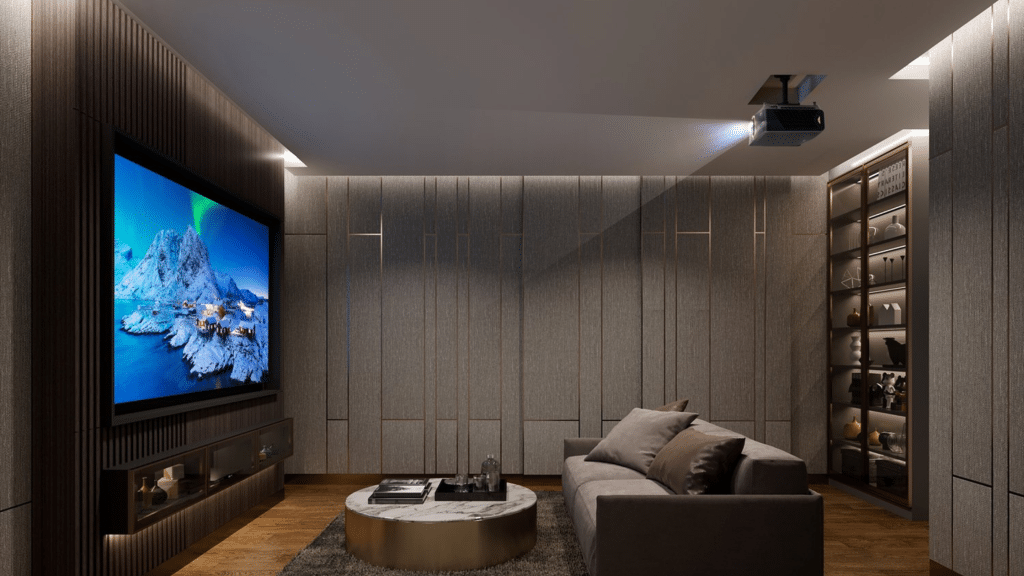
The AI-Driven Auto-Setup will be the Immediate Next Wave. UST projectors demand precision placement, screen alignment, focus, and geometry correction. This sets up a friction point for many users.
The AI-powered auto-setup will directly solve this challenge by automatically detecting screen size, surface type, and ambient lighting; applying real-time keystone, focus, colour, and brightness optimization and adapting image quality dynamically as room conditions change.
Gaming Enhancements with the Strong Parallel Wave, as UST projectors move into living rooms and entertainment spaces, gaming expectations are rising.
Key enhancements driving adoption include – Lower input lag and high refresh rates, support for next-gen consoles and fast-paced gaming & improved motion handling for the latest games.
Muneer Ahmad, Managing Director, ViewSonic India
Could you highlight your brand’s UST portfolio and key differentiating features?
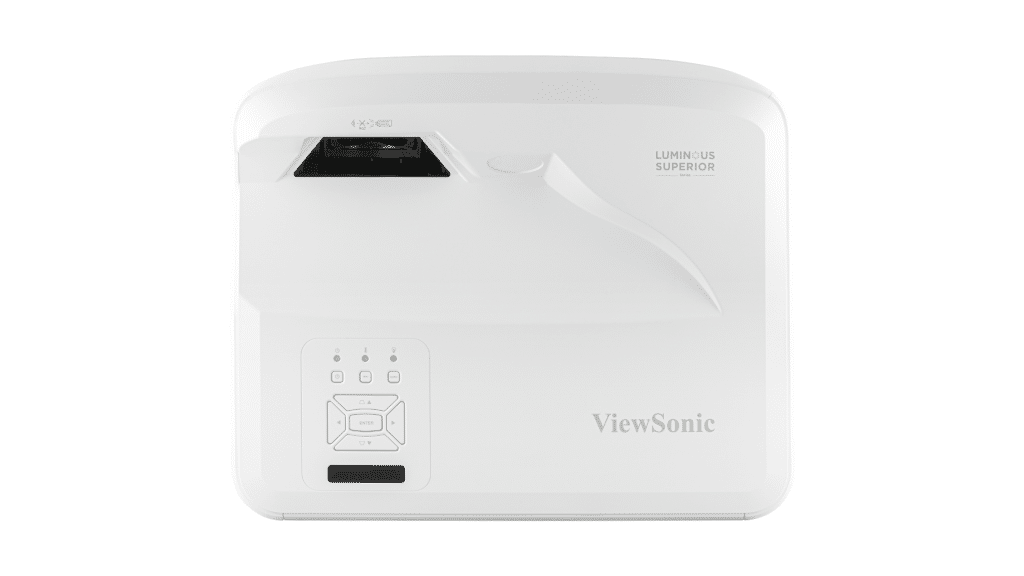
ViewSonic’s approach to Ultra Short Throw projectors is centred on delivering exceptional performance and design integration for modern commercial and educational spaces. The LS832WU, part of the Luminous Superior Series, exemplifies this philosophy. This lamp-free, high-brightness projector delivers 5,000 ANSI Lumens in WUXGA resolution, making it ideal for digital signage applications across museums, retail storefronts, shopping malls, and airports. Its 0.25 ultra short throw ratio projects a 100” image from just 28 cm, with scalable screen sizes up to 170”, offering a significantly lower cost-per-inch compared to traditional commercial displays. Powered by 2nd-generation Laser Phosphor technology, the LS832WU ensures consistent brightness and reliable performance for up to 30,000 hours. Flexible installation is facilitated through horizontal/vertical keystone correction and 4-corner adjustment, while comprehensive LAN control enables centralized device management and seamless integration with Crestron, AMX, Extron, and PJLink control systems. By combining powerful optics, versatile installation options, and long-term reliability, ViewSonic positions its UST projectors as an essential tool for both commercial and large-scale media environments.
What are the biggest misconceptions consumers have about UST projectors?
Despite significant technological progress, Ultra Short Throw projectors are often misunderstood by consumers. One prevalent misconception is that projectors require dark rooms to perform effectively, whereas modern laser-based UST models are designed to deliver strong brightness and vibrant colour reproduction even in spaces with ambient light. There is also a belief that projector installation is complex, when in reality UST systems simplify setup by eliminating long throw distances, ceiling mounts, and extensive cabling. Additionally, concerns around maintenance persist, despite laser light sources offering years of consistent performance without the need for lamp replacements. As awareness improves, consumers are increasingly recognising UST projectors as a sophisticated, low-maintenance solution for large-screen living.
Sushil Motwani, Founder, Aytexcel Pvt. Ltd, India
Which brands do you represent, and what are the key highlights and distinguishing features that set them apart?
Our portfolio includes Formovie, Hisense, AWOL, and JMGO; each brand offers distinct models powered by unique technologies that clearly set them apart in the market. Several models from these brands have consistently secured the No. 1 and No. 2 positions in Projector Central’s Showdown rankings from 2022 to the present, reaffirming their leadership in the UST category.
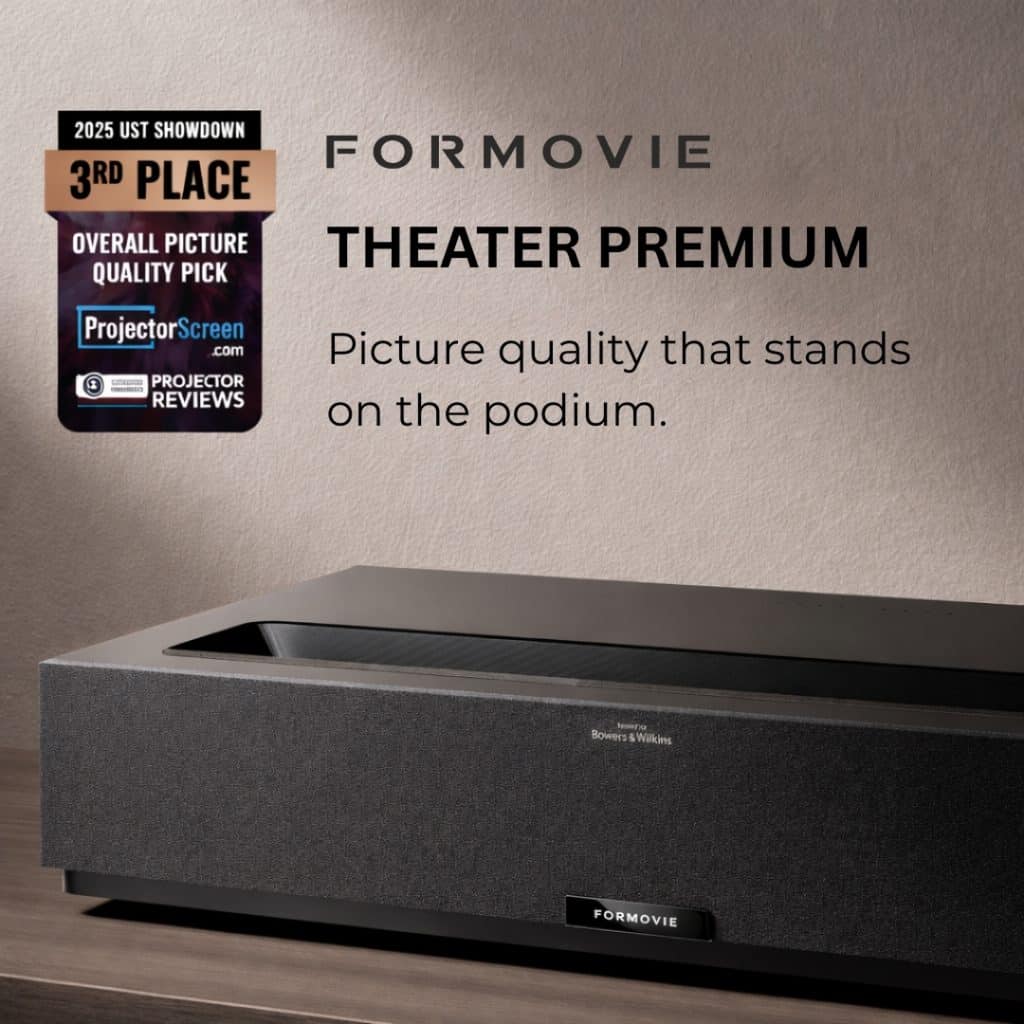
Formovie Theatre Premium is powered by Appotronics’ ALPD® RGB+ 4.0 triple-colour laser technology. This projector delivers exceptional visual performance that surpasses conventional RGB laser systems. It produces vibrant, true-to-life colours with remarkable natural accuracy, enhanced by advanced speckle suppression for smoother, clearer images. Designed for long-term reliability, the laser light source offers up to 30,000 hours of lifespan while maintaining consistent brightness at 2200 ISO lumens. Supporting up to a massive 150-inch screen with 4K Ultra HD resolution, the projector features a 0.21:1 ultra-short-throw ratio, enabling large-format viewing from a minimal distance. Factory-calibrated to achieve 107% BT.2020 colour gamut coverage, it ensures precise colour reproduction and cinematic realism. The experience is further elevated with official Google TV certification and native Netflix support, seamless Dolby Vision compatibility with external devices, and immersive audio delivered through Bowers & Wilkins Advanced Gen 2 acoustics with Dolby Atmos and DTS-X support—culminating in a truly immersive 3D home-cinema experience.
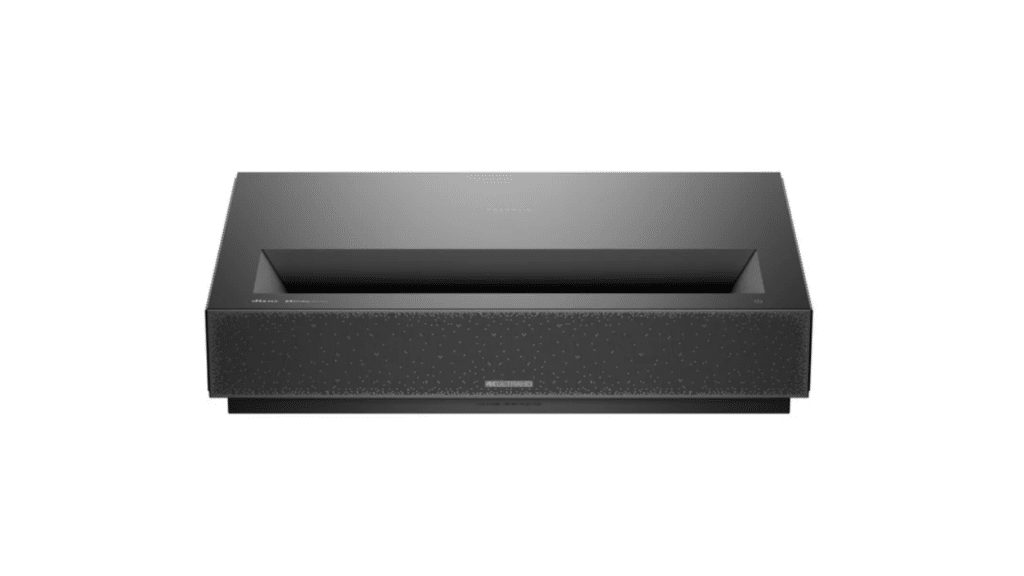
The Hisense L9Q is a triple-laser UST projector rated at 5,000 lumens with over 25,000 hours of laser life, yet real-world testing shows output exceeding 6,000 lumens. While UST brightness measurements vary due to projection angles, the takeaway is clear: the L9Q is exceptionally bright, delivering around 200 nits on a 100-inch ALR screen with a real-world 0.5 gain—ideal for well-lit rooms.
Powered by the LPU™ Digital Laser Engine 2.0, the L9Q combines a high-performance chipset, precision optics, and triple-laser technology, enhanced by AI-driven picture processing that optimises contrast, colour, brightness, and HDR in real time.
Are there upcoming launches or major updates?
We’re excited to announce the upcoming launch of some of the most groundbreaking Ultra Short Throw projectors. Leading the way is the JMGO O2S Ultra, a world-first UST powered by MALC™ RGB Pure Triple Laser 3.0 technology, delivering ultra-clear 4K resolution that remains crisp even in daylight. With lifelike colours, exceptional clarity, and finely rendered details, it promises a truly immersive big-screen experience.
Also making its debut is the AWOL Aetherion Series, designed to redefine visual performance with an advanced RGB laser UST platform, unlocking remarkable clarity, brightness, and cinematic precision.
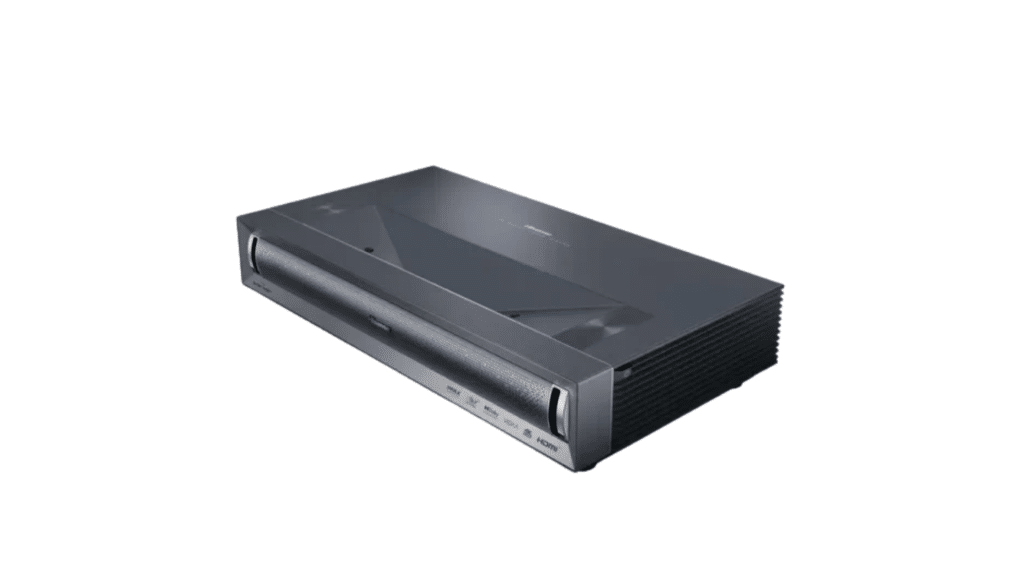
Raising the bar further, Hisense introduces the PX4 Pro and the L9Q Pro, bringing category-first innovations including an iris lens and lens shift—features appearing in UST projectors for the first time. These advancements offer greater installation flexibility, improved contrast control, and enhanced image accuracy.
Together, these upcoming launches represent true game-changers for the UST category, introducing multiple world-first technologies that will redefine how large-format home entertainment is experienced.
What are the biggest misconceptions consumers have about UST projectors?
Ultra Short Throw projectors are still widely misunderstood. Many consumers continue to view them through the lens of traditional televisions or conventional long-throw projectors. In reality, UST projection is a category of its own—purpose-built for immersive, large-format viewing and designed to deliver a fundamentally superior big-screen experience in modern living spaces.
Below are some of the most common misconceptions surrounding Ultra Short Throw (UST) projectors, along with the realities behind them:
* UST projectors are often marketed as “Laser TVs,” but they still operate on the principles of projection. Unlike TVs that emit light directly, projectors reflect light off a surface. In very bright rooms with large windows, even the best UST projectors can appear less punchy than high-end LED or OLED TVs. Additionally, UST projection demands a perfectly flat surface—minor wall imperfections can cause noticeable distortion due to the extreme projection angle.
* While a UST projector can technically project onto a plain wall, this is far from ideal. To achieve the contrast and clarity seen in promotional imagery, a dedicated Ambient Light Rejecting (ALR) or Ceiling Light Rejecting (CLR) screen is essential. Without it, light spills onto the ceiling and surrounding surfaces, washing out contrast and reducing overall image quality.
* Although UST projectors eliminate the need for ceiling mounting, installation still requires precision. Even a few millimetres of movement can affect image size and alignment. Most UST projectors lack optical zoom or lens shift, making exact placement critical. Furniture height and depth also play a key role—incorrect cabinetry can result in the image spilling onto the ceiling or missing the screen entirely.
* While gaming on a massive screen is undeniably immersive, there are trade-offs. Many UST projectors have higher input lag than modern gaming TVs, which can impact competitive gameplay. Additionally, while newer 2025 models are beginning to support 120Hz, a large number of USTs remain capped at 60Hz, whereas gaming TVs routinely offer 120–144Hz with faster response times.
* This misconception stems from older lamp-based projectors. Modern UST projectors use laser light sources rated for 20,000 to 30,000 hours—equivalent to 10–20 years of typical use. In most cases, users will upgrade the projector long before the laser light source ever needs replacement.
How do you foresee the next wave of innovation in UST projection—AI-driven auto-setup, modular optics, gaming enhancements, or 8K upgrade? Foreseen Innovations (2025 & Beyond)
AI-driven auto-setup is rapidly becoming standard across leading UST brands such as Formovie, AWOL, and Hisense, with intelligent sensors automatically adjusting focus, keystone correction, and even wall-colour compensation for instant, hassle-free installation. Gaming performance is also seeing major advancements, with high refresh rates taking centre stage—most notably, the Hisense PX3 Pro now supports up to 240Hz at 1080p and carries “Designed for Xbox” certification, positioning UST projectors as serious contenders for console gaming.
Looking ahead, while 4K remains the current benchmark, the next phase of UST evolution is focused on pushing brightness beyond 5,000 lumens and significantly improving native contrast to around 5,000:1—bringing performance closer than ever to high-end OLED displays. Adding to these breakthroughs, iris lenses and lens shift are making their debut in UST projectors for the first time, marking a significant leap in installation flexibility and image control within the category.
Abhishek Pandey, Product Manager India, Projector Category, LG
Could you highlight your brand’s UST portfolio and key differentiating features?
LG Electronics has long been a pioneer in the Ultra Short Throw (UST) projection category, consistently shaping how large-format viewing can be delivered in space-constrained environments. Our UST journey began with acclaimed 4K UHD Laser TVs such as the HU715QW and HU915QE, which set benchmarks for the category with exceptional colour accuracy with 2500 ANSI and 3700 ANSI Lumens of brightness respectively , smart home integration, and true ultra-short throw convenience—delivering immersive large-screen experiences at brightness with Smat features.
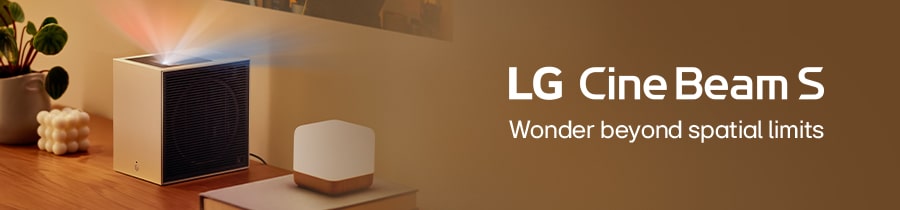
Building on this strong foundation, LG UST portfolio has evolved significantly with the introduction of Cinebeam S. These next-generation models raise the bar with a powerful 500-lumen output, ensuring vibrant, high-contrast visuals even in brightly lit environments—an area where UST solutions traditionally face challenges.
Despite the substantial boost in performance, these models retain LG’s compact and portable design, reflecting our engineering leadership in balancing brightness, form factor, and installation flexibility.
Are there upcoming launches or major updates your brand is planning in the UST category?
Yes, we have CineBeam S and HU295V, further strengthening our UST portfolio with advanced, user-focused projection solutions.
What are the biggest misconceptions consumers have about UST projectors?
One of the biggest misconceptions around Ultra Short Throw (UST) projectors is that they are inherently large, bulky, and impractical once installed. Another widely held belief is that UST solutions compromise on brightness and are only suitable for dark rooms.
As a pioneer in the UST projection category, LG has consistently worked to redefine these perceptions. Our UST models—from earlier innovations to the latest generation—demonstrate that high performance and compact design can coexist. LG’s UST projectors deliver powerful brightness levels suitable for everyday, well-lit environments, while maintaining a sleek, space-efficient form factor that is easy to install, reposition, and integrate into modern interiors.
By combining advanced laser light sources, efficient optical engineering, and user-centric design, LG continues to challenge outdated assumptions—proving that today’s UST projectors can be bright, compact, flexible, and effortless to use, without compromise.
In conclusion, we would say Ultra Short Throw projectors signal a decisive shift in how we will experience large-format entertainment at home in future.