
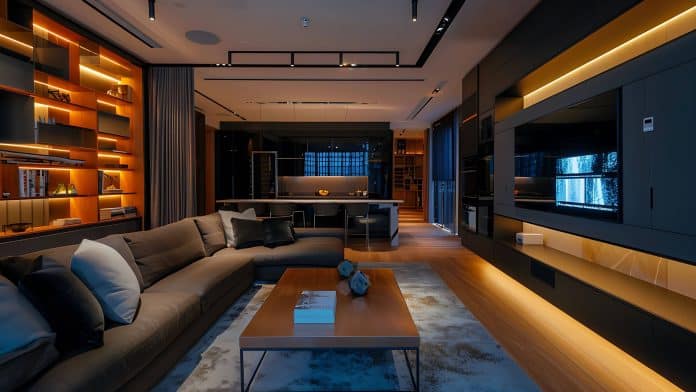
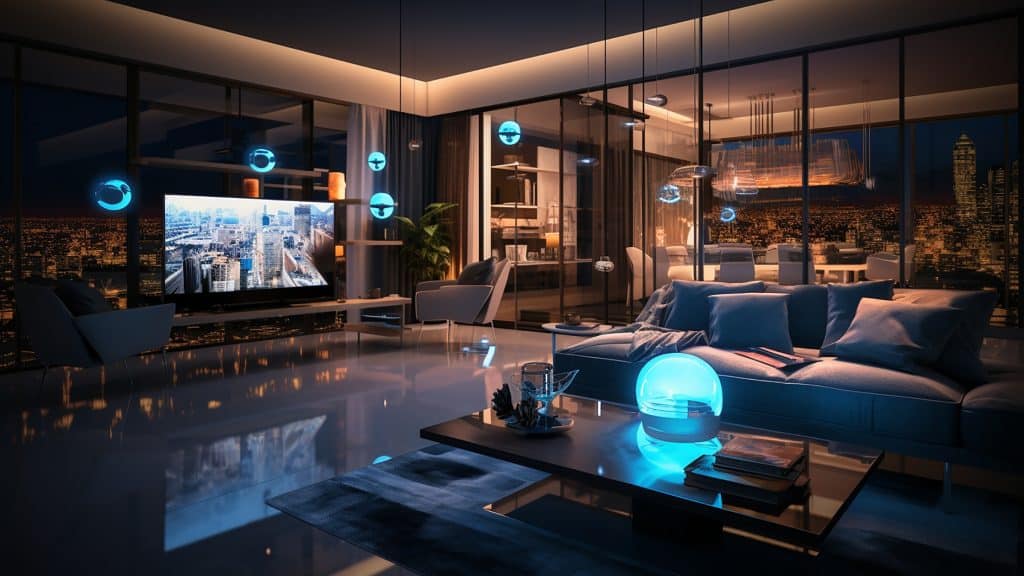
Smart homes are no longer just for villas. In large apartments, technology is transforming everyday living, making spaces more comfortable, secure, and efficient. From lighting and climate control to security and entertainment, apartments are quickly becoming the new frontier for connected, future-ready living.
For years, smart home technology was perceived as an indulgence reserved for sprawling bungalows and palatial villas with expansive layouts and equally large budgets. This generic perception has changed, and today, there is a growing demand for smart home integration within large-scale apartments, particularly in premium and mid-to-high-end residences, where technology is valued for its luxury statement and also for its practicality, scalability, and relevance to contemporary urban living.
As Indian cities densify and vertical living becomes the new normal, large apartments, typically spanning 2,000 to 5,000 sq. ft. and beyond, strike the ideal balance between scale and smart solutions.
Today, owners of large apartments not only have the budget to incorporate smart home technology but also have an aspiring lifestyle to integrate it meaningfully into their living spaces. Advancements in wireless protocols, modular systems, and app-based controls are making smart solutions more accessible and adaptable than ever before.
Smart Zoning, Efficiency and Control
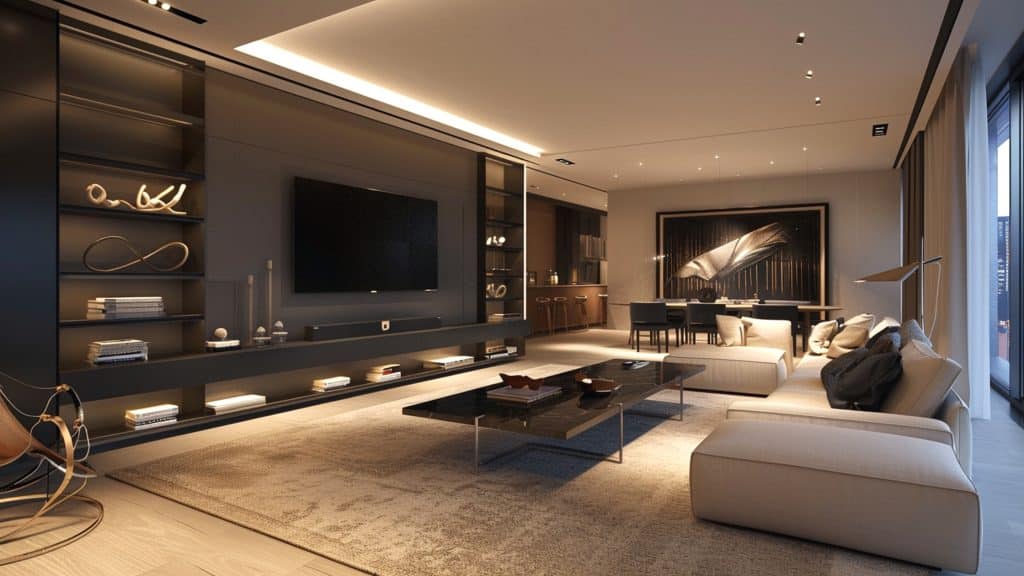
Large apartments are inherently well-suited to smart home integration, as their scale allows for clear zoning between private, semi-private, and social spaces. Smart lighting, climate control, and shading can be customised for each zone, enabling personalised bedroom routines, adaptable living areas for gatherings, and efficient automation of utility spaces. In dense urban settings, energy optimisation becomes critical, and technologies such as occupancy sensors, smart thermostats, and intelligent lighting help reduce wastage while improving comfort. Enhanced security systems, including video door phones, smart locks, intrusion sensors, and remote monitoring, add a vital layer of control, particularly in homes with multiple access points or frequent staff and visitor movement.
Centralised control through touch panels, smartphones, or voice assistants further simplifies the management of large apartments, replacing multiple switches and remotes with intuitive, user-friendly interfaces.
Future-Ready Living in the Vertical City
This momentum is being accelerated by developers who are increasingly delivering premium apartments as smart-ready residences, complete with structured cabling and platform compatibility. For homeowners, this ensures easier integration, lower retrofit costs, and the flexibility to scale systems over time. Crucially, smart technology in apartments is no longer about over-engineering or visual spectacle; it is about lifestyle-driven solutions that prioritise reliability, ease of use, and subtle sophistication. As urban homeowners grow more discerning, smart home technology is evolving into a defining benchmark of premium apartment living and enhancing efficiency, comfort, and control. This firmly positions the future of smart homes within the vertical urban landscape, not just restricting to just standalone bungalows and villas.
Smart Home World speaks to industry professionals to understand their perspectives on integrating smart home tech in large-scale apartments, and the technologies they most commonly recommend and integrate into their residential projects.
Vikas Gowrisetty, Managing Partner, Awicon Technologies

Home automation is often perceived as being limited to luxury villas and bungalows. However, there is a noticeable shift toward apartments as ideal environments for automation. What are your views on this evolution?
That perception is changing quite rapidly, and in many ways, apartments are becoming the natural next frontier for home automation rather than villas.
Historically, home automation was associated with villas and bungalows because Large spaces that benefited from lighting, climate, centralised security zoning and most importantly, more space and demand for Audio Visual Zones. This created the image that automation = luxury.
What Has Changed: Why Apartments Are Now Ideal?
Lifestyle needs tend to be more pronounced in apartments, where efficient use of space, comfort and convenience play a critical role in everyday living. At the same time, the cost of smart home technology has shifted from being perceived as a luxury indulgence to a value-driven investment that enhances functionality and long-term efficiency. Developer-led adoption has further accelerated this transition, with smart-ready infrastructure increasingly built into new residential projects. Additionally, apartment buyers are often younger and more tech-savvy, with a natural inclination toward integrated digital solutions. Together, these factors are shaping a new narrative of functional luxury, where the conversation has moved from automation as a showpiece to automation as a meaningful enabler of daily living. Ultimately, home automation is no longer defined by the size of the residence but by the expectations of its occupants; positioning apartments, particularly in urban India, as the largest and fastest-growing segment for smart home adoption.
As an expert, what smart solutions do you incorporate in large apartments?
In large apartments, smart solutions need to move beyond standalone `gadgets’ and focus on reliability, scalability, and everyday usability. My approach treats automation as invisible infrastructure—functional luxury that enhances daily living seamlessly and without friction.
Lighting Control (Foundation Layer): Lighting forms the backbone of smart home automation. I implement scene-based controls such as Welcome, Evening, Dinner, Night, and Away, along with dimming in living, dining, and master bedrooms to set the right ambience. Motion-based night lighting in corridors and bathrooms ensures safety, while automated balcony and façade lighting adds both functionality and aesthetic appeal.
Climate Control (High-ROI Zone): Smart climate solutions deliver high comfort and energy efficiency. I integrate zone-based temperature control for VRV or split AC units, occupancy-based shut-off, and pre-cooling before arrival, ensuring a perfect balance between convenience and energy savings.
Smart Curtains & Blinds: Motorised curtains and blinds are automated based on time schedules or sun position, and can be controlled manually, via app, or through voice commands. This adds privacy, comfort, and energy efficiency without daily effort.
Security & Access Control: A robust security setup includes smart main-door locks with fingerprint, PIN, mobile, or RFID access, video door phones with mobile app connectivity, door and window sensors, and panic button integration—offering comprehensive control and peace of mind.
Audio-Visual Integration: Entertainment is seamlessly integrated with dedicated home theatre systems and multi-room audio across living and dining areas, ensuring an immersive, connected experience throughout the home.
How do you ensure reliability and performance in high-density residential environments?
Ensuring reliability and performance in high-density residential environments (large apartment towers, gated communities) requires a systems-engineering mindset, not a gadget mindset. The framework I use in real-world deployments to make automation boringly reliable – Network-First Design, Power Reliability & Protection, Fail-Safe & Manual Overrides, Monitoring, Logging & Maintenance.
Ajay Kamath, Founder & Principal Consultant, SOUNDS GOOD, AV|AUTOMATION

Home automation is often perceived as being limited to luxury villas and bungalows. However, there is a noticeable shift toward apartments as ideal environments for automation. What are your views on this evolution?
From a Mumbai perspective, this shift isn’t really new; it has always been this way. The majority of Mumbai’s ultra-affluent residents live in apartments, not villas. Independent homes within the city are rare; most villas tend to be weekend or holiday homes in places like Lonavla, Pawna, or Alibaug.
What has genuinely evolved is that home automation is no longer restricted to only ultra-luxury projects. We now see strong adoption even in mid-segment and budget-conscious developments. Automation has become more affordable, more reliable, easier to deploy, and far better supported than it was even a few years ago.
Add to this the explosion of smart appliances and connected devices, and automation has quietly crossed over from being a ‘nice luxury’ to something that actually makes day-to-day living more convenient and efficient. In many cases today, it’s less about indulgence and more about practicality.
As an expert, what are the smart solutions you incorporate in large apartments?
For many homeowners and designers, home automation is still defined by keypad-controlled lighting. And often, the prettier the keypad, the more advanced the automation is assumed to be. Our philosophy is almost the opposite.
We believe the best home automation system is the one that feels invisible and effortless. A system where the lighting understands when the sun is setting and gradually brings the home to life. Where climate sensors quietly detect discomfort and adjust the air-conditioning before you even think about it. Simply connecting your phone to a streaming service powers up the entire music system rack automatically.
We focus on systems that respond to behaviour rather than commands, where you speak to your home the way you’d speak to your house help and describe what you want, instead of hunting for the right button on a wall or scrolling through multiple app screens.
In short, we design what we like to call a human-appliance interface, automation driven by context and intent, not constant manual input.
And yes, we do occasionally have some fun with it. We’ve even custom-designed pressure-sensing cinema seating that automatically pauses the movie and switches on floor lighting when you get up for a break—and resumes playback when you sit back down. Because sometimes, automation should simply make you smile.
How do you ensure reliability and performance in high-density residential environments?
Reliability in home automation comes down to three key pillars:
Product Quality: Choose robust, well-engineered products that are designed for long-term operation, not just impressive spec sheets.
System Design: Good design is critical. All loads, compatibility, and operating limits must be carefully calculated. We strongly believe in over-engineering rather than running systems at the edge—and certainly never below it.
Operating Conditions: Even the best systems will fail if the basics are ignored. Clean and stable power, proper installation practices, adequate ventilation, high-quality cabling, and periodic maintenance checks are non-negotiable.
Ultimately, though, all of this boils down to one simple truth: Choose the right professional team. A well-designed automation system is not just about products, it’s about experience, foresight, and execution.
A truly smart home isn’t one with the most buttons, screens, or flashy keypads. It’s the one that does exactly what you want and often before you realise you want it, while letting you forget that there’s any technology involved at all.
Sarah Sham, Principal Designer, Essajees Atelier

Which smart home technologies do you typically propose for large apartments?
For large apartments, we approach smart home integration based on lifestyle, scale, and budget rather than a one-size-fits-all solution. We commonly work with platforms such as Lutron, KNX, and Crestron, selecting systems depending on the project’s complexity and the level of customisation required. These systems allow seamless integration of lighting, climate control, curtains, and select appliances, while maintaining reliability and ease of use for homeowners.
Can you share a case study where smart home technology delivered clear, measurable benefits for apartment homeowners?
In a recent large apartment project, smart home automation significantly enhanced daily comfort and energy efficiency. Lighting was programmed with time-based schedules, for instance, brighter settings during breakfast hours and softer lighting through the day, reducing unnecessary usage. Climate control for air-conditioning, fans, and water heaters was automated and zoned, allowing homeowners to pre-set temperatures before reaching home and activate specific areas only when required.
Motorised curtains were integrated to respond to time and daylight, while dimmable lighting allowed residents to adjust mood lighting without physically moving or interrupting their routines. Overall, the system effectively “read the room,” adapting to usage patterns and reducing manual intervention, which resulted in greater convenience, improved comfort, and optimised energy consumption.
Ar. R.K. Malik, Founder and Principal Architect, R K Malik & Associates

Which smart home technologies are typically proposed for large apartments?
In large apartments, smart home technology needs to solve everyday problems, not add layers of complexity. Automation in apartments works best when it stays in the background and supports how people actually use their homes.
Typically, this begins with lighting controls that allow simple scene settings, climate control with clear zoning across bedrooms and living areas, and automated blinds or curtains to manage heat and daylight. These systems address comfort and energy use without requiring constant manual adjustment.
Access control is another priority, especially in apartment buildings. Video door phones, smart locks, and controlled entry systems add security while fitting naturally into daily routines. Energy monitoring is also increasingly relevant, helping residents understand and manage consumption in larger homes.
In apartments that house elderly residents or multiple generations, technology is extended to safety. Motion sensors, night lighting, and emergency alerts are introduced quietly, without making the home feel institutional.
Can you share a case study where smart home technology delivered clear, measurable benefits for apartment homeowners?
In one of our residential projects, smart home integration was planned as part of the architectural layout from the outset rather than introduced as a later addition. The home accommodated varied daily schedules, multiple users, and extensive glazing, all of which had a direct impact on heat gain and cooling loads.
Zoned air-conditioning combined with automated blinds was integrated to respond to the time of day and occupancy patterns. This approach helped reduce peak energy consumption while maintaining consistent thermal comfort, without requiring constant manual intervention from the residents.
Lighting automation was intentionally kept simple. Pre-set scenes reduced unnecessary usage and improved nighttime movement, particularly for older family members. Over time, the homeowners experienced fewer maintenance-related issues, more predictable energy costs, and a home that required significantly less day-to-day management.
What this illustrates is straightforward. In large apartments, smart home technology delivers measurable value when it is integrated with architectural planning, aligned with real living patterns, and designed to remain functional well beyond its initial installation.
ANNKUR KHOSLA, Founder, ANNKUR KHOSLA DESIGN STUDIO

Which smart home technologies do you typically propose for large apartments?
For large apartments, particularly luxury homes with multiple systems and variable occupancy, we typically propose integrated smart home technologies rather than standalone gadgets. The emphasis is on achieving simplicity, security, and efficiency at scale, ensuring the technology enhances daily living without becoming intrusive.
A key component is integrated lighting control using the DALI protocol, which allows centralised management of over 70 lighting circuits through scene-based automation. This approach replaces cluttered switch panels with clean, minimal keypads while enabling adaptive lighting that enhances comfort and simulates occupancy for added security.
Smart HVAC integration plays an equally important role, with centralised control of multiple air-conditioning units 10 in this case working in tandem with sensors and motorised drapes. This coordination helps reduce thermal load, optimise runtime, automate shut-down during absence, and precondition spaces before arrival for immediate comfort.
Motorised drapes and shading systems are designed to function in sync with lighting and HVAC, helping stabilise indoor temperatures, lower energy consumption, and improve privacy and comfort without manual intervention.
From a safety standpoint, smart access and security systems include smart locks with time-bound digital access for family members, staff, or guests, along with motion sensors, gas leak detection, and anomaly alerts. Panic button integration ensures an immediate response in emergencies, which is especially critical for solo occupants.
All these systems are unified through a single app and scene-based automation, enabling remote monitoring and intuitive control. Instead of overwhelming users with granular settings, the home operates through simple modes such as “Away” and “Welcome Home,” designed for one-touch or fully automated operation to reduce cognitive load.
Overall, the focus remains firmly on integration over complexity, ensuring the home works intuitively for the resident—quietly supporting comfort, security, and efficiency rather than demanding constant attention.
Can you share a case study where smart home technology delivered clear, measurable benefits for apartment homeowners?
The homeowner is a single mother residing in a 4,500 sq. ft. penthouse. With her sons travelling frequently for work, the home often remains unattended for long periods during the day and across extended trips. As a result, safety, intuitive operation, and energy efficiency were identified as primary priorities.
The key challenges in this project began with a clear set of concerns: heightened security anxiety during solo occupancy and family absences; operational complexity arising from the management of 10 air-conditioning units and over 70 lighting circuits; inefficient energy consumption caused by manual controls and a lack of coordination between systems; and visual clutter from multiple switch panels that compromised both usability and interior aesthetics.
A full-home automation strategy was implemented using the DALI protocol, enabling seamless integration across systems. Scene-based automation replaced individual, fragmented controls, while centralised keypads and a unified mobile app ensured effortless day-to-day operation. Security was strengthened through smart locks, sensors, and AI-driven alerts, delivering proactive monitoring rather than reactive responses.
Measurable Outcomes were Energy Efficiency. The HVAC system was synchronised with motorised drapes to maintain thermal stability throughout the home, significantly reducing unnecessary air-conditioning runtime during periods of absence. Compared to a previously occupied non-automated home of similar size, the residence achieved a 10–15% reduction in electricity bills, while energy spikes caused by human error or forgotten systems were effectively eliminated.
What was once a wall of eight switches was replaced with a single six-button keypad, while control of more than 70 lighting circuits was consolidated into intuitive, scene-based settings. This dramatically reduced daily decision-making and cognitive load, improving ease of use and enhancing the home’s visual clarity—an especially valuable benefit for a busy single parent.
Real-time monitoring of doors, motion sensors, and gas leaks is now accessible via a mobile app, offering constant reassurance. Time-bound digital access allows staff, emergency services, and returning family members to enter securely without physical keys. AI-based anomaly alerts and an integrated panic button addressed concerns associated with solo living, eliminating unmonitored periods and reducing anxiety during evenings alone or extended travel gaps.
This project underscores how smart home automation delivers tangible ROI when designed around lived realities rather than technology alone. By prioritising integration, the homeowner benefitted from lower energy costs, effortless daily operation, and a heightened sense of security and emotional reassurance. Most importantly, the home evolved into a reliable partner—supporting peace of mind during routine days, solo nights, and unpredictable family travel, rather than becoming another system to manage.
In conclusion, the Industry experts agree that smart home adoption has reached a point of maturity, where its value is measured by performance, reliability, and long-term usability rather than novelty. In large urban apartments, intelligent systems are no longer optional enhancements but critical infrastructure supporting efficient zoning, energy optimisation, security, and centralised control.