

Rhythm Arora, CEO & CTO, Qubix Technologies, represents a new generation of technology leaders who blend engineering depth with design clarity. A recipient of the InAVate APAC 40 Under 40 recognition, his 16+ years in AV-IT integration and home automation have positioned him as a key voice in shaping intelligent living environments. Having collaborated with global brands such as Meyer Sound, Crestron, Bose and Cisco, he continues to push boundaries in circadian lighting, adaptive automation and seamless control ecosystems.
In this exclusive interaction with Smart Home World, Rhythm shares how Qubix’s decades of craftsmanship, combined with a systems-driven approach, are redefining high-end AV, IT, and lighting integration for the modern luxury home.
How has Qubix’s legacy (since 1984) and reinvention (from 2011) shaped your approach to AV, IT, and lighting integration today?
Growing up in a family business taught us two lessons you don’t learn from brochures: respect for craft, and respect for time. We learned what truly lasts — is good wiring, careful documentation, and installations that can be serviced after ten years.
When we consciously reinvented the business in 2011, we added a `systems mindset’. Instead of seeing AV, lighting, and IT as separate trades, we learned to design them as one living system. Practically, that means three changes in how we work: We sit with architects, MEP engineers, and interior designers at the concept stage. This prevents fights over ceiling space, cable routes, and equipment locations later.
All drawings, BOQs and control logic live in one place. If someone changes a cable run, everyone sees it immediately. That cuts site surprises by a huge margin.
We build checklists, test scripts, and “golden configurations” so that a system installed in Mumbai behaves the same as the one in Bengaluru.
The legacy taught durability; the reinvention taught scale and systems thinking. Combine both, and you get high-tech solutions that still feel dependable in the long run.
What sets Qubix apart in high-end AV, IT and home automation when delivering end-to-end solutions?
People often equate “end-to-end” means piling on hardware, but our approach is the opposite: We do the opposite: we design end-to-end around behaviour, how people will actually use the space. Here’s how that plays out:
We start by asking simple questions: “How will the family use the cinema? Will the study double as a meeting room? Do you host large dinners?” The answers define the technical scope.
We choose components that play well together. For control and orchestration, we frequently use Crestron because it can coordinate AV, lighting, shades, HVAC and security in a predictable way. For audio networking, we use Dante, so signals move reliably over the network.
Every system ships with handover docs, device maps, and a maintenance plan. We also tag devices on the network, so remote troubleshooting is simple.
Example: a homeowner asked for “no fuss” movie nights. We built a system where one button on a Crestron panel lowers the shades, dims the lights (DALI), powers the projector, sets the audio preset (Dante + DSP), and engages the HVAC scene. The owner doesn’t see the complexity; they just press a button and the room transforms.
That ability to hide complexity, keep systems maintainable and design for real use is what clients value most.
What’s your process for achieving accurate audio calibration and video optimization for reference-level performance?
Calibration is the moment where engineering meets experience. We treat it as a four-stage process: design, build, measure, and verify.
Design (before installation)
We run acoustic models of the room to predict standing waves, reflections and modal issues. Speaker choice and placement are decided from these models. If the room will be a reference cinema, we select neutral monitors so the speaker coloration doesn’t mask acoustic problems.
Build (installation discipline)
Correct speaker mounting, isolation, soffit design, and wiring are non-negotiable. Cabling and grounding strategies are laid out to avoid hums and interference. Good calibration is impossible if the physical work is sloppy.
Measure (scientific tuning)
On-site, we use calibrated measurement microphones and tools like REW or Smaart to measure impulse response, frequency and time-domain behavior. We check phase and group delay and then align subs and mains for coherent low-frequency response. Where useful, we use correction tools carefully, but only to refine, not to hide structural acoustic issues.
Verify and document
We create a “golden configuration”, which is a snapshot of the final DSP settings, crossover points, EQ curves and delay values. We also run a listening session with the client so their preferences are captured. Finally, we deliver documentation and remote monitoring hooks so future recalibration can be quick.
For video, the process is similar: select the right projector or panel for the room’s light levels, calibrate color with a colorimeter, match gamma and white point, and ensure multi-screen setups are matched so content flows seamlessly across panels.
Real example (simple language): in one project, the low end was boomy in evening use. Our modeling had predicted a mode at 45Hz. Instead of flattening it with DSP only, we tuned sub placement, added bass traps at strategic positions, and then used room correction to tame the remainder. The result: the bass became tight, and dialogue clarity improved without over-processing.
Which protocols and platforms do you prefer for whole-home integration?
When it comes to whole-home integration, we select protocols based on their specific strengths rather than forcing a single standard across the project.
Control & Orchestration: Crestron remains our backbone because it’s robust, programmable and widely supported. It serves as the conductor, coordinating scenes and handling system logic.
Audio Networking: Dante (or AES67) delivers low-latency, reliable audio transport over standard Ethernet, making it ideal for scalable multi-room setups.
Video Distribution: We use NDI for local, low-latency camera and presentation workflows, and SRT when secure, long-distance contribution over public networks is required.
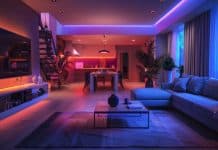
Lighting: DALI and DMX give us precision for tunable white and theatrical effects, which we integrate into Crestron so lighting and AV can operate within a unified scene.
Building Systems: BACnet supports HVAC and building management where needed. In residential projects, we bridge these systems so Crestron can automatically adjust HVAC presets as part of a routine.
Security & Surveillance: ONVIF ensures camera interoperability and seamless, secure VMS integration.
Rather than relying on one rigid ecosystem, we build a predictable, well-segmented network with disciplined VLANs, QoS and monitoring. This ensures that media streams stay stable and never compete with everyday traffic. In our experience, strong network architecture is just as critical as the choice of any display or loudspeaker.
What role do control systems and UI design play? How do you hide complexity from homeowners?
The interface is the moment of truth. The best systems are invisible, but the interface must be obvious.
Start with journeys, not features. We map the simple tasks first: “Start Movie,” “Host Dinner,” “Wake Up.” Those actions should be one or two taps away.
Two-layer model. Primary actions are immediate. Advanced settings live in a secondary layer for power users or service staff. This keeps the day-to-day experience simple while preserving advanced control.
Prototyping and testing. We build clickable UI prototypes (tablet/phone) and test them with real users at the design stage. This avoids surprises where a homeowner finds the control confusing.
Service-first design. Panels include hidden diagnostic screens for engineers, so troubleshooting is quick. Crestron lets us build this dual experience — simple for the owner, powerful for the technician.
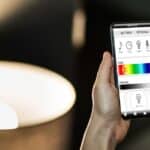
Example: we gave a homeowner an app where the “Party” button triggers lighting, background music and a lowered HVAC setback for comfort. If the house is empty, the same button would also arm security, a single concept, many coordinated actions.
Which global brands do you work with most, and how do you select them?
We choose vendors using four filters:
Performance. Does it meet the target? For reference audio this often means PMC or similar studio-grade monitors.
Reliability & service. How fast are spare parts and firmware updates available in the region? A great product is useless if it cannot be serviced in 72 hours.
Integration / APIs. Can we control it programmatically? Crestron, Dante-enabled devices and ONVIF cameras are examples that make our life easier.

Roadmap & openness. We prefer vendors with a clear product roadmap and an openness to integration rather than closed ecosystems.
So yes, we prefer Crestron for control a lot. We use PMC or other neutral monitors for critical rooms. For audio networking it’s Dante. For large format visuals we pick projectors or fine-pitch LEDs that meet our measured brightness and color targets. These are practical choices made to give predictable results.
How do you make AV, IT and lighting work together technically and aesthetically?
It comes down to planning and respect for each trade:
Design workshops early. We run cross-discipline workshops at concept, so cable routes, rack space, return air, and speaker locations are coordinated.
Single documentation hub. Everyone references the same drawings and change logs. This prevents last-minute clashes between lights and speakers.
Mockups and prototypes. Physical mockups of speaker placement, grille finishes and keypads help interior designers visualise the outcome. We often prototype a wall with the actual grill finish to confirm the look.
Integrated commissioning. Tests verify scenarios that cross systems — e.g., “start meeting” should alter lights (DALI), call the AV codec, route microphones (Dante) and adjust HVAC preset (BACnet). We log each of these tests.
Aesthetic choices. When possible, we specify color-matched grills, recessed mounts, and minimal touch panels so technology does not dominate the room visually.
The result is a space that looks and feels natural — technology disappears into the background while delivering an elevated experience.
Where is Qubix headed in luxury AV and home automation? Which trends will you champion?
We see the future as threefold: smarter automation, human wellbeing, and sustainable design.
Smarter Automation (practical AI). We’re already running private models to accelerate technical support and automate routine checks. Soon, AI will adapt a room’s audio EQ based on occupancy, predict device failures from telemetry, and tune lighting based on a resident’s circadian needs — all without the owner needing to set anything.
Wellbeing & Experience. Lighting will move beyond aesthetics. Tunable light that supports sleep and focus, acoustics tuned to reduce cognitive fatigue, and air and thermal control that responds to individual comfort profiles. These are the features that make a house feel like a healthful home.
Immersive Audio & Hybrid Life. Object-based audio and spatial sound will enter living rooms — not for gimmicks but to create believable immersive experiences. Hybrid meeting experiences, where a home office works like a small studio, will become normal.
Sustainability and Manageability. Owners will expect systems that use less energy and deliver service as a subscription: scheduled recalibrations, remote monitoring, and feature updates delivered over time.
Our role is to make these advances usable. The goal is not to show off technology, but to make life quieter, simpler, healthier, and more delightful. To that end we’ll continue using robust control platforms like Crestron as the backbone, neutral audio like PMC for reference fidelity, and resilient networking and monitoring to keep things running year after year.