

Michael Short, VP, Marketing Operations & Residential, Crestron, discusses the company’s latest product launches and platform advancements showcased at ISE 2026. Plus, highlighting emerging technology trends, the growing importance of integrated automation ecosystems, and the significant growth potential of the Indian residential smart home market.
Could you tell us about your new product launched at ISE 2026?
At ISE 2026, Crestron introduced several new solutions, with a key focus on simplifying system configuration for dealers. Among the highlights is Configure Pro, the next-generation evolution of the widely used Crestron Home Setup App. While the earlier app enabled dealers to build projects, pair devices, create scenes, and manage backend setup without programming, Configure Pro takes this capability significantly further.
Launched in September under an Early Access program, the platform offers a completely redesigned, faster, and more intuitive configuration experience. It streamlines the entire backend process into a no-code environment, allowing dealers to execute projects of any scale with greater speed, consistency, and efficiency. For Indian integrators in particular, this means the ability to deliver a uniform, high-quality user experience while scaling operations and reducing deployment time.
Tell us about the new 80 Series touch screens unveiled at ISE.
Crestron has introduced its all-new 80 Series touch screens, marking a significant leap forward in performance, usability, and future-ready hardware design. Building on a legacy that dates back over two decades, when Crestron pioneered dedicated control touch interfaces well before consumer tablets entered the market, the new series reinforces the brand’s leadership in premium control solutions.
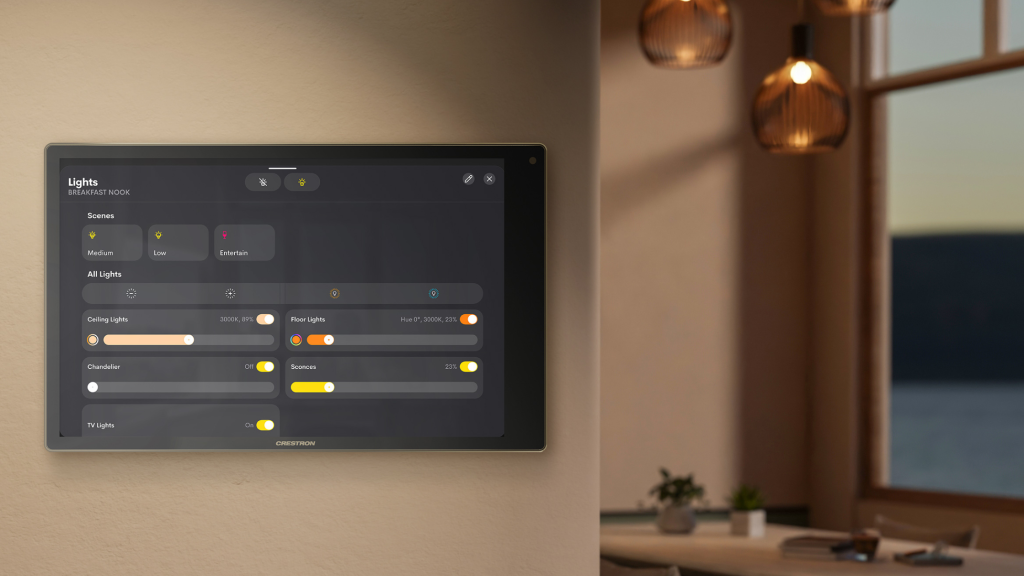
The 80 Series features the fastest processor ever deployed in a Crestron touch screen, ensuring ultra-smooth responsiveness and providing the headroom needed to support future software advancements. Enhancements also include upgraded light sensors for improved adaptive brightness, more advanced microphones for better voice interaction, and refined overall system performance.
Available in both new 8-inch and 10-inch formats, the touchscreens offer flexible orientation, allowing users to seamlessly switch between portrait and landscape modes, with the Crestron Home interface automatically adapting. Compared to the previous 70 Series, the new lineup offers faster performance, more intelligence, and better long-term scalability, making it a next-generation control hub for modern smart environments.
Can you elaborate on the Crestron Cevo Mini Remote and other new control solutions showcased at ISE?
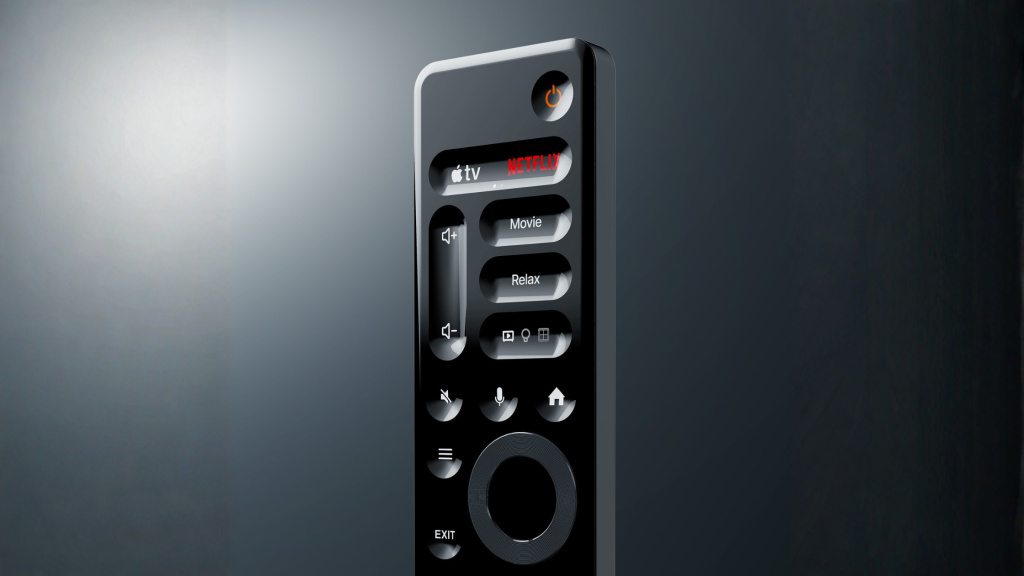
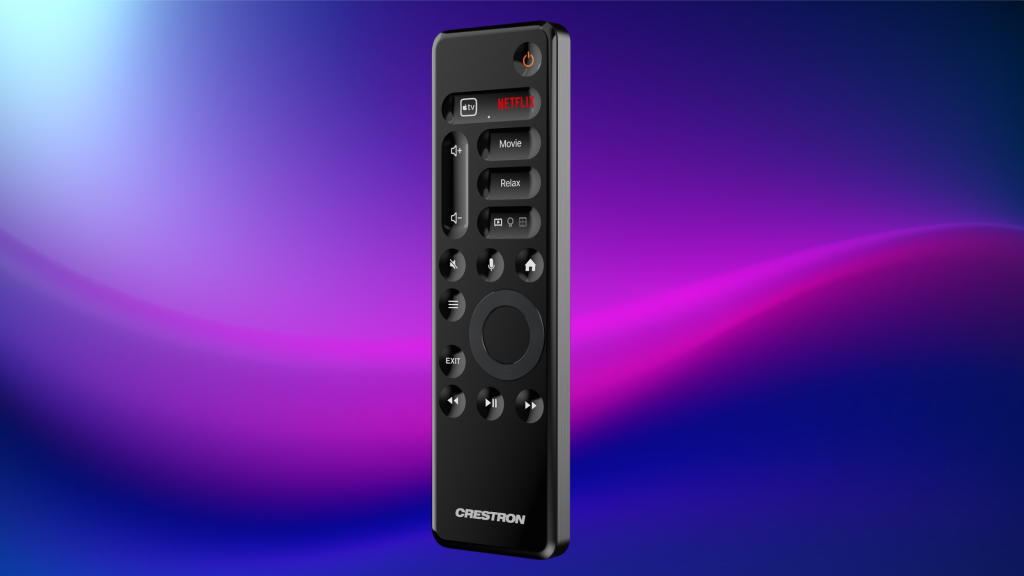
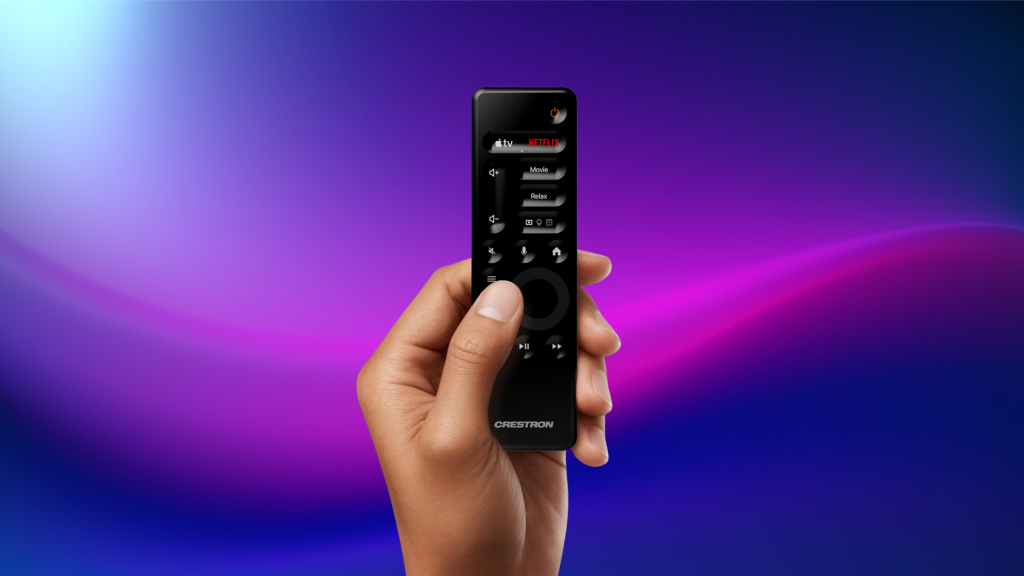
Crestron’s new Cevo Mini Remote is designed as a premium single-room control device, combining elegant form with powerful functionality. Engineered as a compact handheld controller, it enables seamless management of key in-room systems, including video, lighting, shades, and customisable quick actions, all from a unified interface. Its luxury finish and ergonomic design position it as a refined control solution for high-end residential environments.
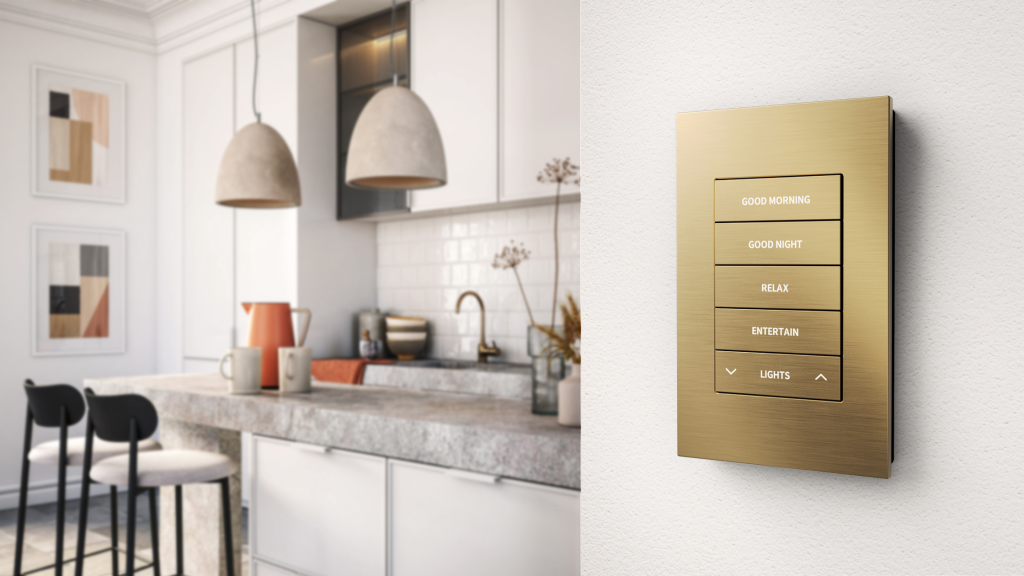
Alongside the Cevoo Mini Remote, Crestron also introduced new keypad options at the show, including the Horizon Metal and Cameo 2 series, both now available in the Indian market. These additions expand design flexibility while maintaining the brand’s focus on tactile precision and aesthetic integration.
Another major highlight is the new Multiview integration within Crestron Home, which allows users to display up to six content sources simultaneously on a single screen in multiple layouts. This capability significantly enhances monitoring, entertainment, and control scenarios, reflecting Crestron’s continued push toward more intelligent, unified smart home experiences.
As an expert, what solutions would you recommend for luxury homes in India, and which products are best suited to this market?
For India’s luxury residential segment, the emphasis is increasingly on solutions that combine advanced performance with refined materials and tactile elegance. The Horizon range of keypads is among the most premium control offerings, well-suited to this market.
Initially available in classic plastic finishes such as white, black, and almond, the Horizon lineup evolved with the introduction of sophisticated glass variants, including black and white glass, elevating its luxury appeal. More recently, the brand introduced metal finishes for the Horizon 2 series, responding to the strong preference in India for rich materials and a premium tactile experience. Available in four refined metallic options, these keypads combine craftsmanship, durability, and visual sophistication — making them ideal for high-end residential environments where detailing and finish quality are critical.
Complementing this is the Cevo Mini Remote, positioned as a premium single-room control solution. With its sleek industrial-grade finish and compact ergonomic design, it enables seamless control of video, lighting, shades, and quick actions from a single handheld interface.
Together, the Horizon Metal keypads and the Cevo Mini Remote form a compelling luxury proposition for the Indian market, blending aesthetic refinement with intuitive, high-performance smart home control.
What is Crestron’s stance on Matter, and are there plans to integrate the universal protocol into Crestron Home?
Crestron views Matter as an evolving industry protocol that holds long-term potential, although its adoption has progressed more gradually than many initially anticipated. Over the past few years, the conversation around Matter has centered on whether it will emerge as a truly universal standard, something that will ultimately depend on how consistently it is implemented across the market.
Crestron’s approach remains rooted in openness and collaboration. As an inherently open platform, the company already integrates with a wide range of technologies and ecosystems, working seamlessly with protocols and partners such as Philips Hue, Sony, and Samsung, among others.
In this context, Matter is seen as a natural extension of that philosophy. Should it achieve broad, consistent adoption across the industry, Crestron is prepared to support and incorporate it within the Crestron Home platform, ensuring continued interoperability and flexibility for dealers and end users.
How is AI being integrated into Crestron’s product ecosystem today?
At Crestron, AI integration is being driven primarily through the evolution of its software platforms. This will enable more intelligent configuration workflows, automation-driven optimization, and smarter system recommendations in the future.
Beyond the software advancements, the company is also showcasing several new hardware and solution innovations at ISE, reflecting a broader push toward more intelligent, integrated automation ecosystems.
What are your plans for the Indian residential market, and what new developments can we expect?
India continues to be a major focus market for Crestron, driven by rapid growth in the residential smart home segment. At ISE, this commitment was evident through a dedicated India Residential Summit, where the company hosted around 60 Indian dealers to share insights on upcoming solutions, including previews of new and upcoming products not yet publicly announced.
During these discussions, a key theme that emerged was the strong growth trajectory of India’s smart home market. At the same time, one of the main challenges identified is the lack of unified platforms, with many brands operating independently across categories such as lighting, shading, and control. Crestron is actively encouraging dealers to adopt more integrated approaches, using unified platforms to streamline solutions and support business growth.
The company also highlighted its ongoing investment in India, including expanding its local team to meet rising demand. With strong performance indicators across revenue and dealer engagement, Crestron sees India as a high-potential market and anticipates significant continued growth in the years ahead.