
Smart Home World speaks with leading architects, interior designers, technology consultants, and system integrators to explore how invisible technology is transforming luxury homes. These experts share their experiences, insights, and perspectives on creating seamless, intelligent living environments where technology blends effortlessly into design.
There was a time when technology was expected to make a statement. Touch panels occupied prime wall space, speakers were showcased as design objects, and equipment racks became visible symbols of a sophisticated smart home. Today, however, the priorities and preferences have shifted dramatically. In the luxury residential segment, the most advanced technology is often the invisible technology.
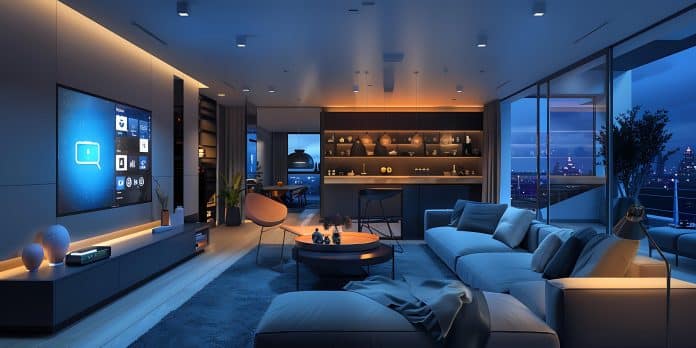
As architects, interior designers, developers, and system integrators work more closely than ever before, a new design language is emerging, one where technology is woven into the fabric of a home rather than added to it. Lighting is concealed within architectural details, audio systems vanish into walls and ceilings, climate control operates without visible interfaces, and automation anticipates needs without demanding attention.
This evolution is being driven not only by advances in technology but also by changing homeowner expectations. Affluent clients are increasingly prioritising calm, uncluttered environments that deliver exceptional experiences without compromising aesthetics. They want spaces that feel warm and human rather than overtly digital. The goal is no longer to showcase technology; it is to create environments where comfort, wellness, entertainment, and convenience happen effortlessly in the background.
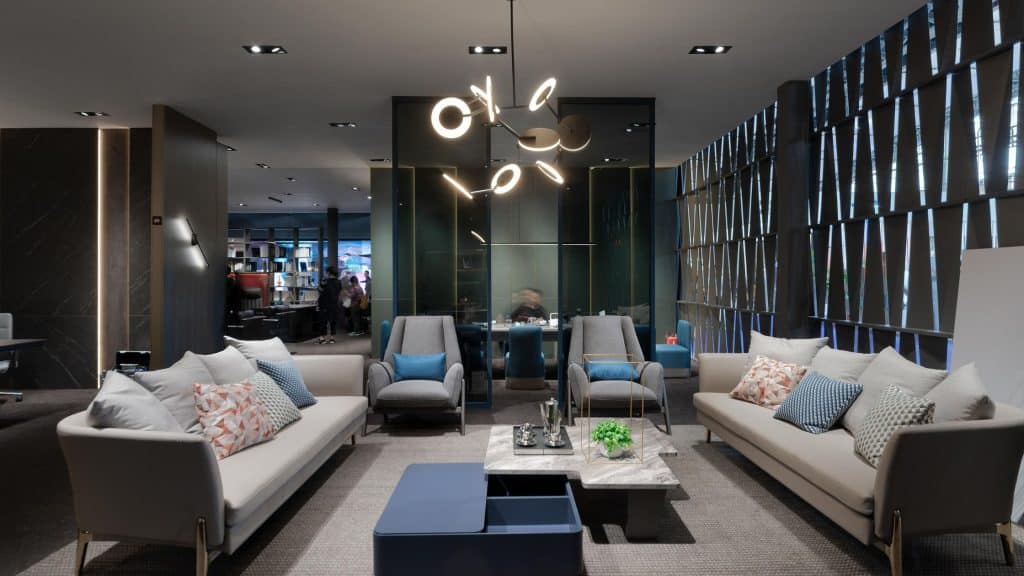
For the industry, this shift is redefining project planning and collaboration. Technology decisions are now being made much earlier in the design process, requiring architects, interior designers, lighting consultants, and system integrators to work together from the concept stage. The success of an invisible technology strategy often depends as much on design coordination as it does on technological innovation.
The trend is also influencing product development across the residential technology sector. Manufacturers are increasingly designing solutions that complement architectural intent rather than compete with it. Invisible speakers, flush-mounted controls, concealed motorised shading, integrated lighting systems, hidden displays, and sensor-driven automation are becoming standard requirements in premium residential projects.
Artificial intelligence is accelerating this transition even further. Instead of requiring homeowners to manage multiple apps, interfaces, and controls, AI-powered systems are enabling homes to understand preferences, predict routines, and automate experiences. The result is a more intuitive relationship between occupants and their living spaces, where technology quietly adapts to lifestyle patterns in real time.
This movement also reflects a broader change in the definition of luxury itself. Historically associated with visible opulence, luxury is increasingly being defined by simplicity, personalisation, and seamless experiences. The modern luxury homeowner values thoughtful integration over technological excess, favouring solutions that preserve architectural purity while delivering exceptional functionality.
To explore the rise of invisible technology, Smart Home World spoke with architects, designers, technology consultants, and system integrators about their experiences, challenges, and perspectives on creating seamless, experience-driven smart homes.
Muskan Salgia, Vice President, CasaDigi

What types of invisible technologies, such as hidden audio systems, concealed control interfaces, motorised solutions, or integrated lighting, are you increasingly incorporating into your projects, and why?
We at CasaDigi are always working to create an evolving, seamless, efficient ecosystem for homes where residents never have to worry about managing their systems like lighting, climate, audio and security, because their CasaDigi ecosystem has already taken care of it.
Every project is built around that standard. The technologies we incorporate most consistently are the ones that earn their place by concealing entirely. In our homes, audio systems are fully concealed, embedded in ceilings, walls, and structural elements, with no visible hardware.
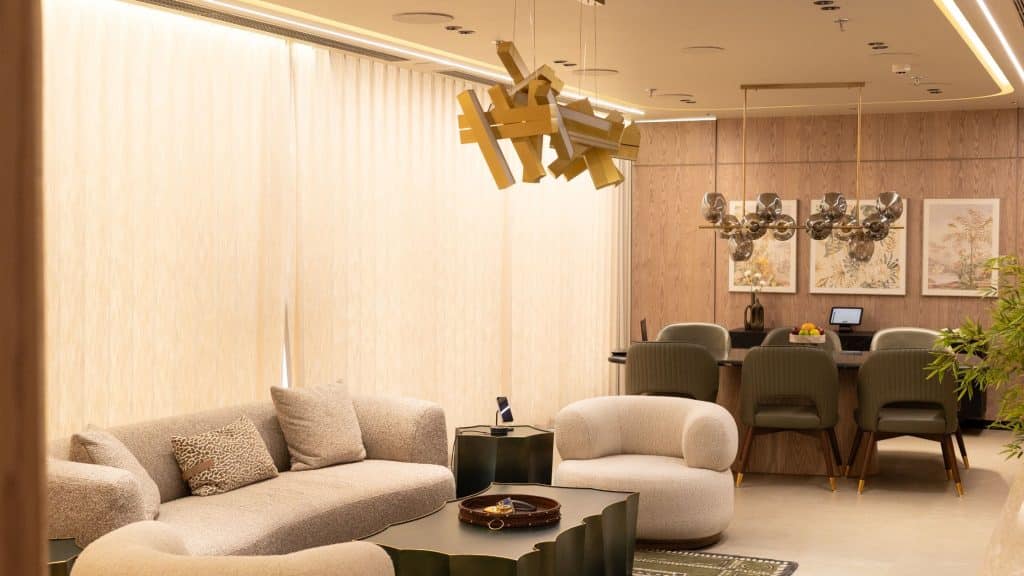
Then there are what we call scenes — a precise record of every environmental setting a resident prefers at a given moment. A particular lighting intensity and colour temperature, curtains at a specific opacity, climate at a set degree, and music at a chosen volume. Once saved, the home automates the scene, every time, with a single command. The same scene is reactivated.
What ties all of this together is unified control. Every system, lighting, climate, audio, security, access, and entertainment runs through one interface. No separate applications for each element, no panels or switching between systems. The reason this matters is straightforward: managing multiple devices across a home creates a low-level friction that sits beneath daily life. With CasaDigi, every system works in coordination, without demanding oversight.
What innovations from your portfolio best demonstrate how technology can disappear into the background while delivering a premium smart home experience?
The innovations that matter most to me are those in which a resident walks in, the scene is already set, and there is no visible trace of the system that made it so.
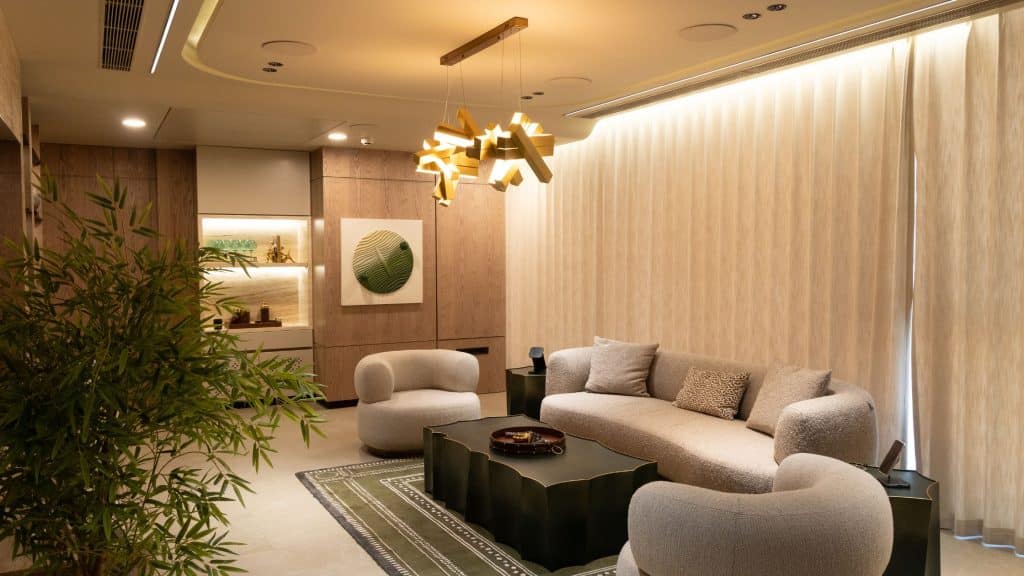
The butler module is an example. Through the same interface that controls a home’s lighting and climate, a resident can communicate directly with household staff, set morning preferences, send instructions, and manage requests throughout the day. If the user wants coffee at a specific temperature when they wake up, it’s noted, communicated, and executed. If a resident finds a recipe online and wants it cooked, they send the link directly to the butler through the app; no separate system or conversation is needed. The dish is initiated, prepared to their preferred specifications, and ready to be served at exactly the time the user wants. Everything is executed seamlessly through one platform.
What I find most significant about this is what it represents at a deeper level. For over a decade, we’ve been learning what people actually need from their homes, not what they say they need, but what makes daily life feel supported, and CasaDigi takes care of a multigenerational home.
Another example is what happens when a resident leaves their space for the day. The home registers the absence — systems power down, room service is notified, the space is cleaned and reset to their preferred scene. By the time the resident returns, the right temperature is set, the mood light is on, and everything is prepared seamlessly.
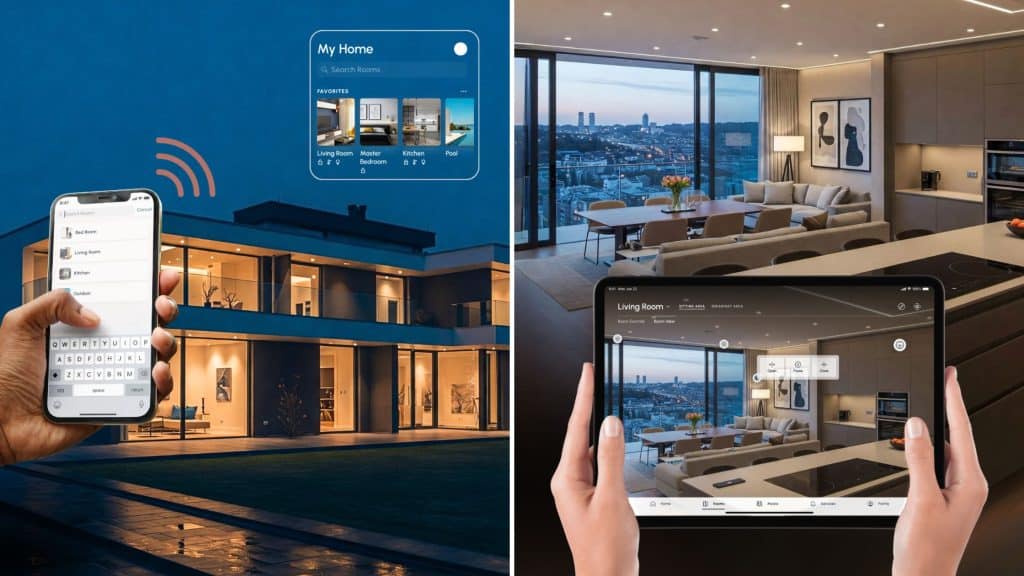
This is what premium luxury in the background actually looks like. Not features that impress when demonstrated, but a system that holds a person’s preferences and acts on them consistently, every day.
Mohit Dangayach, Consultant-Director, SIGMAC CONCEPTS LLP

What types of invisible technologies, such as hidden audio systems, concealed control interfaces, motorised solutions, or integrated lighting, are you increasingly incorporating into your projects, and why?
The demand for invisible technology is certainly growing in the luxury residential segment, although it is still largely limited to niche projects where design and aesthetics are given significant importance. The strongest trend we are seeing today is in audio. Homeowners want an immersive entertainment experience but do not necessarily want large speakers occupying valuable visual space within carefully designed interiors.
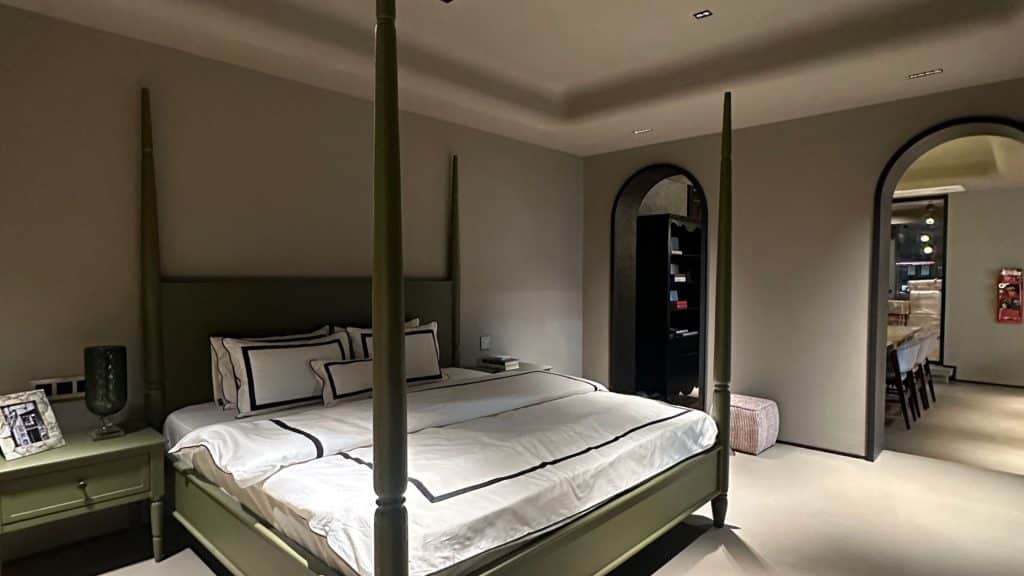
As a result, we are increasingly incorporating in-wall and in-ceiling speakers with paintable, trimless grilles that blend seamlessly.
What innovations from your portfolio best demonstrate how technology can disappear into the background while delivering a premium smart home experience?
Some of our most successful projects have been those where homeowners and designers wanted technology to be felt rather than seen. One such example was a large luxury residence where the brief was to create a fully connected smart home without introducing visible technology clutter into the living spaces.
The entire audio system was integrated using trimless in-ceiling and in-wall speakers with paintable grilles, allowing the speakers to blend into the surrounding surfaces. Lighting automation was controlled through elegant engraved keypads designed to complement the interior finishes, while centralised equipment racks housed all major electronics in dedicated technical spaces away from the living areas. Motorised shading systems were seamlessly integrated into the architecture, preserving clean lines and uncluttered windows.
The result was a home that delivered premium audio, lighting, climate, and automation experiences while allowing the architecture and interiors to remain the focal point. Guests could enjoy the benefits of technology without being constantly reminded of its presence.
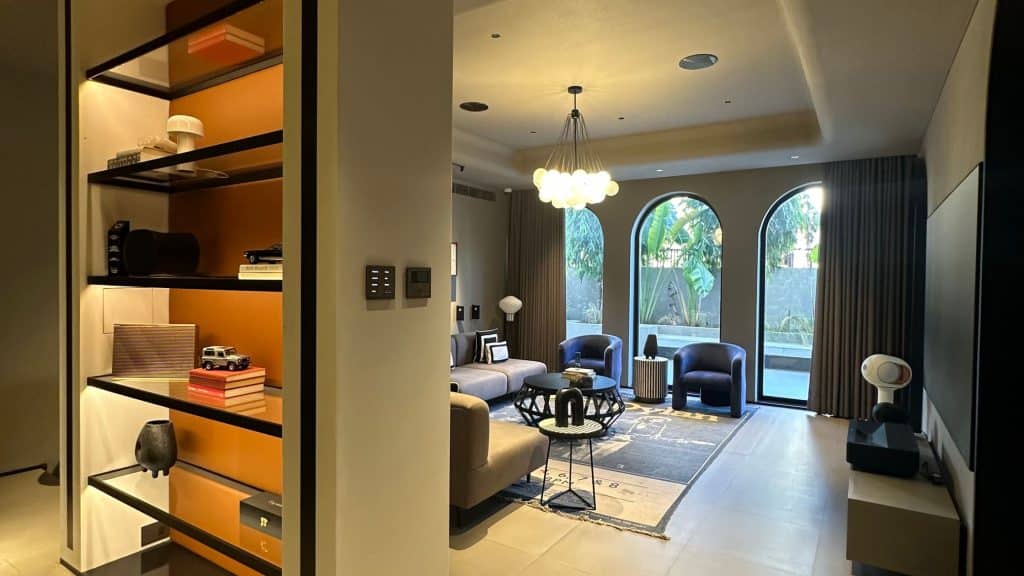
At the same time, our philosophy has always been that invisible technology should not compromise usability or future maintenance. While there is significant interest in completely hidden solutions, we carefully evaluate long-term serviceability and user experience before recommending them. For example, concealed audio behind acoustically transparent fabrics often provides a more practical balance between aesthetics and accessibility than solutions permanently hidden behind structural surfaces.
Looking ahead, I believe the future of luxury smart homes lies in making technology simpler rather than more complex. Audio, lighting, controls, and automation systems will increasingly become part of the home’s architecture itself. The ultimate measure of success will not be how much technology a home contains, but how effortlessly it enhances everyday living. When executed correctly, technology becomes an invisible layer that supports the lifestyle of the homeowner while remaining almost entirely in the background.
Smirati Bhatnagar, Assistant Director, Design Forum International

As luxury homes increasingly embrace invisible technology, how has your approach to design evolved to seamlessly integrate smart systems without compromising aesthetics?
The paradigm shift in luxury residential architecture lies in treating technology as a foundational element of the design narrative right from inception, rather than an afterthought to be accommodated later. In high-end homes, every element carries visual responsibility. A switch, sensor, speaker, camera, lighting control, access panel, or automation device can either quietly support the spatial experience or completely disrupt the visual language of a room.
Our approach at Design Forum International has evolved toward a conscious integration. When smart systems are understood at the conceptual stage, they can be meticulously planned into the architecture, ceiling profiles, wall panelling, lighting design, joinery, and material detailing to enhance the user experience in a space. Consequently, they no longer appear as forced, retrofitted additions; they become an organic part of the space’s rhythm, proportion, and detailing.
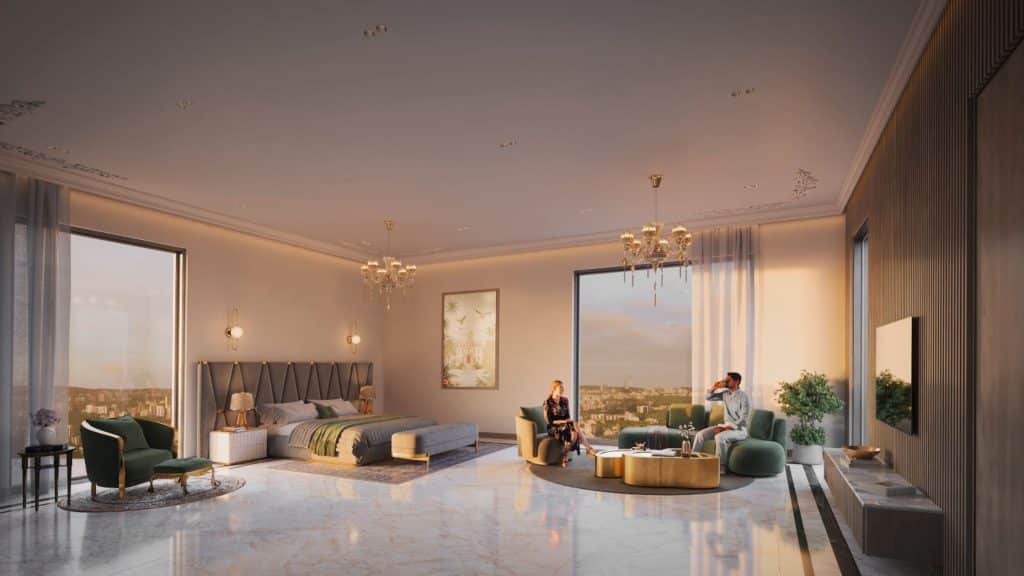
True luxury today is not about an ostentatious display of gadgets. It is about making life effortless without making technology visually dominant. The user should experience impeccable comfort, control, security, mood lighting, climate responsiveness, and convenience, but the systems that enable these experiences must remain discreet. Invisible technology is not about hiding devices at the eleventh hour, but it is about designing with absolute awareness. It requires architects, interior designers, lighting consultants, automation teams, and MEP engineers to collaborate early. When done well, technology doesn’t compete with design; it enhances the choreography of the home while allowing the architecture to remain calm, refined, and timeless.
In your view, why is discreet and design-led technology becoming a defining element of modern luxury living, and what are homeowners seeking from these solutions today?
Discreet, design-led technology is becoming the hallmark of modern luxury because true luxury and good technology ultimately share the exact same objective: to make life easier, more comfortable, and entirely frictionless.
Luxury is no longer defined by overt grandeur or visible opulence. It is increasingly measured by the quality of the daily, lived experience. A home that intuitively understands your lifestyle, responds to your physiological needs, shifts moods seamlessly, offers comfort at a touch, and quietly supports your routine feels far more luxurious than one where hardware is constantly intrusive.
Today, discerning homeowners are looking for solutions that simplify life without complicating their spaces. They desire intuitive lighting, seamless climate control, robust security, bespoke entertainment, and high energy efficiency, but they vehemently reject a home that looks mechanical or clinical. The technology must be felt in the experience, not seen as a distraction. Homeowners are seeking a sense of ease; they want spaces that are highly intelligent but not intimidating, advanced yet deeply human. For me, that is the core of “Smart Luxury.” It is about engineering an environment where everything operates beautifully in the background, allowing people to live with more comfort, calm, and control.
Can you share a project where concealed or seamlessly integrated technology enhanced the design narrative and living experience? Please also highlight any products, solutions, or technology partners that played a key role in achieving the desired outcome.
In a recent luxury residential interiors project, our primary intent was to create a calm, refined, hospitality-inspired living environment centred around warmth and understated elegance. It was imperative that technology supported the lifestyle without cluttering the visual field.
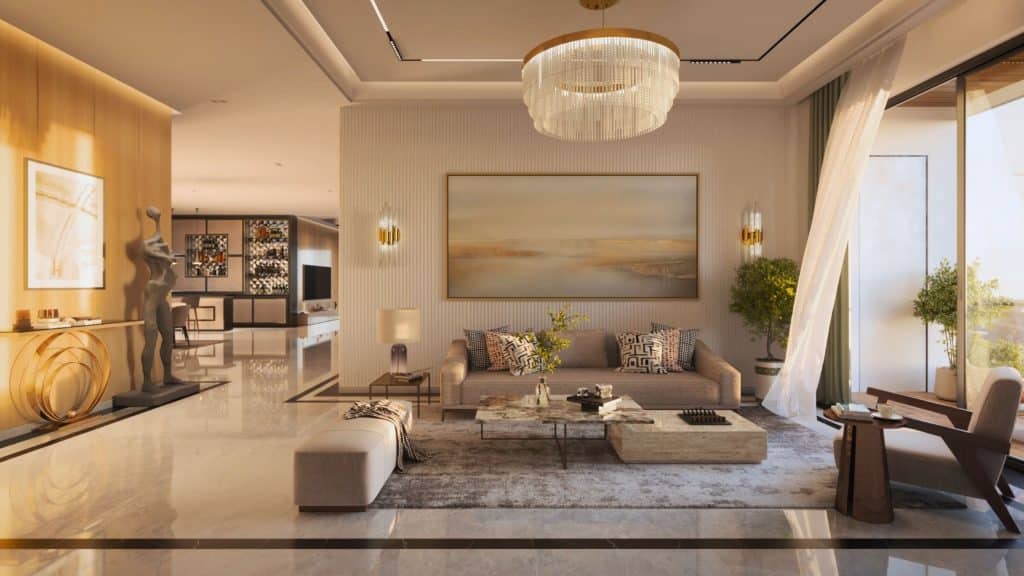
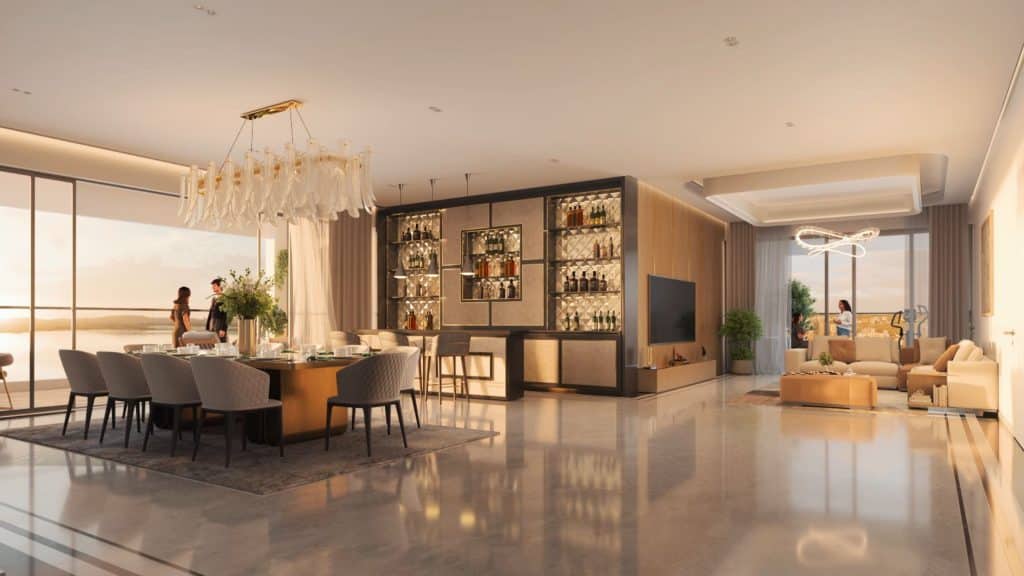
From the schematic design stage, we integrated the home automation, lighting controls, motorised curtains, climate control, security systems, and audio solutions directly into the interior detailing. Control panels were flawlessly aligned with wall panelling and material junctions, sensors and access points were mathematically coordinated with ceiling layouts, and speakers were integrated invisibly.
This meticulously planned environment radically transformed the daily living experience. Residents could smoothly transition from a bright, invigorating morning scene to a softer, ambient evening setting, manage privacy, adjust temperatures, and secure the home with zero visual noise.
Achieving this required deep, cross-functional collaboration. Products and solutions, such as integrated lighting control modules, smart climate interfaces, architectural motorised shading, concealed audio systems, and scene-based automation platforms, become truly effective only when designed in tandem with the architecture. When this collaborative synergy happens early, the result is never a technology-heavy house, but rather a graceful, intuitive home where technology strengthens the design narrative by allowing the space to remain elegant, timeless, and fundamentally livable.
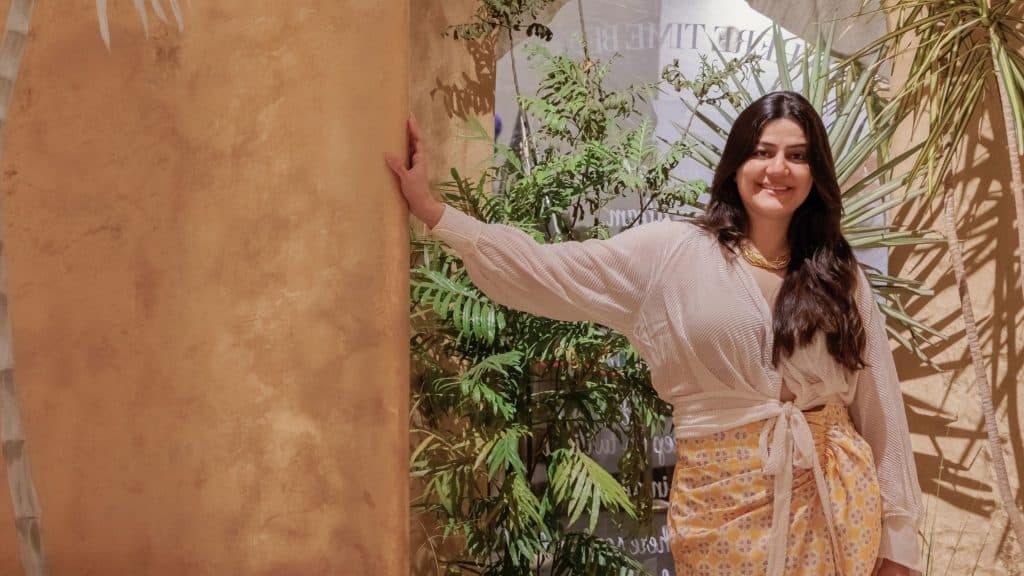
Shimona Bhansali, Founder & Principal Designer, DesignHex
As luxury homes increasingly embrace invisible technology, how has your approach to design evolved to seamlessly integrate smart systems without compromising aesthetics?
Honestly, the shift for us has been more about unlearning than evolving. There was a period where technology in a home felt like something you had to accommodate. You designed around it, made space for it, sometimes quite literally. You’d feel it.
What we’ve come to understand, and this has really shaped how we work now, is that the best version of any smart system is one that starts from a design intent, not a product catalogue! It changes everything. Before we ask what technology a space needs, we ask what the space is supposed to feel like at seven in the morning, or on a slow Sunday, or when a family comes together for a meal. The answers to those questions are what determine everything else. Light, temperature, sound, and privacy, these aren’t technical categories for us. They’re the conditions of a life being lived well. Technology, when it’s doing its job, helps anchor it altogether.
In your view, why is discreet and design-led technology becoming a defining element of modern luxury living, and what are homeowners seeking from these solutions today?
I think people’s relationship with luxury has genuinely shifted. And it has taken its time. For a long time, and you still see this, luxury meant more, visibly. More finish, more layers, more visible investment. Technology followed that same instinct. It showed itself. It wanted to be noticed. Which made sense, honestly. When something is new, you want to see it work.
The clients we sit with now aren’t asking what their home can do. They’re asking how it makes them feel. And that’s a completely different conversation to be in. One leads you toward features. The other leads you toward, I don’t know, toward a quality of morning. Toward what it’s like to come home at the end of a hard day.
And technology is actually what’s making that possible now. That’s the shift I find genuinely exciting. It’s not that technology has retreated; it’s that it’s become sophisticated enough to work in the same register as good design. A climate that anticipates rather than reacts. Sound that fills a room the way light does, from everywhere and nowhere. Design and technology are arriving at the same intention together, which is to just make the experience of being home feel effortless.
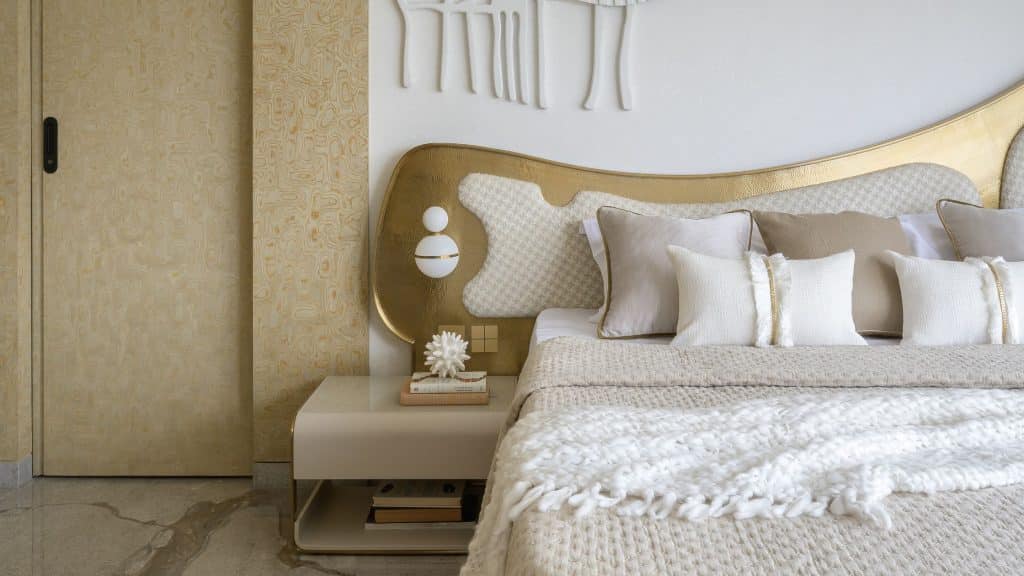
And the homes that stay with you are the ones where that partnership is working. Where you couldn’t point to anything specific and say, there it is. The light just behaves well. The room is always at the right temperature. There’s an ease to being in the space that you feel before you’ve analysed anything. That ease isn’t accidental. It’s designed. And increasingly, it’s also engineered.
Can you share a project where concealed or seamlessly integrated technology enhanced the design narrative and living experience? Please also highlight any products, solutions, or technology partners that played a key role in achieving the desired outcome.
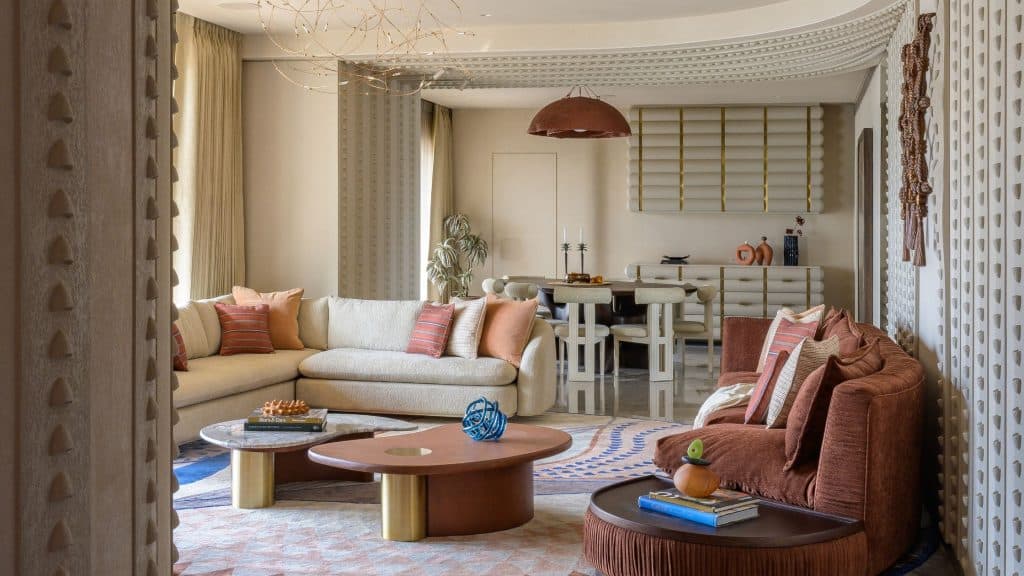
All for Shaz was a residential project, and it was personal in the way homes usually are when they’re built around one person’s actual life rather than an idea of how someone should live.
The client wanted the home to just work. Not perform, not impress, just work. And that shaped every decision we made, including the technology ones.
Fingerprint locks on the private zones of the home. Which sounds like a small thing, but it genuinely changes the feeling of moving through a space. You’re not reaching for anything, not fumbling, not switching modes. You arrive, and the door responds. That ease compounds over the course of a day in ways that are hard to articulate but very easy to feel.
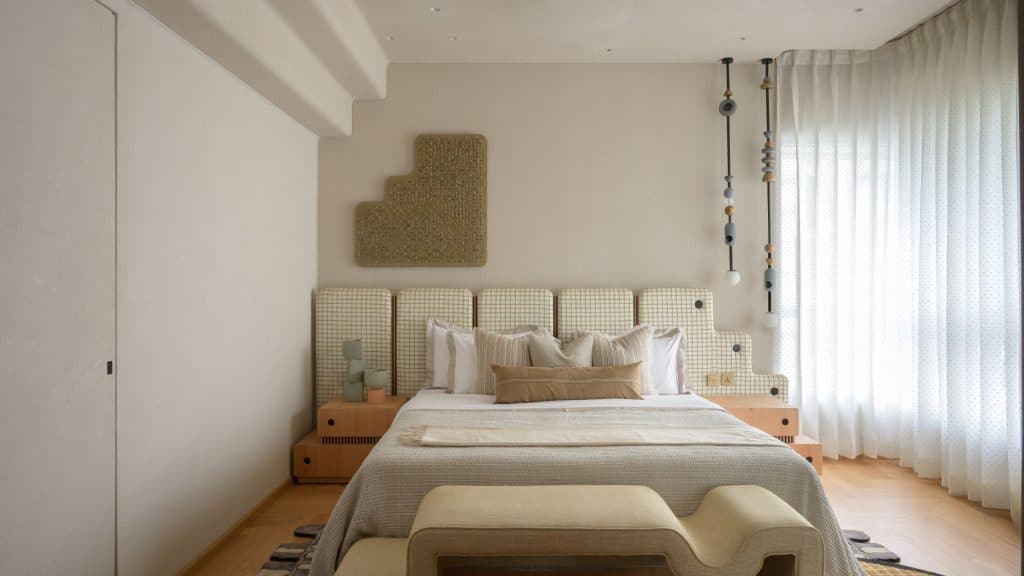
In-ceiling speakers through the lobby so music didn’t die the moment you walked from one room to another. This came from something the client said early on, that they hated the silence that happened between spaces. So we just got rid of it. Sound moved with you.
Automated lighting calibrated to the time of day. The whole project was oriented around nature as a reference, not nature as a mood board, but nature as a logic. The way light actually behaves across a day. Morning is different from afternoon is different from evening, and the home should know that without being told.
Rahul Mistri, Founder and Principal Designer, Open Atelier Mumbai

As luxury homes increasingly embrace invisible technology, how has your approach to design evolved to seamlessly integrate smart systems without compromising aesthetics?
The shift, honestly, has been about when we bring technology into the conversation. For a long time, smart systems were something that arrived toward the end of a project, almost as a layer added on top of a finished design. And you could always tell. A switch placed where there was no natural pause in the wall, a conduit that wasn’t accounted for, an interface that sat awkwardly against a surface someone had spent months selecting.
What has changed in how we work is that technology is now part of the architectural thinking from the beginning. Not as a separate brief, but as part of how the home is meant to feel. Motorised window treatments recessed within ceiling pockets, audio-visual systems sitting within architectural surfaces, flush-mounted interfaces that don’t break the material language of a wall. When these decisions are made early, they stop being visible decisions at all. The home simply becomes what it was always meant to be, and the technology, in the best possible sense, disappears.
In your view, why is discreet and design-led technology becoming a defining element of modern luxury living, and what are homeowners seeking from these solutions today?
After designing luxury homes and hospitality spaces for over a decade, one thing I have come to understand is that the experience of luxury has immensely shifted. It is about how a home feels to live within it, day after day.
Contemporary luxury is increasingly defined by the absence of visual clutter. A home with multiple switches, exposed thermostats, and visible control panels feels unsettled regardless of the quality of its materials or furniture. What homeowners are seeking today is an environment where comfort, wellness, and convenience are orchestrated with effortless precision, without having to consciously interact with the systems that enable them.
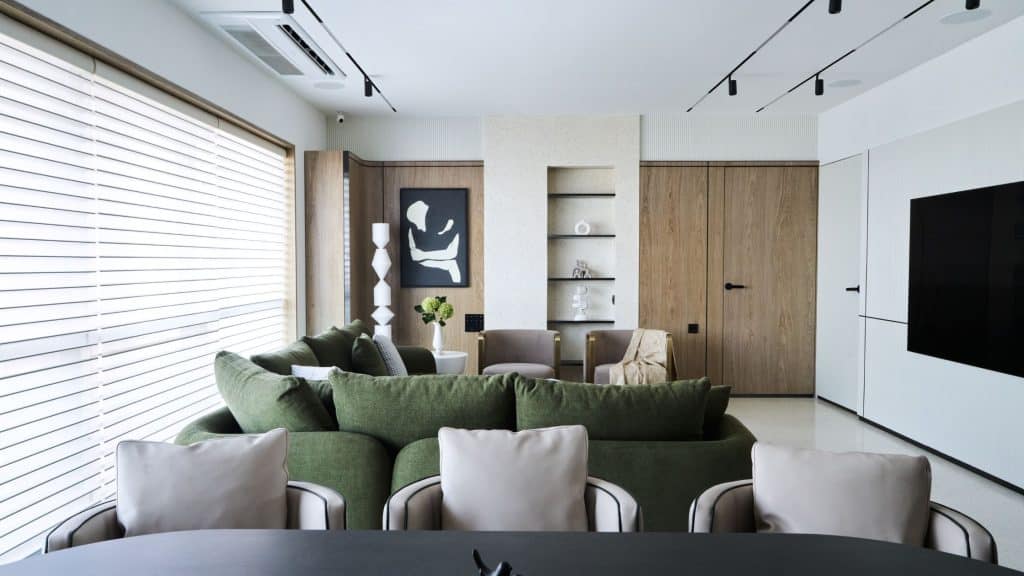
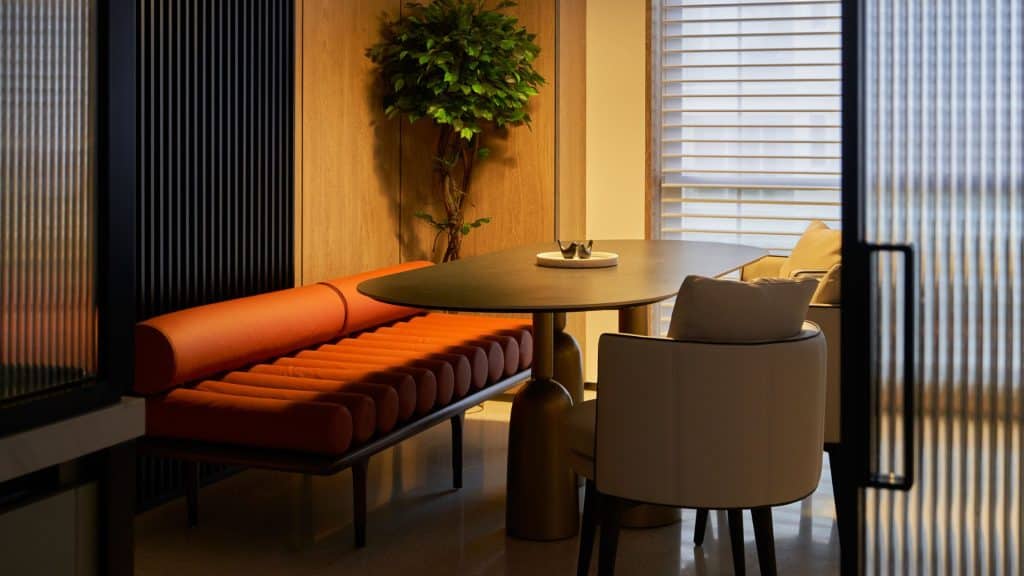
There is also a deeper expectation at play. Clients today are well-travelled; they have experienced the best hotels and residences globally, and they intuitively understand what a space feels like when technology is genuinely integrated rather than simply installed. That distinction is what drives the ask. They want their home to sense what they need before they have to ask for it, and they want that intelligence to sit entirely within the architecture, invisible but always present.
Discreet technology earns its place in a luxury home precisely because it allows the architecture and interiors to remain the primary experience, while the home’s intelligence operates quietly in the background.
Can you share a project where concealed or seamlessly integrated technology enhanced the design narrative and living experience?
Across several of our residential projects, the integration of platforms such as Lutron and KNX, and wireless solutions such as Casambi, has enabled us to build genuine building intelligence into the fabric of the home. These systems provide the backbone, managing lighting, thermal comfort, shading, and acoustics as a unified ecosystem rather than isolated functions. Two projects come to mind where technology wasn’t simply integrated but became an extension of the design philosophy itself.
At Kiyoma Crest in Chembur, Mumbai, the home was rooted in Japandi and Wabi-Sabi sensibilities, and what became clear early on was that the philosophy wasn’t only about material choices. It was about the absence of unnecessary things. The wireless Casambi system allowed us to carry that thinking into how the home operates. Light transitions gradually throughout the day, from warmer tones in the morning to cooler tones by evening, in response to natural light cycles. HVAC and lighting shut off automatically when spaces are unoccupied. The home regulates itself quietly, and that quality of effortless responsiveness felt entirely in keeping with what Japandi asks of a space.
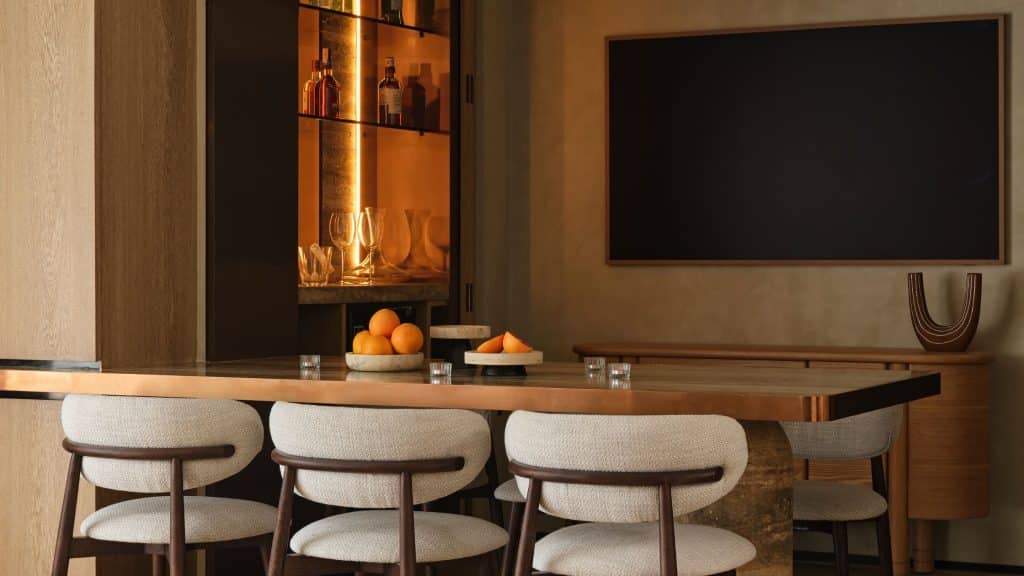
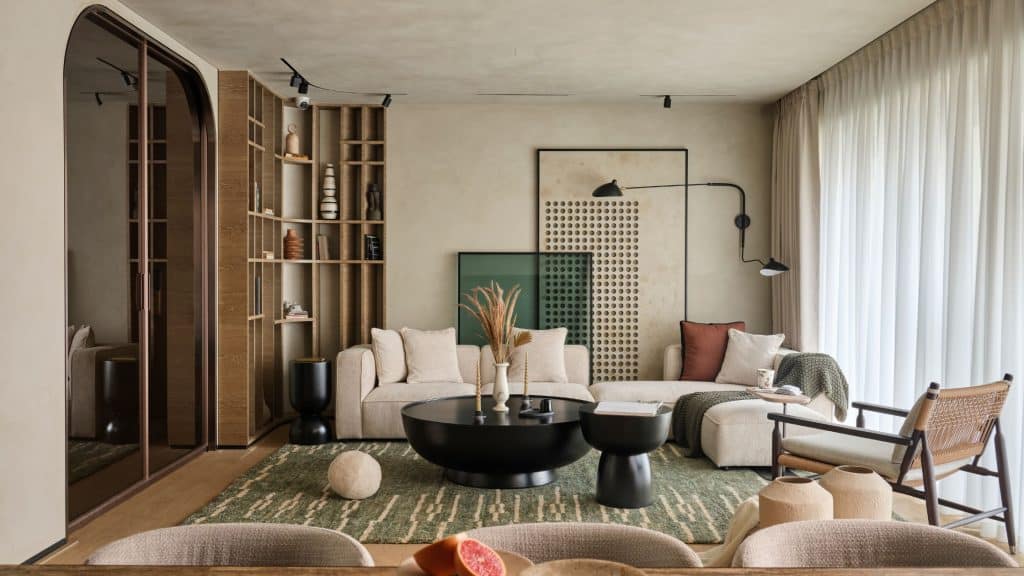
At Serene Cove, also in Mumbai, the integration came from a different starting point. This was a family with a young child, and the client’s primary ask was ease, a home that supported their everyday life without adding friction. Human-centric lighting systems adjust temperature and intensity based on the time of day and the activity at hand, shifting from warm, soft light for relaxation to brighter tones for study or play. Hunter Douglas Duette blinds manage light exposure throughout the home, and the entertainment room transitions seamlessly between gathering, movie viewing, and play through automated lighting and window treatments. All of it concealed within the cabinetry and architecture, maintaining the clean visual flow the family wanted.
Across both projects, the integration of platforms such as Casambi, paired with interface solutions from Basalte and CasaDigi, ensured the technology remained subordinate to the experience. The next step we are working towards is predictive intelligence, where the home moves from responding to its occupants to anticipating them. That shift, from a responsive home to an intuitive one, is where the most meaningful work lies ahead.
Vijay Dahiya, Partner, team3

As luxury homes increasingly embrace invisible technology, how has your approach to design evolved to seamlessly integrate smart systems without compromising aesthetics?
In my experience, the way we approach smart systems has become much more straightforward over time. It is no longer something we factor in after the design is established. Rather, it is embedded in the initial thinking itself. This shift has fundamentally changed how we approach spatial design. Architecture, interiors, and technological systems are now developed in parallel, rather than in sequence. As a result, decisions around lighting, climate control, and automation are resolved within the architectural language.
This enables a greater degree of visual restraint. Every surface, whether ceiling, wall, or joinery, is designed with the understanding that it will carry more than one function, but without visually expressing it. Systems are absorbed into the fabric of the space. The intent here is to ensure technology never interrupts the reading of the space. When this is achieved, design holds its primacy, and technology becomes completely invisible in experience while remaining precise in performance.
In your view, why is discreet and design-led technology becoming a defining element of modern luxury living, and what are homeowners seeking from these solutions today?
Luxury today is defined less by visibility and more by precision of experience. There is a clear shift towards homes that feel intuitive, where systems operate quietly and consistently without requiring interaction or attention. Technology is no longer expected to be seen or managed; it is expected to anticipate and respond.
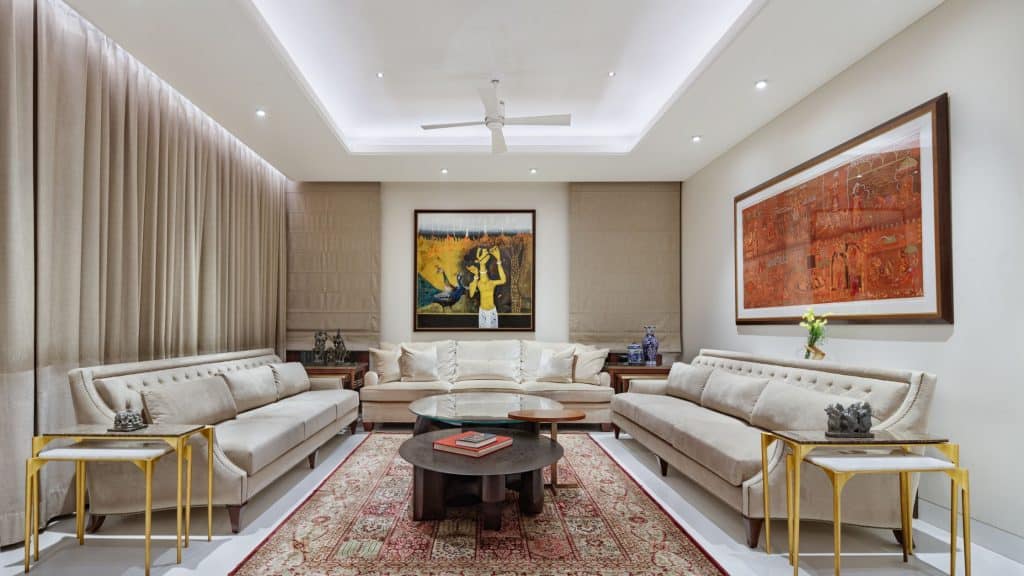
This has redefined expectations within residential design. Today, comfort is something that adjusts seamlessly across time, activity, and need. Lighting that aligns with natural rhythms, air systems that maintain balance, and environments that adapt without instruction are now integral to how luxury is understood.
At the same time, there is a growing emphasis on visual calm. As interiors become more material-driven, any visible technological layer disrupts spatial continuity. Discreet integration is therefore essential to preserving architectural clarity. What homeowners really seem to value now is this sense of effortlessness, a home that quietly adapts to them. And when technology can do that, without being seen, that’s when it actually feels like luxury today.
Can you share a project where concealed or seamlessly integrated technology enhanced the design narrative and living experience? Please also highlight any products, solutions, or technology partners that played a key role in achieving the desired outcome.
At B-10 Residence in New Delhi, technology was introduced with a clear intent to make everyday living simpler without adding visual or operational complexity within the home.
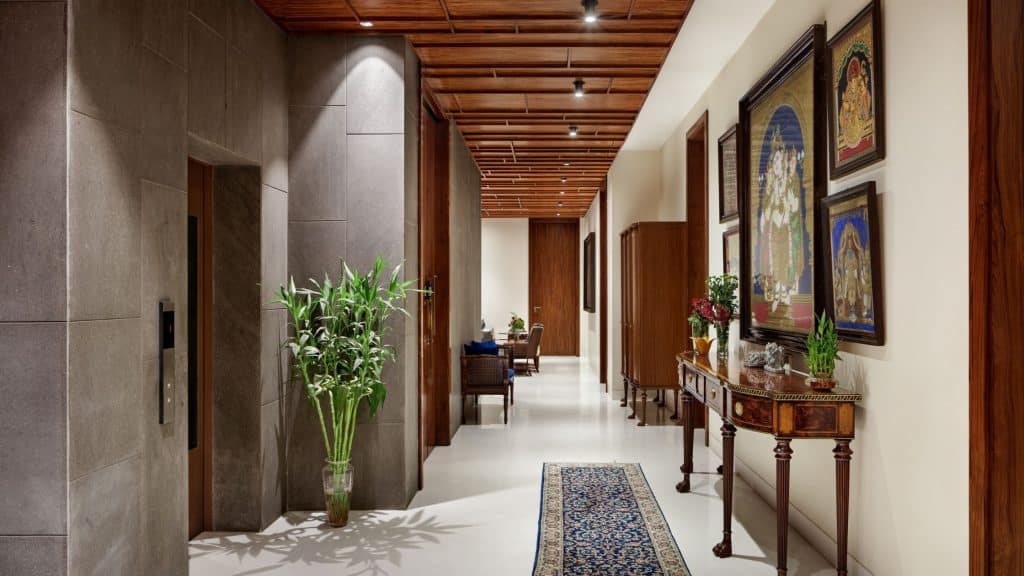
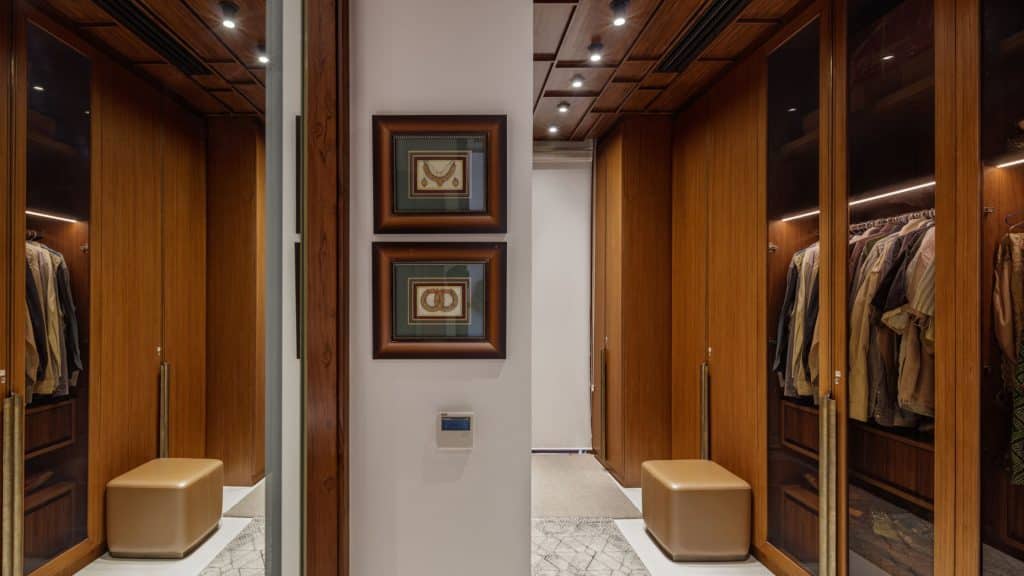
Given the size of the residence and the number of spaces across levels, the focus was on bringing all core functions onto a single, unified system. Lighting control, motorised blinds, and HVAC are all integrated and accessible directly through mobile phones and tablet devices. This allows occupants to manage comfort and environment from anywhere in the house without depending on multiple switches or separate controls. Beyond this, the home also brings together multiple systems into one platform. Audio-visual controls, CCTV monitoring, and essential electrical functions are all available through a single interface. The idea was to avoid fragmentation so that the user does not have to switch between different systems for different needs.
In day-to-day use, this makes the home far more responsive. Lighting, temperature, shading, and security can all be adjusted instantly, whether individually or together, depending on the requirement. It creates a more effortless way of interacting with the house, especially in a multi-level home where movement between spaces is constant.
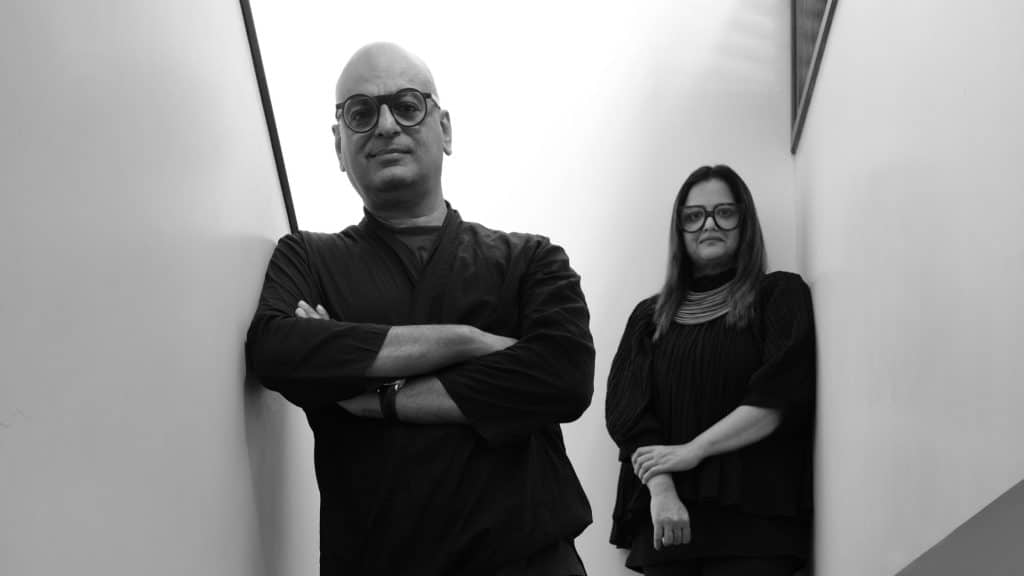
Praveen Bavadekar, Founder & Principal Architect & Namrata Betigiri, Principal Architect, Thirdspace Architecture Studio
As luxury homes increasingly embrace invisible technology, how has your approach to design evolved to seamlessly integrate smart systems without compromising aesthetics?
A piece of architecture is made of materials like brick, stone or concrete. These are tangible materials that often resist change. Architecture is often about timelessness and stasis.
On the other hand, technology is about constant change and temporality. We live in times where our phones and even our cars are rendered obsolete within a year.
The challenge is about how to reconcile the timelessness that is inherent within architecture with the ephemerality that technology entails.
On the one hand, any technology that we integrate into our buildings risks being dated within a couple of years, and yet, a building like Gaudí’s Sagrada Família, which is still under construction even after a century and a half, is rightly considered a relevant and important specimen of architectural heritage. Architecture, thus, has to easily segue between temporality and timelessness.
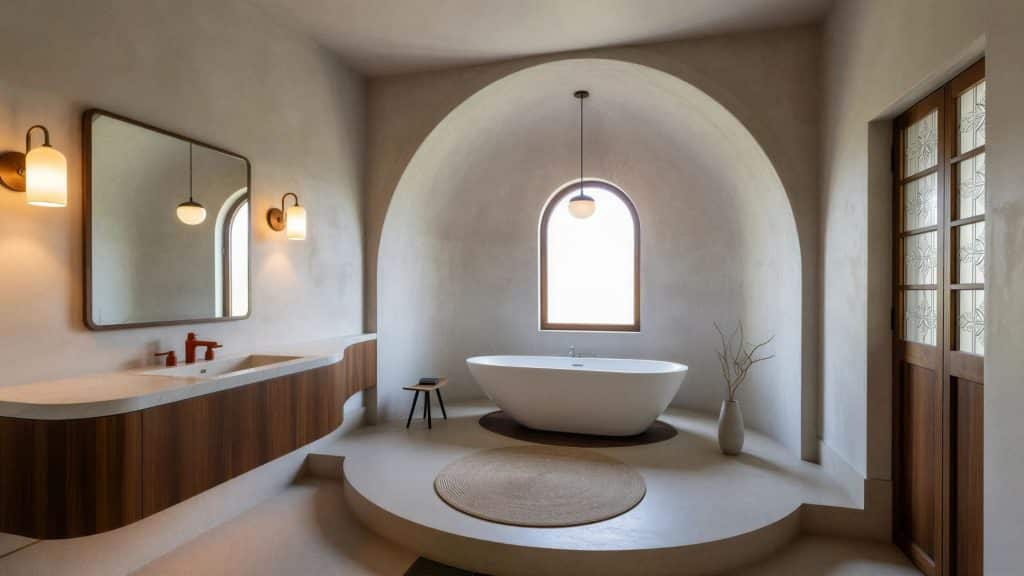
The invisibility of technology is preordained by an invisible framework of cabling and wireless networks that allows for conveniences to be integrated with our built space seamlessly.
Today’s technology is non-intrusive and non-invasive and that makes it easy for us to integrate it with architecture, but it also has to have resilience so as to enable upgrades over time.
In your view, why is discreet and design-led technology becoming a defining element of modern luxury living, and what are homeowners seeking from these solutions today?
We are increasingly looking at our living and working spaces as commodities or products that give us the same experience as our electronic devices. We inhabit a world where we are constantly and seamlessly moving between several micro spaces, ranging from our homes to hotel rooms to even our cars and offices.
Our cloud accounts then become the connective tissue that links disparate spaces and gives us a cohesive informational and spatial experience. For example, our music intuitively switches to
the car audio and then to our Bluetooth speaker at home. Our Netflix streams across devices, with no obvious lag.
Thus, Technology is no longer about fancy devices and complicated machines like what we imagined at the beginning of the last century, but rather it is about unobtrusive invisibility that yet guarantees you a seamlessness in your daily life.
Can you share a project where concealed or seamlessly integrated technology enhanced the design narrative and living experience? Please also highlight any products, solutions, or technology partners that played a key role in achieving the desired outcome.
Whereas most of our projects have some amount of technology built into them, we are particularly excited about a project that involves the renovation of an erstwhile palace that belonged to a minor kingdom in pre-independence India. This Palace, which has since been bought by an aerospace entrepreneur and his family, is a mishmash of architectural influences, from a 17th-century Maratha Wada that forms the core, to an early 20th-century art deco front wing designed by the legendary Claude Batley.
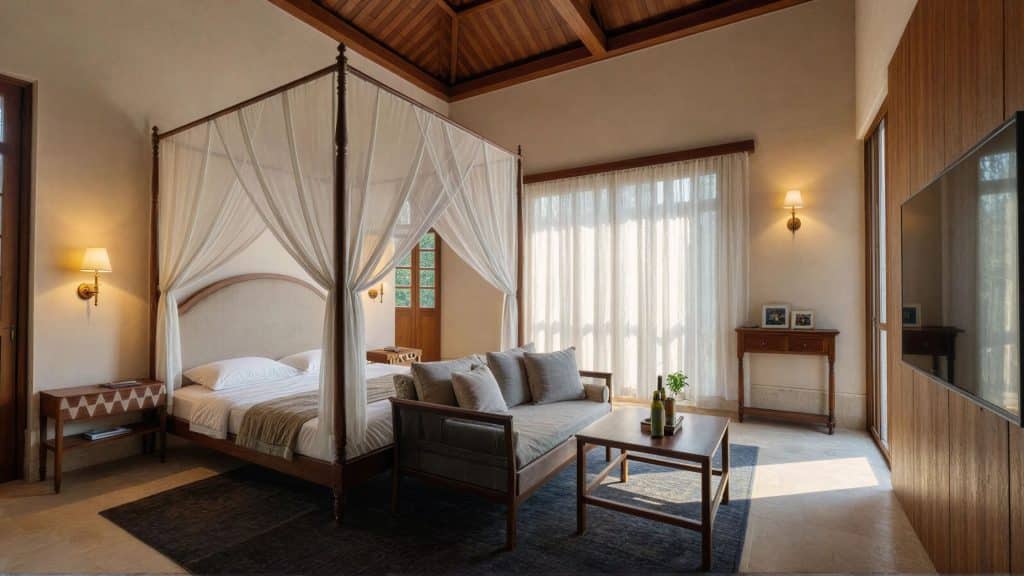
Here, we are integrating the latest that technology has to offer with a structure that has been in existence, in one form or another, for at least around 350 years.
To achieve this, after careful consideration, we decided to go for solutions by a company called Gladiance Automation, which is run by a father-son duo, the Andurkars.
Here, smart technology extends to lighting control of all spaces as well as integration of audio-visual solutions across the whole building, extending from the core living spaces to liminal spaces such as corridors and even encompassing spaces such as the bathroom and wardrobe areas.
Aashita Chadha, Co-Founder, The KariGhars

As luxury homes increasingly embrace invisible technology, how has your approach to design evolved to seamlessly integrate smart systems without compromising aesthetics?
The relationship between luxury and technology has changed significantly over the last decade. Earlier, technology was often seen as something to be showcased – a marker of innovation within the home. Today, the expectation is very different. Homeowners want technology to enrich their lives without visually dominating the spaces they inhabit. This shift has fundamentally influenced the way we approach design.
For us, every project begins with understanding how the client wants to live rather than what technology they want to install. Once we understand their routines, habits, and aspirations, technology becomes a tool that supports those experiences. It is no longer a separate layer added to a finished design but an invisible framework that is considered from the very beginning.
This early integration is important because the most successful smart homes are rarely the ones where technology is immediately visible. Instead, they are the homes where lighting responds intuitively to different moments of the day, where climate control maintains comfort effortlessly, where entertainment systems disappear when not in use, and where security operates quietly in the background. Achieving this level of seamlessness requires close collaboration between designers, architects, consultants, and technology partners from the conceptual stage itself.
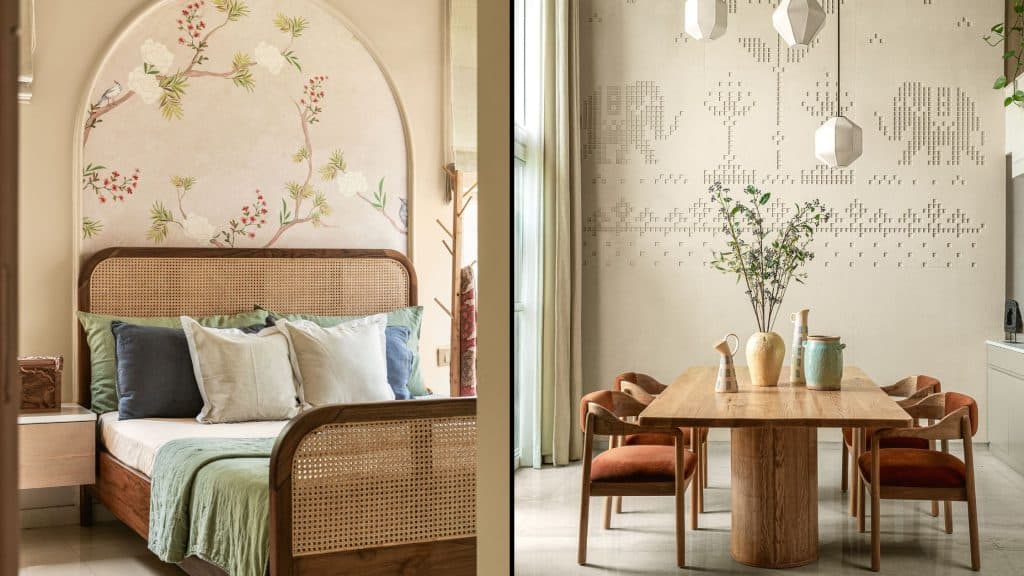
As a result, our focus has increasingly shifted towards creating spaces that feel calm, intuitive, and uncluttered. We carefully integrate controls, sensors, speakers, and automation systems into the architecture so that the design remains visually clean and cohesive. The goal is not to make the homeowner aware of the technology but to make them aware of how effortlessly the space supports their lifestyle.
Ultimately, we believe technology should enhance the emotional experience of a home rather than compete with it. When integrated thoughtfully, it allows architecture, materials, craftsmanship, and human experiences to remain at the forefront while quietly making everyday life simpler, more comfortable, and more intuitive.
In your view, why is discreet and design-led technology becoming a defining element of modern luxury living, and what are homeowners seeking from these solutions today?
Luxury today is increasingly defined by ease rather than excess. People are moving away from visible displays of technology and are instead looking for homes that feel effortless to live in. In many ways, the highest form of luxury is not having to think about the systems around you because they work seamlessly in the background.
Homeowners want their homes to feel warm, personal and visually serene. They do not want screens, switches, equipment and devices competing with the architecture or disrupting the overall design narrative. Instead, they want technology that integrates naturally into the environment and supports the way they live. This is why discreet, design-led technology has become such an important part of modern luxury living.
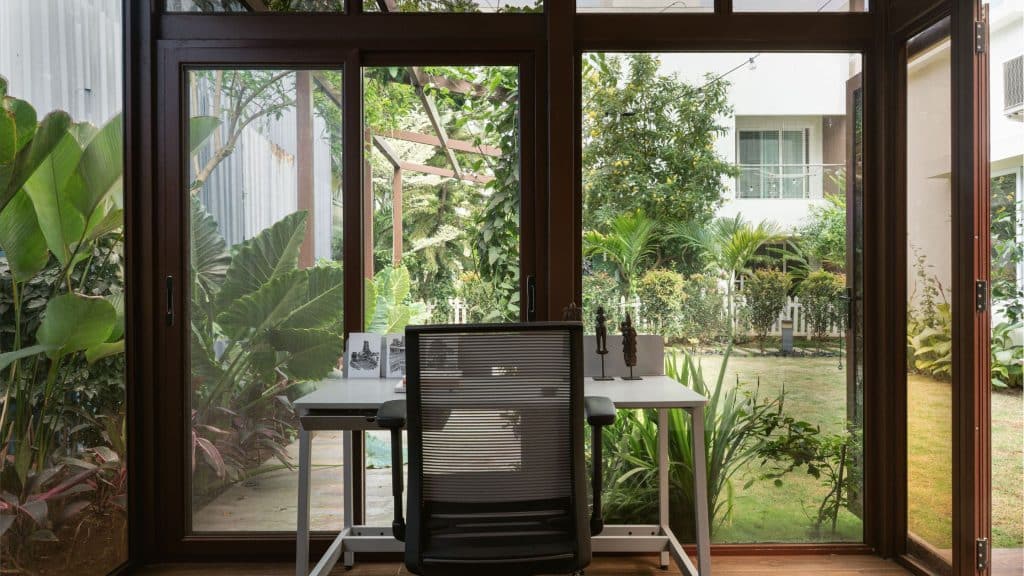
What homeowners are increasingly seeking is convenience without complexity. They want lighting that adapts to different moods and activities, climate systems that maintain comfort while optimising energy use, security solutions that provide reassurance without feeling intrusive and entertainment systems that can be enjoyed without becoming the focal point of a room. There is also a growing interest in wellness, sustainability and personalisation, with homeowners expecting their homes to respond intelligently to their routines and preferences.
Ultimately, invisible technology is becoming synonymous with luxury because it aligns with what homeowners value most today: simplicity, comfort, personalisation, and peace of mind. The technology may not always be visible, but its impact is felt every day through the ease, efficiency, and quality of the living experience it creates.
Conclusion: As our conversations with architects, interior designers, technology consultants, and system integrators reveal, the future of luxury living lies not in technology that demands attention, but in technology that quietly enhances everyday experiences. As artificial intelligence, automation, and connected technologies continue to advance, it will be interesting to see how the concept of the invisible home evolves, and whether the most sophisticated smart homes of tomorrow will be the ones we notice the least.