


Choosing the right technology is critical for a truly smart home. Experts explain how hybrid systems, open protocols, and predictive intelligence are helping Indian homeowners build reliable, scalable, and future-ready living spaces.
In India’s fast-evolving residential landscape, smart home automation has moved far beyond novelty. What was once defined by a few app-controlled lights or voice-enabled speakers has matured into a complex ecosystem of integrated systems. Yet, despite this growth, one fundamental mistake continues to create long-term issues: selecting technology based on trend, price, or brand popularity rather than suitability and structure. The reality is simple: smart homes succeed or fail at the planning stage. Choosing the right technology foundation at the beginning prevents instability, incompatibility, and expensive upgrades later.
A smart home should never begin with product selection; it should begin with need analysis. Every project must first evaluate the homeowner’s lifestyle, expectations, and long-term plans. Is the priority convenience, enhanced security, energy efficiency, centralised control, or luxury living? Is the property a new construction or a retrofitted apartment? What level of scalability is expected over the next decade? Installing a high-end, complex automation system in a compact apartment that requires only basic lighting and curtain control adds unnecessary cost and complication. Conversely, deploying entry-level wireless gadgets in a large villa with extensive automation demands can lead to network congestion, signal failures, and dissatisfied users. The right technology is not the most advanced option available; it is the most appropriate option for the project.
At the core of every stable smart home lies the platform. Platform selection is significantly more important than choosing individual devices because the platform defines how all subsystems communicate. Lighting, climate control, security, audio-video, and shading must operate within a unified ecosystem. Structured platforms such as Control4, Crestron, Lutron, and systems built on standards from the KNX Association are designed for long-term integration, reliability, and scalability. They provide centralised logic, consistent user interfaces, and the flexibility to expand without overhauling the entire system. In contrast, combining multiple standalone Wi-Fi products often results in fragmented control across different mobile apps, firmware conflicts, router overload, and cybersecurity vulnerabilities. Devices can be replaced over time; replacing a poorly chosen platform is expensive and disruptive.
Equally critical is the selection of the right hub or controller, as this determines processing capability, automation speed, integration capacity, and system stability. In Indian conditions, where internet reliability can vary, systems that rely solely on cloud processing can fail during outages.
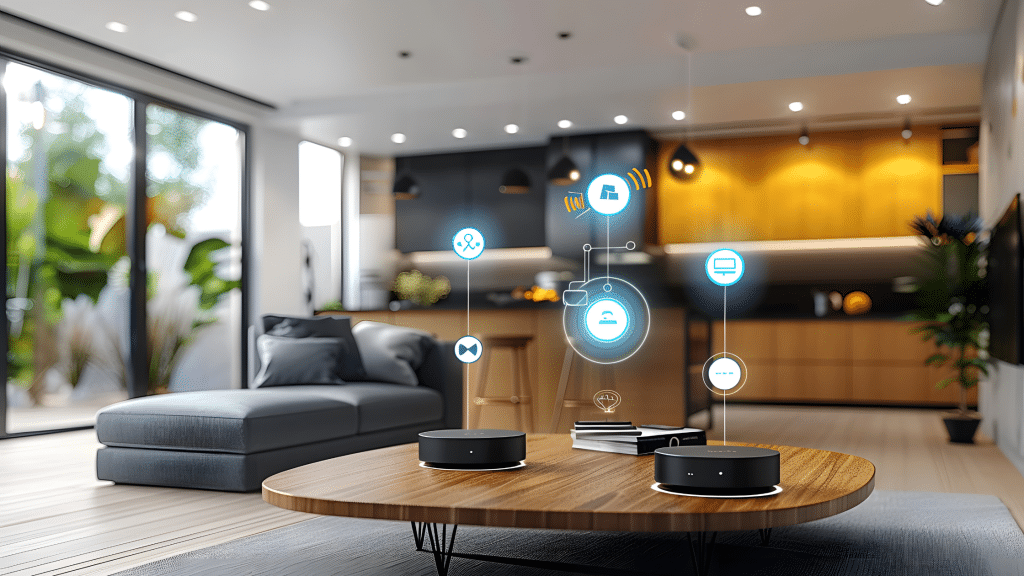
When evaluating infrastructure realities in India, the wired versus wireless debate becomes central. Wired systems offer unmatched reliability, minimal latency, and long operational life cycles. They are ideal for new constructions where planning can begin at the design stage. However, wired installations may not always be feasible in completed homes or apartments. Wireless systems offer faster deployment and lower initial civil work, making them attractive for retrofits. Yet, heavy dependence on Wi-Fi can create interference challenges, especially in high-rise buildings with multiple overlapping networks.
This is where hybrid architecture emerges as the most practical and forward-thinking solution for Indian homes. A well-designed hybrid system combines the stability of a wired backbone with the flexibility of wireless extensions. Critical systems such as lighting control, HVAC, and security can operate on a wired infrastructure, ensuring consistent performance and minimal latency. At the same time, wireless sensors, smart switches, and auxiliary devices can be added without extensive rewiring. Hybrid architecture not only optimises cost but also provides resilience. If one communication layer experiences issues, the overall system remains stable. Moreover, hybrid designs make future expansion easier, allowing homeowners to upgrade specific zones without disturbing the entire ecosystem. In India’s diverse housing formats, from compact apartments to expansive villas, hybrid systems strike the right balance between reliability, scalability, and practicality.
Ultimately, the difference between a successful smart home and a problematic one lies in invisible decisions. Electrical planning, network design, surge protection, structured cabling, and professional commissioning are as important as the visible touch panels and designer switches. Choosing technology purely on cost can lead to higher long-term maintenance and replacement expenses. A well-planned system, built on the right platform with an appropriate controller and a hybrid infrastructure tailored to the property’s needs, delivers consistent performance for years.
Smart Home World speaks to System Integrators to share their expert insights on choosing the appropriate smart home solutions and building future-ready automation systems.
Aditya Khambhati. Managing partner at Trinity Synergy Home Automation

How has the definition of a `Smart Home’ in India evolved over the last five years from a technology standpoint?
Over the past five years, the concept of a smart home in India has undergone a significant transformation. Earlier, smart homes were largely defined by standalone connected devices such as CCTV apps, smart bulbs, and video door phones, each operating independently through separate mobile applications. These systems were device-centric, not integrated, and certainly not synchronized into a unified experience.
Smart Systems have evolved through various phases:
Phase 1 App-Controlled Devices: The initial phase of smart homes revolved around individual products controlled via their respective apps. There was minimal interaction between systems, and automation was limited to basic remote control functionality.
Phase 2: IoT and Voice Integration: With the rise of IoT adoption, devices began communicating within broader ecosystems. Voice assistants like Amazon (Alexa) and Google (Google Assistant) played a major role in bringing automation into the mainstream. Homes started experiencing platform-level integration rather than isolated device control.
Phase 3: AI-Driven Ecosystems: Today, smart homes are integrated, human-centric ecosystems powered by AI and cloud intelligence. Lighting, climate control, and security systems are no longer just reactive, but they are adaptive, profile-based, and increasingly intelligent. The focus has shifted to energy efficiency, automation logic, and seamless interconnected living environments.
Why is platform selection more critical than individual device selection in a smart home project?
Platform selection is the foundation of any smart home project because it defines the system’s architecture, interoperability, automation logic, scalability, and long-term viability.
Devices can always be replaced or upgraded. However, the platform determines how all components communicate and function together. A strong platform ensures seamless integration between lighting, HVAC, AV, security, and other subsystems.
Selecting the right platform today guarantees flexibility for tomorrow. It prevents compatibility issues, reduces fragmentation, and ensures the home can scale without requiring a complete overhaul.
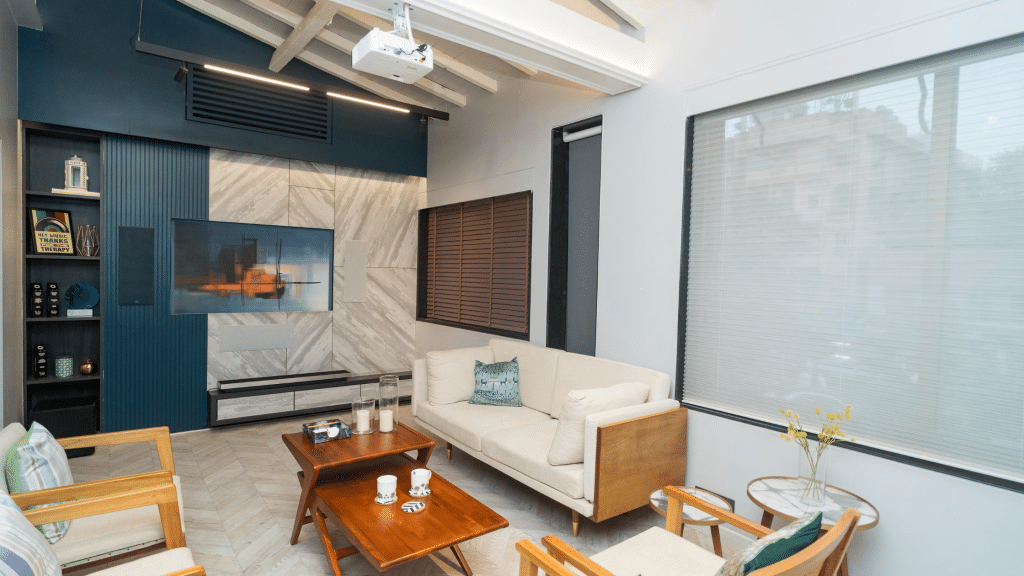
Given Indian infrastructure realities, how do you evaluate wired versus wireless or hybrid smart home systems?
When evaluating smart home systems in India, one must consider practical realities such as high wiring costs, a strong retrofit market, power fluctuations, and network instability.
Wired systems, particularly those built on standards supported by the KNX Association, are robust, secure, and designed for long-term stability. They offer superior reliability and are ideal for new constructions.
However, wireless systems have gained popularity due to their scalability, ease of deployment, and suitability for retrofit projects.
The most practical solution for India is a hybrid architecture. Hybrid systems combine the robustness and integration strength of wired infrastructure with the flexibility and cost-effectiveness of wireless devices. This approach balances performance, scalability, and budget considerations, making it highly suitable for Indian homes.
What factors should determine the choice of communication protocols in Indian residential projects?
Choosing the right communication protocol, whether a wired solution such as closed BUS systems or KNX, or wireless options like Wi-Fi, Zigbee, Z-Wave, or Thread, should be a carefully evaluated decision based on multiple project-specific factors. Budget constraints often play a defining role, as certain protocols require greater infrastructure investment than others. Power stability is another critical consideration in Indian conditions, where fluctuations can impact system performance. Integration requirements, particularly when coordinating lighting with AV, HVAC, security, and other subsystems, also influence protocol selection. User interface expectations, including responsiveness and centralised control, must align with the underlying technology. Scalability is equally important, ensuring the system can expand seamlessly as future needs evolve. Additionally, wall construction and structural barriers significantly affect wireless signal strength and reliability, making site conditions a key determinant. Finally, future readiness, such as compatibility with upcoming technologies and long-term upgrade potential, should guide the decision to ensure the system remains relevant and efficient for years to come.
Indian construction practices, especially thick concrete walls, can significantly affect wireless performance. Therefore, protocol selection must be carefully aligned with site conditions and long-term goals. An experienced system integrator plays a crucial role in evaluating these variables and recommending the right solution.
Do you believe hybrid architectures are the most practical solution for Indian homes today? Why?
Yes, in most Indian residential contexts, hybrid architectures are the most practical solution, not necessarily because they are theoretically superior, but because they align best with Indian infrastructure, construction styles, and buyer expectations.
Hybrid systems combine the strengths of both wired and wireless technologies, creating a balanced and practical automation framework. They deliver the robustness and reliability typically associated with wired systems, ensuring stable performance for critical functions such as lighting and HVAC control. At the same time, they provide the scalability of wireless solutions, allowing easy expansion and the addition of new devices without major structural changes. Hybrid architecture also retains the integration advantages of structured infrastructure, enabling seamless coordination between multiple subsystems. Importantly, it offers the budget flexibility of wireless expansion, making it possible to optimise initial investment while keeping room for future growth.
They also appeal to developers and homeowners who seek performance without high initial civil costs. Hybrid architecture delivers a balanced, future-ready solution tailored to Indian conditions.
Do smart homes need to be more predictive or more adaptive — and what’s the difference in practice?
The terms “predictive” and “adaptive” are often used interchangeably in smart home marketing, but they represent distinct intelligence models. Adaptive systems learn user habits over time and adjust accordingly. They operate reliably even with limited connectivity and focus on gradual optimisation.
For example, if a user turns on the air conditioning every evening, the system learns this pattern and begins automating it.
Predictive systems anticipate needs using broader data inputs such as weather forecasts, calendar schedules, or location tracking. They act proactively rather than reactively.
For example, the home may cool itself before the user arrives, based on travel schedules and external temperature data.
Indian smart homes should be primarily adaptive and selectively predictive.
Infrastructure variability demands reliability first. Indian households are often multi-generational with dynamic usage patterns, and users value transparency and control. Adaptive systems build trust by responding consistently to behaviour. Predictive features should be layered in only after system stability is ensured and where they genuinely enhance comfort and efficiency.
Dhanraj Sheth, CEO & Director, Uniser Smartspaces

How has the definition of a “Smart Home” in India evolved over the last five years from a technology standpoint?
Five years ago in India, a smart home (rather a smart space) largely meant basic automation. It was mostly about switching lights, fans, or air conditioning On and Off through an App or Voice Control, with technology added as a layer rather than designed into the space.
Today, the definition has evolved significantly. Smart spaces are no longer about isolated functions or individual devices. They are about how different systems work together to create comfort, efficiency, and consistency. While lighting was one of the earliest entry points through scenes and automation, the conversation has expanded to include HVAC, shading, security, energy management, and audiovisual systems working in sync.
From a technology standpoint, the shift has been from device-led automation to platform-driven ecosystems. Clients now recognise that the quality of their experience depends far more on the underlying infrastructure, choice of platforms and protocols, and how thoughtfully the space is designed, integrated, and commissioned.
In essence, smart spaces in India are moving from simple connected setups to well-engineered environments that are reliable, scalable, and built to last across homes, offices, showrooms, and hospitality spaces.
Why is platform selection more critical than individual device selection in a smart home project?
The platform is what holds the entire smart space together. Once a platform is chosen, it determines how different systems communicate, how stable the setup is, and how easily space can evolve over time.

In many projects, issues arise not because the devices are poor, but because they do not work well together. A strong platform ensures interoperability between lighting, HVAC, security, AV, and other systems, instead of creating multiple disconnected islands of automation.
Platform selection also impacts long-term reliability and serviceability. A well-chosen platform allows for easier troubleshooting, software updates, and future expansion without ripping out existing infrastructure. In contrast, device-driven approaches often lead to complexity, compatibility issues, and higher life-cycle costs.
Ultimately, a smart space succeeds not because of a few impressive devices, but because the underlying platform delivers consistency, scalability, and a seamless user experience over the long term.
Given Indian infrastructure realities, how do you evaluate wired versus wireless or hybrid smart home systems?
In India, the wired versus wireless debate has evolved significantly over the last few years. Earlier, wired systems were often seen as the only reliable option, while wireless was viewed as a compromise. That perception has changed.
Modern wireless technologies have become far more robust, secure, and responsive than before. When designed correctly with proper network planning, bandwidth allocation, and redundancy, wireless systems today can deliver excellent performance, even in demanding environments.
That said, Indian infrastructure still presents unique challenges such as variable power quality, inconsistent network performance, and wide differences in construction standards. This makes it essential to evaluate each project individually rather than follow a one-size-fits-all approach.
Often, a hybrid architecture works best. Wired systems provide a stable backbone for critical functions, while wireless systems offer flexibility, scalability, and ease of deployment where required. The key is not choosing between wired or wireless, but designing a system where the technology supports the space, the usage, and the long-term expectations of the client.
What factors should determine the choice of communication protocols in Indian residential projects?
The choice of communication protocols should be driven by reliability, scalability, and long-term relevance rather than brand preference or short – term convenience.
In Indian residential projects, factors such as construction type, project scale, network environment, and expected usage patterns play a critical role. A protocol must be able to perform consistently despite power fluctuations, dense wireless environments, and varied internet quality.
Interoperability is another key consideration. Protocols that allow different systems to communicate seamlessly reduce complexity and avoid vendor lock-in. This becomes especially important as homes evolve and new technologies are added.
Finally, the protocol should be well-supported, widely adopted, and future-ready. A proven ecosystem, strong manufacturer backing, and regular updates ensure that the smart space remains serviceable and relevant long after installation.
Do you believe hybrid architectures are the most practical solution for Indian homes today? Why?
Yes, in most scenarios, hybrid architectures are the most practical solution for Indian homes today.
Residential projects in India differ widely in layout, build methods, occupancy behaviour, and long-term expectations. A hybrid approach allows designers to combine the dependability of wired systems with the flexibility and speed of modern wireless technologies.

This approach also supports change over time. As lifestyles evolve and new requirements emerge, wireless layers can be added or reconfigured with minimal disruption, while the core system continues to deliver stable performance.
Hybrid architectures move the focus away from rigid technology choices and toward outcome-driven design, enabling smart spaces that are resilient, adaptable, and future-ready.
Do smart homes need to be more predictive or more adaptive, and what’s the difference in practice?
Smart spaces need to be adaptive first.
Predictive systems aim to anticipate user behaviour using data and patterns, while adaptive systems respond intelligently to real-time inputs such as occupancy, time of day, environmental conditions, and user interaction. In practice, adaptability builds trust because the system responds correctly in the moment, rather than relying on assumptions.
In the Indian context, usage tends to be highly dynamic. Spaces often see fluctuating schedules, multiple users, and frequent changes in activity. Adaptive systems are better suited to this reality, as they respond to what is actually happening rather than what is expected to happen.
Predictive intelligence works best when layered on top of a strong adaptive foundation. When implemented thoughtfully, the result is a smart space that feels intuitive, reliable, and genuinely supportive of everyday living.
Priyaank Vishnoi, Director, Energyify

How has the definition of a “smart home” in India evolved over the last five years from a technology standpoint?
Over the past five years, the automation industry has evolved significantly, with growing awareness and adoption across both metro and non-metro markets. In B-class cities, consumers are increasingly open to learning about smart technologies and are willing to invest in luxury automation solutions. There is a noticeable demand for retrofit installations, mobile app–based controls, and advanced security systems, reflecting a shift toward convenience and safety-driven smart living.
At the same time, in A-class cities, developers and builders are proactively integrating smart home features into their projects as value additions. Offering pre-installed automation systems has become a competitive differentiator, enhancing property appeal and meeting the rising expectations of modern homebuyers.
Why is platform selection more critical than individual device selection in a smart home project?
Since the automation industry is largely service-driven, the choice of technology becomes even more critical. Many companies operate on their own communication standards, commonly referred to as proprietary systems. When a customer selects a proprietary platform that does not operate on an open or widely accepted protocol, they essentially become locked into that single ecosystem. In such cases, the homeowner’s long-term experience depends entirely on whether that company continues to provide product support, upgrades, and after-sales service. It becomes a long-term commitment to one brand.
Another concern is that some companies focus primarily on selling products rather than delivering complete solutions. Because no single manufacturer can meet every possible customer requirement with one product line, there is a risk of misalignment, where a product may be recommended simply because it exists in the company’s portfolio, not because it is the most suitable solution for the project. This can lead to incorrect applications and limitations later.
In contrast, choosing an open protocol system removes many of these constraints. Open systems provide flexibility and reduce dependency on a single manufacturer. If one brand discontinues a product, compatible alternatives are often available from other manufacturers within the same protocol ecosystem. This ensures long-term security and continuity for the homeowner.
Given Indian infrastructure realities, how do you evaluate Wired versus Wireless, or Hybrid smart home systems?
Wired systems have clear advantages over wireless solutions, as they do not rely on batteries and require no replacements. Wireless systems, while convenient, have inherent limitations in range; the effective range often depends on the room layout and building infrastructure, rather than lab-tested parameters. Identifying and resolving issues is generally easier in wired systems, making them more reliable in practice.
Hybrid systems are commonly preferred in the market, as they combine the strengths of both wired and wireless technologies and can be upgraded over time. Customers can save on wiring and conduit costs during construction, but wireless systems pose more long-term challenges. Most wireless solutions today are proprietary, meaning any technical issues require support from the same brand, which can limit flexibility.
Open protocols, such as Zigbee, if made widely available in India, could make wireless systems far more productive and customer-friendly. Wireless solutions remain most suitable for small-scale applications, such as 1–2 rooms, but for larger or long-term projects, wired or hybrid systems are generally more reliable.
What factors should determine the choice of communication protocols in Indian residential projects?
In the residential market, key priorities are cost-effectiveness, reliability, ease of upgrades, and seamless third-party integration. Solutions should be user-friendly for all age groups, require low maintenance, and rely on dependable products such as dimmable lights, motorised tracks, or VRV/AC systems at an affordable cost.
Do you believe hybrid architectures are the most practical solution for Indian homes today? Why?
Yes, hybrid architectures are currently the most practical solution for Indian customers. People are increasingly embracing eco-friendly and traditional building techniques, especially after COVID, as awareness of lifestyle and health has grown. Homeowners are seeking environmentally conscious living, and architects play a key role in guiding and motivating them toward practical, sustainable solutions that meet their specific needs. However, constructing a truly eco-friendly home remains a complex and challenging task without the right guidance
Do smart homes need to be more predictive or more adaptive, and what’s the difference in practice?
I believe a smart home should be predictive. Building a home on an adaptive basis only allows it to respond to current challenges or conditions, rather than anticipating future needs.
In conclusion, now that we have heard from the experts, it is clear that the key to a successful smart home in India lies in choosing the right technology, platform, and architecture from the start. Hybrid systems, open protocols, and predictive intelligence offer long-term flexibility, reliability, and scalability, while catering to evolving lifestyles and eco-friendly aspirations. By focusing on practical, future-ready solutions rather than short-term trends, homeowners can ensure that their smart homes remain efficient, adaptable, and truly intelligent for years to come.