


Gerry Lemay, Founder and Director, Home Acoustics Alliance (HAA), is a globally respected authority in residential acoustics and home theatre performance. With decades of experience in designing reference demo rooms and training industry professionals, he has played a pivotal role in shaping modern approaches to immersive sound. In an exclusive interaction with Smart Home World, Gerry shares insights on the evolution of home audio, common acoustic misconceptions, and the principles behind creating truly high-performance listening environments.
You’ve spent over 45 years in home theatre design and acoustics. How have the fundamentals of great room acoustics evolved since you started, and what core principles still hold true today?
The understanding of acoustics in residential audio has evolved significantly over the past few decades. When I first entered the industry nearly 45 years ago, acoustics for home environments was largely overlooked. Much of the available knowledge at the time was derived from research focused on large performance venues such as concert halls, which did not translate effectively to smaller residential spaces.
A major shift began with the work of Floyd Toole at Canada’s National Research Council, which helped us establish a scientific foundation for understanding the fundamental differences between large performance spaces and small listening rooms. His research played a pivotal role in shaping modern approaches to residential acoustics, enabling more accurate, immersive sound experiences in home audio environments.
When it comes to home theatre design and acoustics, which principles remain relevant today?
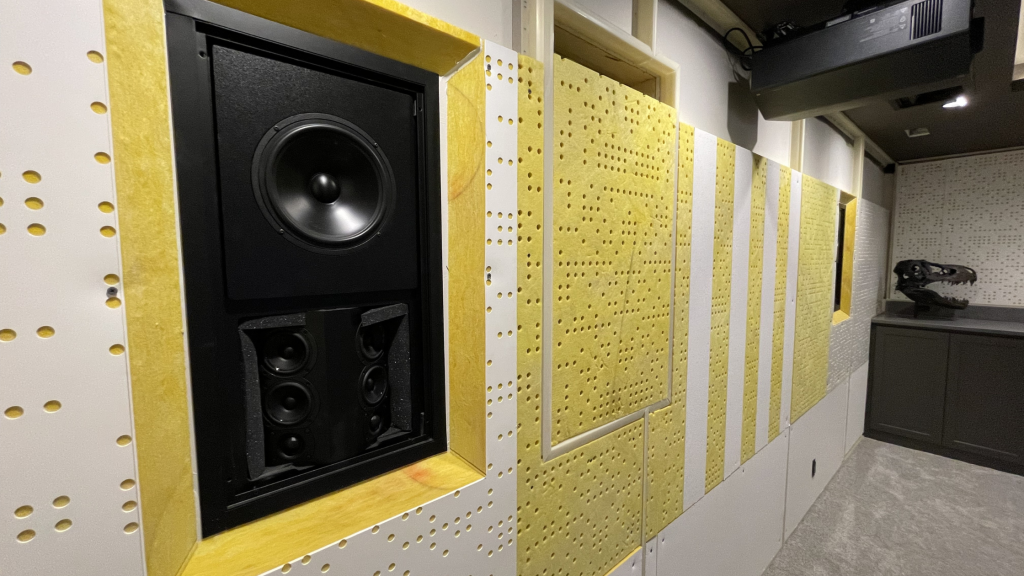
Many of the foundational acoustic principles continue to hold true. For instance, the use of absorptive materials such as fiberglass remains an effective method for controlling sound reflections. However, what has evolved significantly is our understanding of how sound behaves within smaller residential spaces.
Unlike large venues, where acoustic performance tends to be relatively consistent across multiple listening positions, sound in a small room is far more localized. There are specific “sweet spots” where audio quality is optimal, which means acoustic treatments must be carefully and strategically placed rather than applied uniformly.
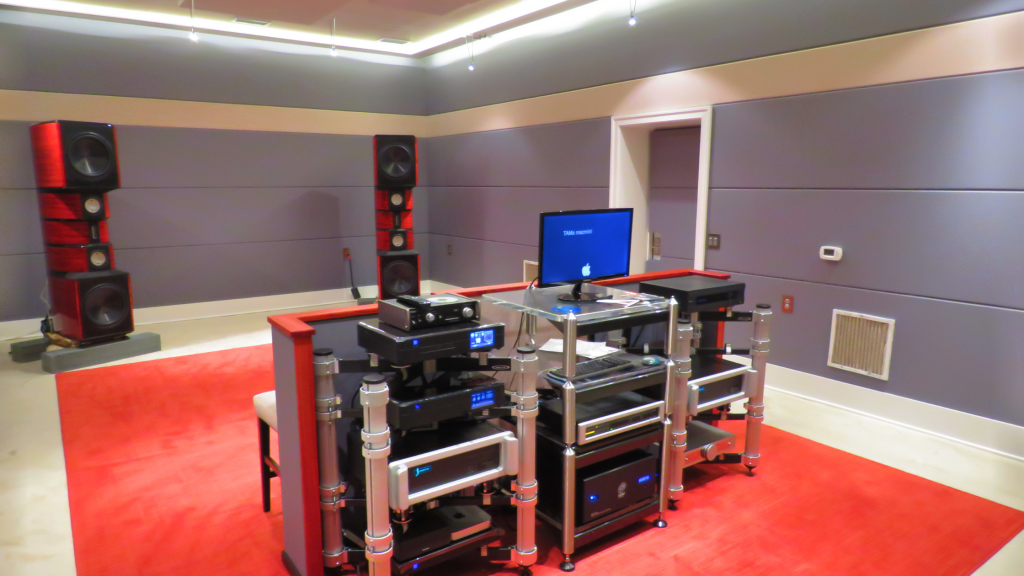
Another important consideration is avoiding over-treatment. In compact spaces, excessive absorption can drastically reduce reverberation time, making the room acoustically “dead.” This can negatively impact the listening experience, highlighting the need for a balanced approach to acoustic design.
The Home Acoustics Alliance (HAA) emphasizes education and hands-on learning in room design and calibration. In your view, what’s the biggest misconception integrators or enthusiasts have about acoustics and system performance?
The Home Acoustics Alliance (HAA) is approaching its 25-year milestone, marking a significant journey in advancing professional education in residential audio and acoustic design. The organization was originally established to address a major gap in the CEDIA ecosystem, where, at the time, there was no comprehensive, hands-on training focused specifically on home acoustics.
Early foundational training was pioneered by THX, which introduced some of the first structured programs relevant to residential audio performance. HAA was subsequently created to build on that foundation, offering more advanced instruction that combines deeper acoustical theory with practical, real-world application.
In fact, over the years, we partnered with THX, and now HAA provides THX training for them.
Can you elaborate a bit on the training part of it? What kind of modules does HAA provide?
The training framework has evolved steadily over the years, shaped by continuous feedback from students and industry needs. Each query or suggestion has helped refine the curriculum, ensuring it remains practical, relevant, and aligned with real-world applications.
One of the most significant developments in recent years has been the introduction of an online foundation level. This first stage provides comprehensive theoretical knowledge and allows participants to learn at their own pace. The digital format also enables the inclusion of more detailed content than was previously possible within the constraints of a single-day in-person session.
The second level combines classroom instruction with hands-on workshops. It builds on the fundamentals covered online while focusing on practical skills such as using advanced measurement tools, sound analyzers, and system calibration techniques.
The final level is highly immersive and collaborative. Conducted in small groups, participants work as a team to design, configure, and calibrate a complete audio system in a real listening environment. With guidance provided throughout the process, this stage allows students to experience firsthand how precise acoustic design and calibration can dramatically enhance system performance.
As an expert in this segment, what do you think are some of the misconceptions among system integrators or audio enthusiasts?
One of the most common misconceptions about home theatre audio is that system design is relatively straightforward. At a basic level, it may seem simple, like placing front speakers at the front and surround speakers along the sides, etc. However, achieving high-quality sound involves a far more nuanced process. It requires precise balancing of speaker placement, calibration, and tuning to ensure cohesive performance across the listening environment.
A major step toward addressing this knowledge gap came through CEDIA’s recommended practices initiative, particularly the introduction of the RP22 audio guideline. This document helped many integrators recognize that effective audio design extends well beyond basic speaker placement and demands a deeper level of technical expertise.
This growing awareness has also strengthened professional training in this field. While CEDIA establishes important industry standards, organizations such as the Home Acoustics Alliance build on that foundation by offering specialized, hands-on education focused on advanced acoustical principles and system optimization skills.
As smart home technology and immersive formats like Dolby Atmos and advanced multiple channels become a standard, how do you see the role of acoustic design and calibration changing in connected homes?
One of the most interesting aspects of the evolution of sound systems, from early two-channel stereo to Dolby Surround, 5.1, DTS, and immersive formats like Auro-3D, is that the core acoustic principles have remained largely unchanged. While today’s technologies are far more advanced, the fundamental concepts still trace back to the earliest days of stereo sound.
In many ways, an immersive audio system can be understood as multiple two-channel systems working together around the listener. This means that optimising stereo imaging remains a critical objective, even in modern multi-speaker environments. Achieving this balance is further complicated by how sound behaves in a room, particularly at low frequencies, where listener position can create areas of both excessive loudness and significant drop-offs due to standing waves.
As a result, system design follows a structured, step-by-step process that addresses each acoustic challenge in sequence. Speaker placement is closely tied to the reference seating position, and adjustments often need to be iterative. If optimising one element, such as subwoofer positioning, impacts the performance of front speakers, the entire configuration may need to be reassessed. This interconnected evolving process is often described as an “acoustical framework,” reflecting the careful balance required to achieve optimal performance.
You have been credited with designing some of the world’s best demo rooms. Beyond great equipment, what truly makes a home cinema immersive?
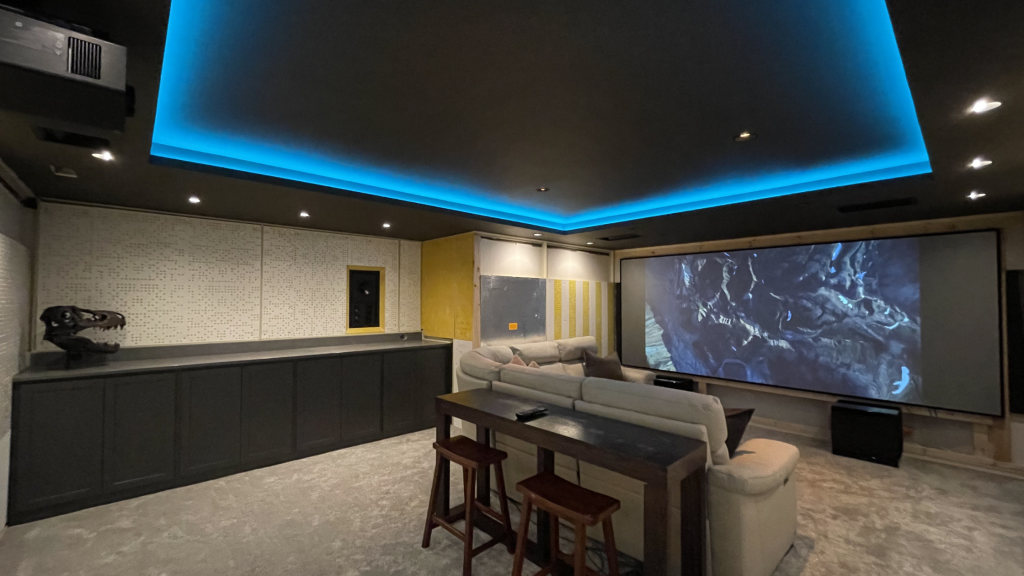
In my experience, one of the most important and often overlooked aspects of creating a truly immersive home cinema is client collaboration. Many end-users come in with strong preconceived ideas, often driven by elaborate themes or highly stylized design concepts. While those creative ambitions are understandable, I’ve found that achieving genuine immersion requires carefully balancing aesthetic goals with acoustic performance and technical realities.
Over the years, I’ve also seen how fundamental spatial factors can make or break a room. Details such as where doors and windows are located, along with the overall proportions of the space, have a significant impact on sound behavior and system layout. Generally, I’ve found that larger rooms offer a clear advantage, as smaller spaces present more acoustic challenges and restrict flexibility in speaker placement.
When a room has adequate size, it becomes much easier to position both seating and the full constellation of speakers effectively. This flexibility allows for precise calibration and better sound balance, which, in my experience, is what ultimately creates the cohesive, enveloping experience that defines a truly immersive home cinema.
Can you tell us about some of the projects you’ve designed? Maybe something unique you have created for that space?
I would be cautious about using the word “unique” when it comes to sound design. One of the core principles of our training is that the goal is not to create a distinctive sound signature, but rather to faithfully emulate the post-production and dubbing stages where films are actually mixed. If you want to experience a film as intended, the ideal approach is to replicate the acoustic standards of professional recording and mixing environments. That’s why the best-performing theatres tend to share very similar layouts and acoustic characteristics — consistency, not uniqueness, is what ensures accuracy.
Where uniqueness does come into play is in problem-solving. Over the years, I’ve worked on rooms with highly unconventional shapes — octagonal layouts, multiple angled walls, or other architectural constraints. In such cases, the challenge is to restore as much symmetry and balance as possible, bringing the space closer to the ideal acoustic template. Recreating the artist’s intent in a non-standard room can be demanding, but with thoughtful design and sufficient client flexibility, it is certainly achievable.
For homeowners in emerging markets who want high-end sound without professional installation, what practical acoustic upgrades or design decisions deliver the most noticeable improvements?
Check Home Acoustics Alliance and take our Level 1 class. You don’t have to be a pro to take it, and it lays out the basics.
One of the most impactful improvements involves seating position. In many homes, sofas are placed directly against the back wall, which often results in boomy, muddy bass and surround speakers being uncomfortably close to listeners. Moving the seating position more toward the center of the room — allowing greater distance from walls and speakers — can dramatically improve clarity, balance, and overall immersion.
Another key principle is to prioritize the primary listening area. In multipurpose spaces (pool Table or a bar), homeowners often try to optimize the entire room equally. A more effective approach is to identify the main viewing seats and focus speaker placement, calibration, and acoustic adjustments around that specific zone.
Finally, it’s important not to over-treat the room. A common mistake is installing excessive acoustic panels, which can overly reduce reverberation and make the space sound dull or lifeless. The goal should be balance, controlling problematic reflections while preserving enough natural ambience to maintain an enveloping listening experience.
In essence, thoughtful seat placement, proper speaker distance, and balanced acoustic treatment can deliver the most noticeable improvements without requiring complex installations.