

Neelima Ronanki speaks about Gensler’s mission to push the boundaries of design and technology in India. From smart automation to digital-first workflows, she highlights how the firm’s innovative processes and global design ecosystem are powering some of the country’s most ambitious workplace and commercial projects.
Gensler is an internationally acclaimed firm renowned for shaping the future of workplace and commercial design. Could you tell us about some of the prestigious projects your teams are currently working on in India and the scope of design and smart technology integration?
At Gensler, digital tools and methods are fully integrated into our design practices. We are constantly pushing boundaries on technology in both process and project design. We believe that buildings and spaces should be designed such that they behave as multisensory ecosystems with a digital-first mindset. Our in-house NFORM ecosystem, which includes tools such as gBlox™, gFloorz™ help us in every step of the project, right from pre-design and strategy to construction and post-occupancy.
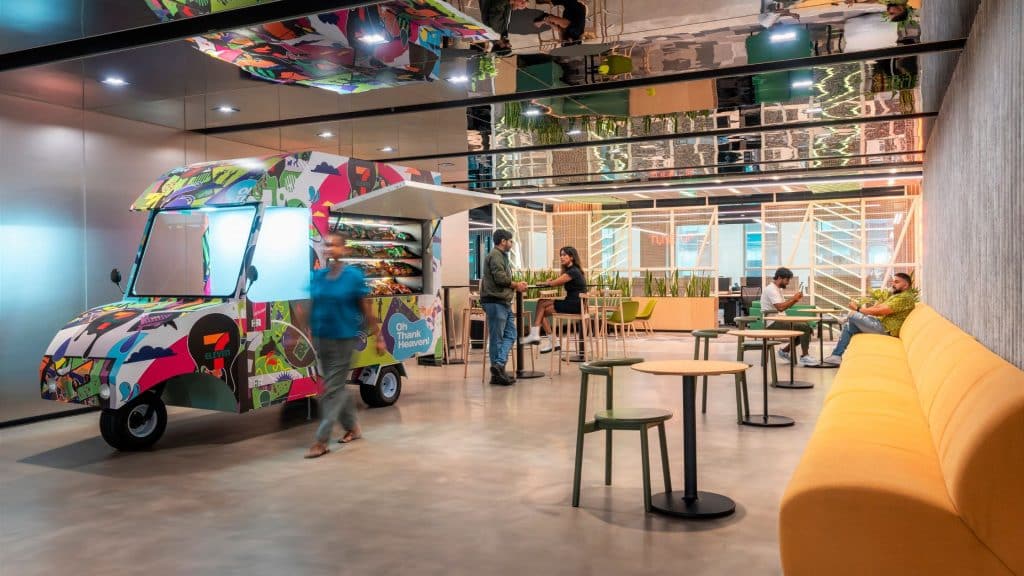
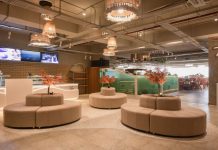
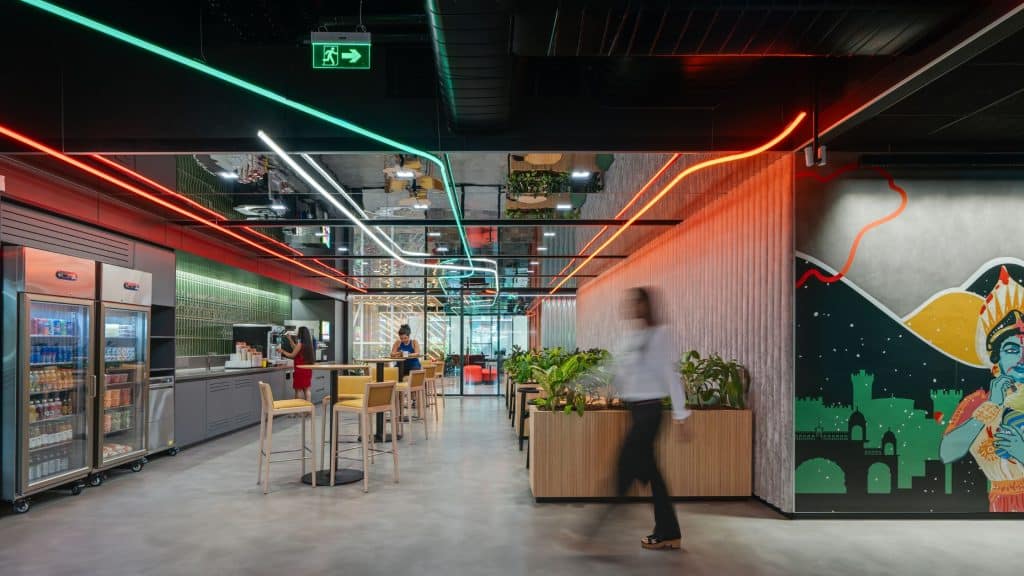
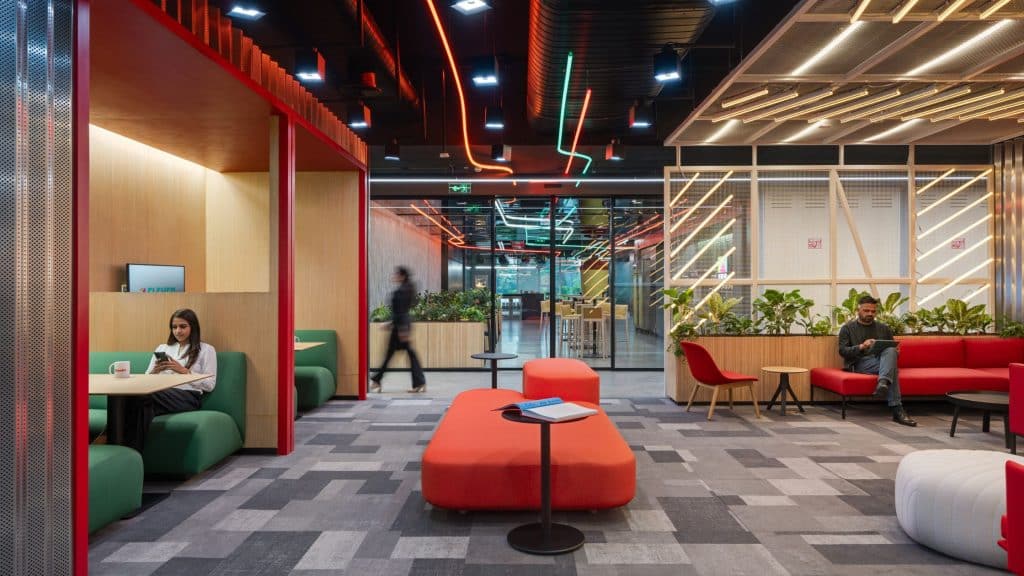
One such visually striking project example would be 7-Eleven’s Global Solution Centre, Bangalore. With an avant-garde workspace design, the office reinforces the brand recall through innovative digital elements and brand typology.
How would you describe your creative journey in India so far — and how have local culture, technology adoption, and sustainability goals influenced your design philosophy?
I believe that good design speaks through the impact it creates on the community. We at Gensler are driven by our commitment to our people and the communities we serve. With our Global expertise and research insights, we are able to pair our design directors in India with global specialists to deliver projects that are globally cutting-edge, yet locally contextualised. Another crucial aspect is our expertise in green building rating systems. We have been able to achieve 1560+ LEED certified projects globally, with over 1.09 million square feet of sustainable work.
Gensler specialises in large-scale commercial environments. Could you share examples of projects where smart technology or digital systems have significantly enhanced user experience and building performance?
A recent pitch we developed for a developer in Bengaluru for a high-value site. This gave us an opportunity to create a space that feels connected to the city’s social fabric. The client’s vision was to develop a sustainable mixed-use project with office and retail components. They wanted a firm that could demonstrate strength not only in design innovation but also in technological and AI integration.
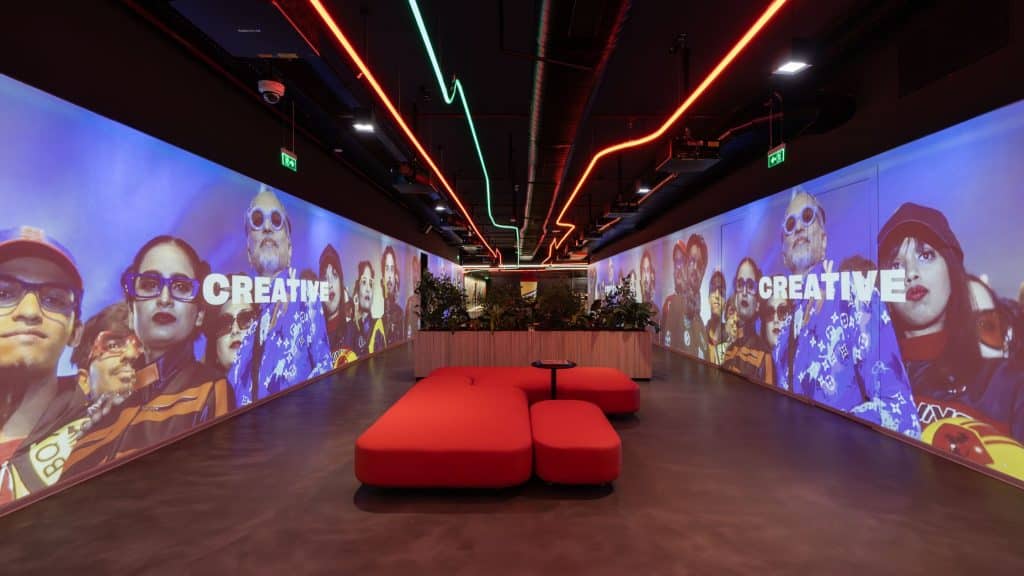
The big idea we worked with was to create a porous, active ground plane—a welcoming space that draws people in, encourages them to stay, and creates opportunities to engage, socialize, and spend. A mix of dynamic retail, F&B, and activated public spaces ensures that the project functions not just as a workplace, but as a 24/7 active destination in its own right,t considering the context the project is sitting in. This vision strongly resonated with the client’s aspirations for the project, and that’s how we were awarded the project despite strong competition from other architects.
We used a hybrid workflow to meet the deadlines, such as human creativity to guide the concept, data-informed optioneering to test the feasibility using gBlox and generative AI to visualize quickly. The value wasn’t in one approach— it was in how all three worked together.
At what stage of a project does your team typically begin considering the integration of Building Automation Systems (BAS)?
In most of our projects, Building Automation Systems (BAS) are typically considered during the early design and planning stage. This is a crucial time because it allows for seamless integration with architectural layouts, electrical and mechanical systems, and IT infrastructure. It also ensures energy efficiency, occupant comfort, and system interoperability due to early-stage involvement.
For some developers involved in high-performance or green certified buildings, we initiate BAS during concept development or feasibility studies. This helps us optimize system selection, sensor placements, and software compatibility. Additionally, this leads to smoother commissioning and long-term efficiency.
Which categories of automation — such as HVAC optimization, occupancy-based lighting, shading systems, or access control — are most commonly prioritized in your Indian projects?
In our Indian projects, automation priorities are shaped by a mix of parameters, namely, energy efficiency goals, occupancy comfort, and security needs. The most implemented would-be HVAC optimization. The developers deploy variable frequency drives, thermostats and predictive maintenance tools to manage these systems. Another crucial system would be Occupancy-based Lighting, especially in residential and commercial setups. To add to the security screening, access controls such as biometric or RFID-based systems, integrated CCTVs and other security systems are also adopted. In some of our luxury premium projects, automated shading systems have seemed to be gaining traction. And finally, Building Management Systems to unify control over all the above systems with centralized monitoring and data-driven decision-making.
How do you balance aesthetics, functionality, and technology when designing spaces that are both visually inspiring and digitally intelligent?
We believe in transforming human experience with technology. Our work connects physical and digital design, creating unique experiences at the intersection of architecture, design, and technology. Through integrated project teams, we bring together a global network of passionate design leaders from the fields of research, strategy, architecture, user experience, brand, content, creative technology, hardware, software, and data science.
How do you ensure that technology integration remains user-friendly and human-centric, enhancing comfort rather than complicating it?
To ensure that, we follow a process with all our projects:
- Make it flexible and easy: Limitless designs and use cases are possible with hyper-modularity and flexibility. The ability to easily transform future proofs the utility of space.
- Show, don’t tell: Words explain a concept. Experiences and compelling visuals bring concepts to life. The most memorable moments are ones leveraging tactile, real-time interactions.
- Make it ownable: Enable the experience to be ownable by anyone but also branded for the owner. Personalized experiences increase engagement and deepen connections.
- Connect the experience: Provide a welcoming experience that connects to a broader ecosystem of tools and services, to enable convenience, hybrid collaboration, and hospitality-focused experiences.
In your opinion, what role will policy, regulation, and client awareness play in driving the adoption of smart building technologies in India?
The real impact comes when these elements work together:
- Policies create the environment.
- Regulations enforce standards.
- Awareness fuels demand.
India’s smart building future depends on this triad working in harmony to overcome cost barriers, technical gaps, and inertia in the construction sector.