


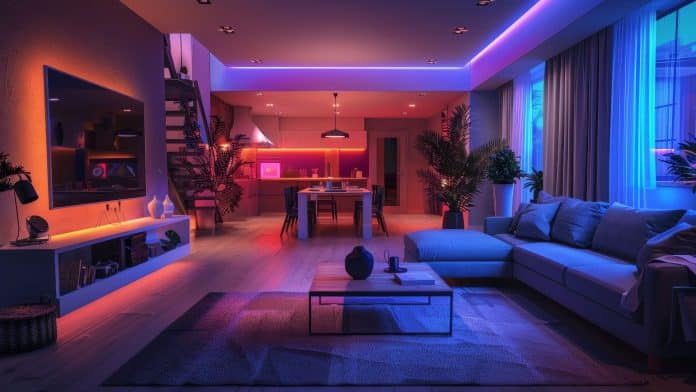
To understand how AI is shaping India’s residential automation market, Smart Home World invited leading system integrators and professionals to share their perspectives. Drawing on their experience of delivering automation across a diverse range of residential projects, they offer valuable insights into what’s working today, what’s still evolving, and whether AI-powered homes are truly living up to the promise.
As Artificial Intelligence finds its way into our homes, is it delivering genuine intelligence or simply becoming the latest buzzword?
Walk through any consumer electronics store, browse the latest home automation launches, or attend a smart home exhibition, and one trend is impossible to ignore: everything is suddenly “AI-powered.”
Televisions promise AI-enhanced picture quality. Air conditioners claim to intelligently adapt to your lifestyle. Security cameras boast AI-driven threat detection, while lighting systems, appliances, speakers and even robotic vacuum cleaners are marketed as being powered by Artificial Intelligence. In today’s connected home, AI has become the industry’s favourite badge of innovation.
But beyond the marketing hype, an important question remains: Are our homes actually becoming more intelligent, or are we simply redefining automation with a new label?
For homeowners, architects, interior designers and system integrators, the distinction matters. Investing in a smart home has always been about making everyday living simpler, more comfortable and more efficient. If Artificial Intelligence is to become the next chapter in connected living, it must do far more than execute voice commands or follow pre-programmed routines; it must understand the people who live in the home.
Growth Drivers and Opportunities
India is no doubt a potential market for most international brands in this segment, because the country’s smart home market has matured rapidly over the last few years, moving beyond ultra-luxury residences into premium apartments, villas and increasingly, aspirational urban homes. As adoption grows, expectations are also changing. Homeowners no longer want a collection of connected gadgets; they want technology that works together seamlessly, anticipates their needs and quietly disappears into the background.
That is precisely where AI enters the conversation.
Unlike traditional automation, which relies on fixed rules and predefined schedules, Artificial Intelligence promises homes that can learn routines, recognise patterns, optimise energy consumption, strengthen security and personalise everyday experiences. It’s an exciting vision, but one that also raises equally important questions. How much of this intelligence is already available in today’s homes? Which applications genuinely benefit from AI, and which are little more than clever marketing? More importantly, is the Indian smart home ecosystem ready for this shift?
The reality, as is often the case with emerging technologies, lies somewhere between the hype and the promise.
Artificial Intelligence is undoubtedly changing residential technology, but not every product carrying the AI label is equally intelligent. While some solutions are genuinely transforming the way homes manage energy, security, wellness and entertainment, others merely automate existing functions under a new name. Separating meaningful innovation from marketing noise has therefore become essential not only for homeowners making purchasing decisions but also for architects, designers and system integrators shaping the homes of tomorrow.
So, are AI-powered homes the future of residential living, or are we still in the early stages of a technology searching for its true purpose? The answer lies in understanding what AI can genuinely deliver and where expectations may still be running ahead of reality.
To separate industry buzz from real-world impact, we invited leading system integrators and professionals to share their experiences of deploying AI-driven technologies in residential projects and their views on where the market is headed.
Ar. Vivek Bhole, CMD and Principal Architect, Vivek Bhole Architects

How do you see AI influencing the way interior spaces are designed and experienced?
At Vivek Bhole Architects, we have always held that architecture begins and ends with the human being who inhabits it. AI has entered our studios not to displace that conviction but to strengthen it. On the design side, generative and analytical tools now let us test dozens of spatial configurations, daylight scenarios, and material palettes in the time it once took to develop a single option. We can study how the morning light will fall across a living room in December, how air will move through a naturally ventilated apartment, and how a family will circulate through a home at different hours … all before a single wall is built. The more profound shift, however, is experiential. For most of architectural history, a space was fixed the moment it was completed. AI is dissolving that permanence. Interiors are becoming responsive: able to read context, anticipate need, and adjust quietly. A room can now recognise that it is evening, that the household is winding down, and modulate light, temperature, and acoustics accordingly. The space is no longer a static container; it becomes a subtle, attentive partner in daily life. The discipline for us as designers is to keep this intelligence in service of the human experience rather than allowing it to become a spectacle in its own right. The goal is not a home that shows off how clever it is, but one that simply feels right, say, like warmer, calmer, more considerate, often without the resident being able to name exactly why.
In what ways can AI and smart technologies make homes feel more intuitive, personalised, and human-centric without compromising comfort or aesthetics?
The philosophy that guides our practice, “Humanising the High-Rise”, is ultimately about ensuring that as our buildings grow taller and denser, the individual is never diminished within them. Used with restraint, AI is one of the most promising instruments we have for that purpose. The keyword is intuitive. Technology becomes human-centric precisely when it stops demanding attention. The best smart home is not the one with the most screens and dashboards; it is the one where the technology is invisible and the comfort is obvious. A home that learns you wake at six, warms the bathroom floor before you step onto it, raises the blinds gently rather than jarringly, and cues your preferred music at a considerate volume feels less like a machine and more like a thoughtful host. On personalisation, AI’s real gift is memory and anticipation. The members of a family experience the same home very differently, say an elderly parent, a young child, and a working professional. AI allows a single space to hold multiple simultaneous settings for comfort, light, and sound, adapting to whoever is present without anyone having to configure anything. None of this, however, should come at the cost of aesthetics. We are firm that technology must be integrated, not imposed. Sensors, speakers, and controls should be concealed within the architecture – recessed, flush, and tuned to the material palette, so that the beauty of a space is never sacrificed to its intelligence. When it is done well, residents feel the intelligence but never see the wiring.
Do you believe AI will reshape the selection and integration of lighting, furniture, and other connected elements within residential interiors?
Yes, and this is one of the more immediate and tangible ways AI is entering the home. Lighting is the clearest example. Human-centric, or circadian lighting- light that shifts in colour temperature and intensity across the day to support our natural rhythms- is genuinely enhanced by AI, because the system can learn a household’s patterns and calibrate itself rather than follow a rigid schedule. Lighting is moving from something we switch to something that anticipates. Furniture and fittings are following. We are beginning to see connected, adaptive elements, beds that respond to sleep data, seating that adjusts, kitchens and storage that assist rather than merely contain. On the specification side, AI is also changing how we select and coordinate these elements: we can evaluate interoperability, energy performance, and long-term compatibility across an entire ecosystem before committing to it, which matters enormously when a client is investing in a home meant to last decades. That said, I offer a note of professional caution, and I make it to our own teams as much as to clients. Connectivity for its own sake is a trap. A home does not become intelligent by accumulating gadgets; it becomes intelligent when every connected element earns its place by making life measurably better. Our role is increasingly that of a curator – editing out the novelty, integrating only what genuinely serves the resident, and ensuring these disparate systems speak to one another as a coherent whole rather than a collection of competing apps.
As homes become increasingly AI-enabled, what concerns do your clients express around privacy, data security, and trust, and how do you address them?
These concerns are real, they are rising, and I believe they are entirely legitimate. A truly intelligent home, by its nature, observes – it knows when you are home, how you live, and when you sleep. Clients are right to ask where that information goes and who can see it. Our most discerning clients now raise these questions in the very first meeting, and I welcome that. Our approach rests on a few principles.
The first is data minimisation and local processing. Wherever possible, we favour systems that process information on-site, say at the edge, or within the home, rather than continuously streaming a family’s life to distant servers. A home that keeps its own data is inherently more trustworthy.
The second is transparency and control. Residents should be able to understand, in plain language, what their home senses, and to switch it off. Intelligence must always be optional, never imposed. The ability to make a room simply a private room again, like no listening, no sensing, is to me, non-negotiable.
The third is security-by-design and the careful choice of partners. We integrate systems from established, accountable manufacturers with strong security and update commitments rather than the cheapest connected device in the market, and we insist on properly segregated home networks so that a vulnerability in one device cannot compromise the entire home. Ultimately, trust is not a feature you can install; it is earned through design decisions. Our task is to give clients not merely an intelligent home, but a home they feel completely in command of.
Looking ahead, what excites you most about the role of AI in creating the next generation of smart homes, and where do you believe it can deliver the greatest value?
What excites me most is the shift from convenience to wellbeing. The first wave of smart homes was largely about convenience: voice-controlled lights, remote switches. The next generation, powered by AI, has the potential to actively support how well we live: our health, our sleep, our sense of calm, and our connection with family. That is a far more meaningful ambition, and it aligns completely with the human-centric philosophy at the heart of our practice. I see the greatest value emerging in three areas. The first is wellness and healthy living: homes that quietly manage air quality, light, acoustics, and temperature to support physical and mental health, which is especially precious in a dense city like Mumbai. The second is sustainability. AI’s ability to optimise energy and water use, and to run a home efficiently without the resident having to think about it, is one of the most important contributions technologies can make to responsible living; and it sits at the core of how we approach large-scale residential development. The third, and perhaps the one closest to my heart, is inclusion and dignity – homes that allow the elderly to age in place with independence and safety, and that adapt to residents of differing abilities. When AI helps a person live with greater autonomy and grace in their own home, technology is doing its most humane work. To return to where I began: we believe the tower must never dehumanise the person within it. Used wisely, AI is among the most powerful tools we have ever had to make even the densest vertical home feel personal, caring, and profoundly human. That, to me, is not hype. It is the real and exciting promise ahead.
Ranju Singhi, Founder & Principal Architect, BASICS Architects

Will Artificial Intelligence fundamentally change the way homes are designed? Why or why not?
AI will certainly transform the design process, but not the essence of good architecture. Homes are ultimately about people, emotions, culture, and context qualities that require human empathy and intuition. At Basics, we see AI as an intelligent design partner that enhances research, simulations, and decision-making, allowing architects to spend more time creating meaningful spaces rather than replacing creativity itself.
What new opportunities does AI create for architects in terms of planning, sustainability, wellness, and user experience?
AI enables architects to evaluate multiple design possibilities in minutes, optimise daylight, ventilation, energy efficiency, and material selection with greater precision. It can also personalise homes by analysing occupants’ lifestyles and predicting future needs. This allows us to create residences that are healthier, more sustainable, and better aligned with the way families actually live.
How should residential projects be designed today to accommodate future AI-driven technologies?
Future-ready homes should prioritise flexibility. The architectural framework should allow for evolving technologies through adaptable infrastructure, integrated sensor networks, scalable automation, and spaces that can change function over time. While technology will continue to evolve rapidly, well-designed architecture must remain timeless and capable of embracing these advancements without major interventions.
Are homeowners actively discussing AI capabilities during the design stage, or is the focus still on traditional smart home solutions?
Currently, most homeowners are still focused on smart home features such as lighting, security, climate control, and entertainment systems. AI as a design discussion is emerging, particularly among younger, tech-savvy clients, but conversations are gradually shifting from automation to intelligent, predictive living environments that learn from user behaviour and improve everyday experiences.
What are the biggest concerns or challenges you foresee with AI becoming more integrated into residential environments?
The greatest challenge is ensuring that homes remain human-centric rather than technology-centric. Privacy, cybersecurity, data ownership, and over-dependence on automation are important concerns. There is also the risk of technology becoming obsolete faster than buildings themselves. As architects, our responsibility is to design homes where technology enhances comfort and wellbeing without compromising simplicity, resilience, or the emotional quality of living spaces.
Manish Gulati, Founder and Principal Architect, MOFA Studio

Will Artificial Intelligence fundamentally change the way homes are designed? Why or why not?
I believe that AI will not change the fundamental purpose of architecture. Human beings will continue to shape architecture because homes are ultimately about emotions, relationships, memory, and belonging—experiences that cannot be generated by algorithms.
What AI will change is the way architecture performs. It gives us the ability to understand patterns that were previously invisible, such as how a family occupies a home over time, how energy flows through a building, how spaces respond to climate, or how routines evolve. That intelligence can help us make better decisions, but it should never become the decision-maker.
For us, architecture has always been about creating environments that respond to people and nature. If AI helps a home become more adaptive, more efficient, and more humane, then it is a meaningful addition. But technology should remain invisible. A home should never feel like a machine. It should continue to feel like a home.
What new opportunities does AI create for architects in terms of planning, sustainability, wellness, and user experience?
I think the opportunity is not that AI suddenly gives us new tools. We have always had tools. The real opportunity is that it allows us to listen better to how people actually live.
As architects, we often design based on observation, intuition and experience. AI can add another layer to that by helping us understand patterns more deeply, such as how spaces are occupied, how light changes through the day, how energy is consumed, or how routines shift over time. This can make planning more responsive and less generic.
In sustainability, AI can help a home perform more intelligently. It can support decisions around shading, cooling, ventilation, daylight and energy use. But it should not replace passive design. The most meaningful use of AI is when it strengthens the basic architectural principles that already make a home climate-responsive.
Wellness is also an important area. Homes today are expected to support health, comfort and emotional balance. AI can help regulate light, air quality, temperature and sound in a way that is more aligned with the body and daily rhythm of the occupants.
For user experience, the biggest shift is subtlety. The best homes will not feel obviously smart. They will simply feel more intuitive. If AI can help a home understand its occupants without making the technology visible or intrusive, then it becomes a valuable layer within architecture.
How should residential projects be designed today to accommodate future AI-driven technologies?
The biggest mistake would be to design around today’s technology because technology has the shortest lifespan in a building. Architecture, on the other hand, is expected to endure for decades.
Our responsibility is to design homes that are adaptable rather than technology-specific. That means creating flexible infrastructure, accessible service routes, robust digital connectivity and spaces that can evolve without requiring the architecture itself to be rebuilt.

Equally important is preserving the human experience. Natural ventilation should still work without sensors. Daylight should still define the rhythm of the home. Windows should still open. Manual control should always coexist with automation.
Homes ready for the future are not the ones with the most devices; they are the ones that can gracefully accommodate change while remaining timeless in their architecture.
Are homeowners actively discussing AI capabilities during the design stage, or is the focus still on traditional smart home solutions?
At this stage, most homeowners are still discussing automation more than AI. The common conversations are around lighting, curtains, air conditioning, security, entertainment systems and the ability to control the home through a phone or voice command.
But there is a clear shift beginning to happen. Clients are becoming more aware of AI, even if they may not always define it in those terms. What they are really asking for is a home that is more intuitive, healthier, more efficient and easier to live in.
Wellness is becoming a very important part of this conversation. Earlier, wellness in a home was understood through light, air, openness, gardens and material choices. AI can now add another layer to that. It can help regulate indoor air quality, daylight, temperature, humidity and ventilation based on how the home is being used throughout the day. It can also support circadian lighting, reduce glare, improve thermal comfort and make the indoor environment more aligned with the body’s natural rhythm.
In larger homes, we are also seeing interest in kitchen gardens, terrace farming and organic food systems. AI can contribute here by helping monitor soil moisture, irrigation, sunlight exposure and plant health. So wellness is no longer limited to comfort inside the house. It can extend to what people grow, eat and experience every day.
So the conversation is gradually moving from control to response. Earlier, the question was, “Can I control this?” Now, it is slowly becoming, “Can the home understand my pattern, support my health and respond accordingly?”
For us, the important thing is not to treat AI as an added gadget. If the infrastructure of the home is planned well from the beginning, AI can be integrated later without disturbing the architecture. The design must remain flexible enough to accept future layers of intelligence as they evolve.
What are the biggest concerns or challenges you foresee with AI becoming more integrated into residential environments?
The greatest concern is not technology itself. It is allowing technology to become more important than the people it is meant to serve.
Privacy is naturally a major consideration because a home is the most personal environment we inhabit. As AI becomes more embedded into everyday life, we will need greater transparency around how data is collected, stored and used.
The second challenge is longevity. Buildings often last fifty or even a hundred years, while technology changes every few years. We need systems that are open, upgradeable and interoperable so that homes don’t become obsolete because a particular platform disappears.
Finally, there is the question of restraint. Not every problem requires an AI solution. Good architecture has always relied on climate, orientation, materiality and passive design to create comfort. AI should strengthen those principles, not replace them.
The most successful homes powered by AI will not be the ones with the most technology. They will be the ones where technology quietly disappears into the background and allows people to live better.
Pragya Sanghavi, Director, Pentaspace Design Studio

Will Artificial Intelligence fundamentally change the way homes are designed? Why or why not?
Artificial Intelligence will undoubtedly transform the way homes are designed, but it will not replace the role of the architect. AI has the potential to optimise layouts, generate multiple design possibilities quickly, and streamline decision-making processes. However, architecture goes beyond efficiency and data, it is deeply rooted in culture, context, and the emotions of the people who inhabit a space. AI should be viewed as a tool that enhances creativity and expands possibilities, while empathy, intuition, and human connection will continue to shape meaningful residential design.
What new opportunities does AI create for architects in terms of planning, sustainability, wellness, and user experience?
AI opens up exciting possibilities across every stage of residential design. In planning, it enables faster space optimisation, scenario testing, and informed design decisions. From a sustainability perspective, AI can analyse daylight, energy consumption, material choices, and building performance to create more efficient homes. It also supports wellness-driven design by helping architects improve ventilation, thermal comfort, and access to natural light. Most importantly, AI allows for a more personalised user experience, enabling homes to adapt to individual lifestyles, behaviours, and the evolving needs of families over time.
How should residential projects be designed today to accommodate future AI-driven technologies?
Future-ready homes must be designed with flexibility and adaptability at their core. Spaces should be able to evolve alongside technological advancements and respond to the changing life stages of their occupants. Sustainability must remain a priority, with thoughtful consideration given to energy efficiency, water management, and resource optimisation. Above all, the human experience should remain central to the design process. Technology should enhance comfort and convenience without compromising the emotional, social, and experiential qualities that make a house feel like home.
Are homeowners actively discussing AI capabilities during the design stage, or is the focus still on traditional smart home solutions?
At present, most homeowners continue to prioritise familiar smart home features such as lighting control, security systems, and automation. However, there is growing curiosity around AI-driven solutions, particularly in areas such as energy management, predictive automation, and personalised living experiences. While AI is still emerging in residential conversations, interest is steadily increasing as homeowners become more aware of its long-term benefits.
What are the biggest concerns or challenges you foresee with AI becoming more integrated into residential environments?
As AI becomes more deeply embedded in our homes, privacy and data security will be among the most significant concerns. There is also the risk of becoming overly dependent on technology, making it essential to ensure that systems remain reliable and functional, particularly during emergencies. The real challenge lies in striking the right balance—leveraging AI to enhance everyday living while ensuring that homes remain human-centric, intuitive, and deeply connected to their context and occupants.
Revathi Rao Gurram, Founder & Design Principal, Stories Design Studio

How do you see AI influencing the way interior spaces are designed and experienced?
AI is gradually becoming a valuable tool in the design process, but I don’t believe it replaces the human understanding that lies at the heart of good design. At Stories Design Studio, every project begins by understanding the people who will live in the space, their routines, aspirations, and lifestyle. AI can help analyse preferences, improve planning efficiency, and simulate different design possibilities, allowing us to make more informed decisions. However, the emotional connection a person has with their home cannot be generated by technology alone. Design is still about creating spaces that feel authentic and personal. I see AI as a powerful assistant that enhances the design journey, but creativity, empathy, and human insight will continue to shape the final outcome.
In what ways can AI and smart technologies make homes feel more intuitive, personalised, and human-centric without compromising comfort or aesthetics?
The best smart homes are the ones where technology almost disappears into the background. AI should simplify everyday living rather than constantly demand attention. Intelligent lighting that adapts throughout the day, climate systems that respond to occupancy, or automated shading that improves comfort without manual intervention all contribute to a more intuitive living experience. From a design perspective, technology should integrate seamlessly with the architecture and interiors instead of becoming a visual distraction. When thoughtfully planned, AI allows homes to respond naturally to the people living in them while preserving the warmth, elegance, and personality of the space. Ultimately, a successful smart home should still feel like a home first and a technology platform second.

Do you believe AI will reshape the selection and integration of lighting, furniture, and other connected elements within residential interiors? Please share your perspective.
Yes, but I believe the change will be evolutionary rather than dramatic. AI is encouraging greater integration between design and technology, particularly in areas like adaptive lighting, energy management, and connected home systems. We may see furniture and lighting becoming more responsive to user preferences, daily routines, and occupancy patterns. However, selection should never be driven by technology alone. Every element must continue to support the overall design language of the home. Beautiful interiors are built through thoughtful proportions, quality materials, craftsmanship, and functionality. AI can certainly enhance how these elements perform, but it should complement the design rather than define it. The goal is to create spaces that remain timeless while quietly benefiting from intelligent technology.
As homes become increasingly AI-enabled, what concerns do your clients express around privacy, data security, and trust? How do you address them?
Privacy is becoming an increasingly important consideration, particularly as more connected devices enter our homes. Clients appreciate the convenience of automation but are equally conscious of how their personal information is collected and managed. Our role is to help them make informed decisions by recommending trusted technology partners and solutions that offer transparency, robust security features, and user control. We also encourage clients to adopt only those technologies that genuinely improve their lifestyle rather than adding unnecessary complexity. Technology should empower homeowners, not overwhelm them. Building trust starts with honest conversations about functionality, long-term usability, and privacy from the earliest stages of the project.
Looking ahead, what excites you most about the role of AI in creating the next generation of smart homes, and where do you believe it can deliver the greatest value?
What excites me most is AI’s potential to make homes more responsive to the people who live in them. Rather than simply automating individual tasks, future systems will have the ability to understand routines, anticipate needs, and improve comfort in subtle ways. This could mean better energy efficiency, healthier indoor environments, adaptive lighting, or spaces that evolve alongside changing family lifestyles. At the same time, I believe the greatest value of AI lies in allowing technology to become less visible. The future of smart homes is not about filling spaces with gadgets but about creating environments that feel effortless, intuitive, and deeply human. When technology supports everyday living without compromising design or emotional connection, it becomes a meaningful part of the home rather than its defining feature.
Sandeep Sahani, Principal Designer, Qbana Designs Pvt.

Can AI personalise interior environments?
Absolutely. AI has the potential to transform interiors into adaptive environments that respond to the unique lifestyle, habits, and preferences of every homeowner. From automatically adjusting lighting, temperature, and acoustics based on occupancy to learning daily routines and optimizing energy usage, AI enables spaces to become more intuitive. AI also enables homeowners to remotely control smart lighting, air conditioning, curtains, and digital door locks through Wi-Fi, ensuring convenience, security, and energy efficiency even when away from home. However, personalization should always complement thoughtful design. The architect’s vision, cultural context, and emotional connection remain irreplaceable, while AI enhances comfort and functionality.
How can technology make spaces feel more human?
Technology becomes meaningful when it quietly supports everyday living without becoming visually or functionally intrusive. AI-powered automation can create personalized lighting scenes, regulate indoor climate, improve air quality, and adapt spaces according to mood, time, or activity. Voice-controlled lighting, ceiling fans, and motorized curtains provide effortless interaction, allowing occupants to manage their environment naturally. Occupancy sensors installed in bathrooms, passages, and terrace areas further enhance convenience by automatically operating lighting only when required, improving both comfort and energy efficiency. The objective is not to showcase technology but to create environments that promote well-being, convenience, and emotional comfort while maintaining warmth, natural materials, and timeless aesthetics.
Will AI influence furniture and lighting choices?
Yes, AI is already influencing the selection and performance of furniture and lighting systems. Adaptive lighting that changes color temperature throughout the day supports health and productivity, while smart furniture integrated with charging, posture monitoring, and environmental sensing is becoming increasingly relevant. AI-enabled lighting systems can also be remotely controlled and automated based on occupancy, schedules, or user preferences, ensuring optimal comfort and reduced energy consumption. Rather than replacing good design, AI helps designers specify intelligent products that improve user experience while preserving aesthetics and functionality.
What privacy concerns do clients raise?
Privacy and data security are among the primary concerns clients express when adopting smart home technologies. Homeowners want transparency regarding what data is collected, where it is stored, and who has access to it. This becomes even more important with connected systems such as Wi-Fi-enabled digital door locks, voice assistants, and remote home automation. As designers, we recommend systems with strong encryption, secure local processing wherever possible, and user-controlled privacy settings. Building trust through responsible technology integration is just as important as delivering innovative design.
What excites you most about AI-enabled living?
The most exciting aspect of AI-enabled living is its ability to create homes that are proactive rather than reactive. Intelligent homes can anticipate occupants’ needs, optimize energy efficiency, improve safety, support aging-in-place, and contribute to healthier lifestyles. Features such as remotely controlled digital locks, voice-operated lighting, fans and curtains, smart control of lighting and air conditioning, and occupancy-based automation create homes that are more intuitive, secure, and efficient. As AI continues to evolve, it will empower architects to design spaces that are not only visually appealing but also intelligent, sustainable, and deeply responsive to the people who inhabit them. The future lies in creating homes where technology seamlessly enhances everyday life without overshadowing the human experience.
Nikhil K Jayan, Chief Engineer, Gadgeon Lifestyle Pvt.Ltd

What AI applications are actually being deployed today?
The AI delivering real value in homes today is practical, not futuristic. Natural-language voice control now lets homeowners speak to the house conversationally instead of memorising commands. Intelligent video analytics distinguish family members from strangers and pets from intruders, cutting false alarms dramatically. Adaptive climate and lighting solutions learn occupancy patterns and adjust themselves, replacing rigid schedules with behaviour-based automation. Energy-management engines monitor consumption in real time, shift heavy loads intelligently and deliver measurable savings on utility bills. Predictive maintenance is emerging too — systems that flag a failing air-conditioning unit or water leak before it becomes a crisis. The solution that works is layering this intelligence over a professionally engineered control backbone: the wired infrastructure guarantees reliability, while AI adds context, learning and convenience on top.
How is AI improving home automation experiences?
The biggest shift is from programmed homes to perceptive ones. Earlier, every scene and schedule had to be explicitly configured, and the system only ever did what it was told. AI solves three long-standing pain points. First, it removes the learning curve: a homeowner simply says “make the living room cosy for a movie” and the system interprets intent — no scene names, no menu hunting. Second, it personalises continuously: learning algorithms observe how a family actually lives and refine lighting, shading and climate over weeks, so the home keeps getting better after handover instead of staying frozen at commissioning day. Third, it makes the interface disappear: presence sensing, voice and prediction mean fewer taps on screens and switches. The outcome is technology that stops demanding attention — which is exactly what a well-designed home should feel like.
What challenges exist in implementing AI-driven homes?
Every challenge we face has a workable solution — if it is addressed early. The first is expectation management: clients arrive with a science-fiction picture of AI, so we begin every project by demonstrating live systems and defining what is reliably achievable. The second is fragmentation: AI must orchestrate lighting, HVAC, security, shades and AV from different manufacturers, and the solution is a unified integration platform with certified engineering rather than a patchwork of standalone apps. The third is infrastructure: AI is only as good as its data, so structured cabling, sensor placement and enterprise-grade networking must be planned at the civil-work stage, not retrofitted. The fourth is reliability: a home is not a laboratory, so we design AI to enhance a deterministic control layer — lights must respond every single time, with or without intelligence. Finally, skilled manpower is scarce, which is why continuous engineer training is now as important as the products themselves.

How secure are AI-powered smart homes?
An AI-powered home is as secure as its weakest architectural decision — the technology is not the problem; casual implementation is. The good news is that proven solutions exist. We isolate automation devices on segmented networks with enterprise-grade firewalls, enforce encrypted communication end to end, and prefer architectures that process voice and video locally inside the home, so sensitive data never leaves the premises. Managed update policies keep firmware patched, and role-based access ensures guests, staff and family see only what they should. The real risks sit on the unmanaged side: cheap devices with default passwords, and free cloud services that monetise personal data. Homeowners should ask three questions of any AI product — where is my data processed, who can access it, and how is it updated? Professionally engineered, an AI home can be more secure than a conventional one, because it actively watches for anomalies instead of waiting for them.

What does the AI home of 2030 look like?
By 2030, the home shifts from responsive to genuinely anticipatory. Instead of a dozen apps and commands, a single ambient intelligence will orchestrate lighting, climate, security, wellness and entertainment through sensor fusion — presence, radar, air quality, even sleep data — acting before you ask. Conversational AI will replace conventional programming: homeowners will describe outcomes in plain language, and the system will configure itself, with the integrator curating, validating and securing rather than coding line by line. Energy will be a headline story — homes negotiating with the grid, batteries and solar in real time and running themselves at peak efficiency. Crucially, intelligence will live at the edge, inside the home, keeping personal data private by design. What will not change is the need for solid engineering: reliable networks, quality sensors and a deterministic control layer. The AI home of 2030 will feel less like technology and more like a home that quietly knows you.
Palak Hotha, Manager – Key Accounts, Actis

What AI applications are actually being deployed today?
AI is already being used in high-end homes, but usually in practical rather than futuristic ways. Its value lies in interpreting sensor data, recognising patterns and helping systems make better decisions.
Lighting: Modern systems can adjust brightness and colour temperature based on time of day, sunrise and sunset, occupancy and room use. This can improve comfort and support natural routines. However, AI cannot compensate for poor fixture selection, placement or commissioning.
Shading and climate: Automated shades can respond to the sun’s position, room orientation, indoor temperature and weather conditions. Climate systems can use occupancy, humidity and air quality data to manage cooling and ventilation more efficiently. If a room regularly overheats in the afternoon, the system can begin cooling it earlier rather than waiting for the temperature to rise.
Audio and video: AI-assisted calibration tools can measure how sound behaves in a room and adjust timing, levels and equalisation. This can improve clarity and consistency across different seats.
Security: Camera systems can distinguish between people, animals, vehicles and general movement. This helps reduce false alerts caused by rain, shadows or trees. These applications are useful, but they work best when the underlying design is already sound.
AI improves a good system. It does not rescue a poorly planned one.
How is AI improving home automation experiences?
The biggest benefit is less friction. A well-designed intelligent home should not ask the homeowner to manage more apps, remotes and settings. It should reduce the number of small decisions they need to make.
A cinema scene may close the shades, lower the lights, adjust the room temperature and prepare the audio system. A morning scene may raise selected blinds and bring up low-level lighting in key areas.
The experience feels intelligent because it is simple. The mistake is to assume that more automation always creates a better home. It often does the opposite.
When a system constantly changes lights, temperature or media based on assumptions, it becomes intrusive. Homeowners want support, not surprise. The better approach is to automate repeated, low-risk activities while keeping personal choices and important decisions easy to control manually.
What challenges exist in implementing AI-driven homes?
The main challenges are usually poor planning, weak integration and unrealistic expectations. Presence detection is imperfect: A motion sensor can detect movement, but it may not know whether someone is quietly reading, sleeping or watching a film. This is why lights sometimes switch off while a room is still occupied. Better systems combine several inputs, such as motion, door activity and environmental data.
Even then, presence detection is not perfect. Important functions should not depend on one sensor alone.
Different systems may not work together properly: Lighting, climate, shading, security and entertainment products may all use different platforms.
Even when products are described as compatible, the integration may be limited. A system may send a command without receiving confirmation that it was completed.
Reliable automation depends on feedback. A system should not only ask a shade to close. It should know whether it actually closed.
Cloud dependence creates risk: Many smart products rely on external cloud services. This can make setup easier, but internet failures, service outages, subscription changes or discontinued products may affect essential functions.
Core lighting, climate, shading and security controls should continue to operate locally when the internet is unavailable.
Too many alerts reduce trust: Cameras, leak sensors and air quality systems can all create false alarms. When users receive too many warnings, they stop paying attention. Better intelligence should produce fewer, more useful alerts.
How secure are AI-powered smart homes?
They can be secure, but privacy and security must be built into the original design. An intelligent home may collect information about occupancy, routines, camera activity, entertainment and environmental conditions.
Local processing should therefore be prioritised where practical, especially for camera analytics, occupancy data and core automation.
Remote access should use strong authentication. Networks should be segmented so that a weakness in one device does not expose the entire property. Software updates and user permissions also need regular management.
No connected home is completely risk-free. The aim is to reduce exposure, limit the amount of data leaving the property and avoid unnecessary dependence on third-party cloud services.
Security is not a feature that can be added at the end. It is part of the system architecture.
What does the AI home of 2030 look like?
The direction is becoming clearer, but it is too early to treat every prediction as certain. Homes will become better at recognising patterns and responding before the homeowner needs to issue a command. Interfaces will become less visible and more processing is likely to happen locally.
Rooms may also adapt more easily to different uses, shifting between entertainment, work, gaming and wellness settings.
Predictive maintenance will become more important. Homes may identify unusual energy use, slow water leaks, ageing equipment or declining air conditioning performance before a complete failure occurs.
Some of this is already possible in limited forms. The challenge is making it reliable, affordable and easy to maintain across different systems.
The AI home of 2030 will not be defined by how much technology is visible.
It will be defined by how rarely the homeowner needs to think about it.
How should customers approach AI home technology today?
Customers should adopt intelligent home technology, but with realistic expectations. The priority should be a strong, flexible and future-ready foundation.
Good network infrastructure, reliable wiring, open integration options and replaceable control components will matter more over time than any single AI feature available today.
Customers should choose systems that work well now, continue to function locally and can be upgraded as software improves.
AI capabilities will advance considerably over the next few years. Some features that currently feel experimental will become reliable. Others may prove less useful than expected.
A clearer picture will emerge as the industry gains more experience of how people actually live with these systems.
The sensible approach is neither to ignore AI nor to automate everything immediately. Build the right foundation today. Add intelligence where it already solves a real problem. Leave room for the system to improve as the technology matures.