
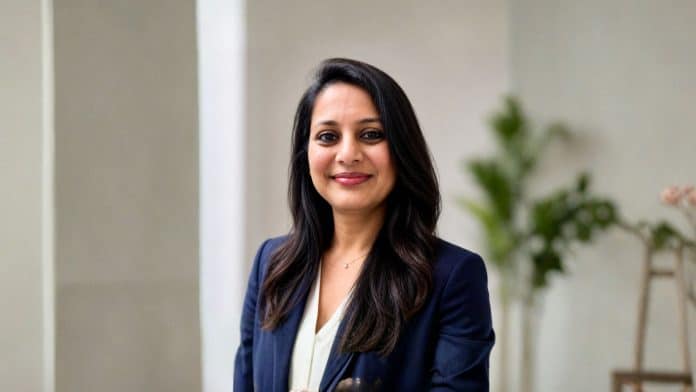
Revathi Rao Gurram shares her perspective on integrating automation, lighting, AV and controls into thoughtfully designed spaces, while keeping people and their everyday experiences at the heart of the design. Revathi discusses the importance of introducing technology early in the design process, coordinating closely with technology specialists, and balancing functionality with aesthetics. From discreetly integrating devices and AV to creating intuitive lighting and control experiences, Revathi believes technology should enhance a home without overwhelming its character.
Could you tell us about your design practice, its philosophy, and the kind of residential, hospitality or commercial projects you specialise in?
Stories Design Studio is a Bengaluru-based interior design and architectural design practice built around a simple philosophy: “Your Space, Your Story.” We believe a space should reflect the people who use it rather than follow a fixed design formula. That means understanding how people live, work, interact and experience a space before deciding how it should look.
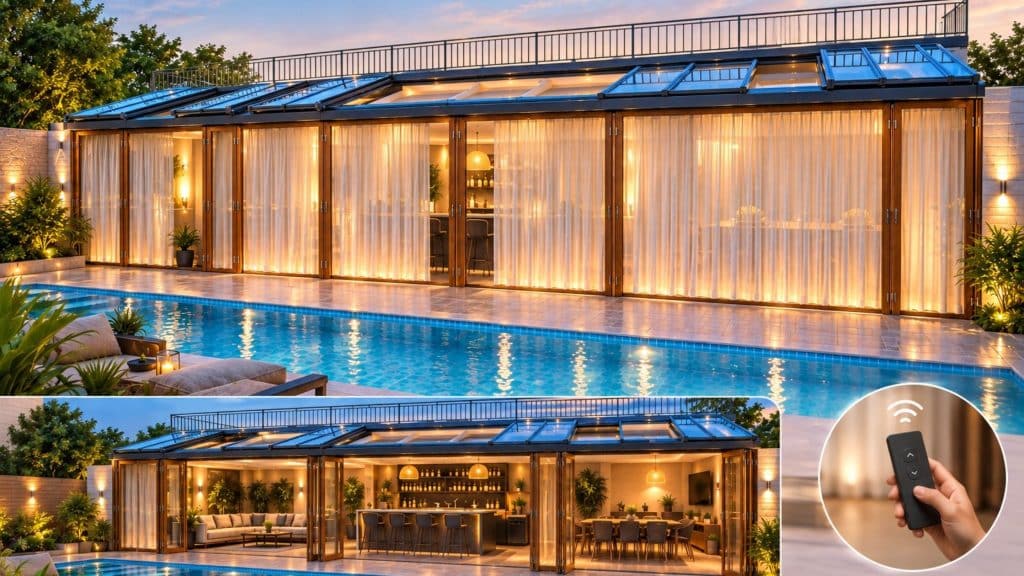
Our work has covered a diverse range of residential, commercial, hospitality, retail and other experiential spaces. We have worked on homes as compact as 400 sq. ft. and residences extending to around 18,000 sq. ft. The scale may change, but our approach remains centred on personalisation, functionality, material exploration and thoughtful execution. For us, luxury is not about adding more elements to a space. It comes from making considered choices and creating an environment that feels distinctive to the people it has been designed for.
How has smart technology influenced your approach to architectural and interior design projects?
Technology has added another layer to how we think about the experience of a home. Lighting, climate control, security, entertainment and other systems can now respond much more closely to the way people use different spaces. From a designer’s perspective, however, technology should not become the starting point. We still begin with the people who will live in the home, their routines, preferences and expectations. We then consider where technology can make that experience more comfortable or intuitive.
The best integration is often the least noticeable. A resident should not have to think constantly about the technology around them. When lighting, climate, security and entertainment systems work naturally with the interiors, technology becomes part of the experience rather than another layer of equipment. A smart home should still feel like a home first and a technology platform second.
At what stage of a project do you usually start considering technology integration, and how early do you involve system integrators or technology consultants?
Technology requirements should ideally be discussed during the early design and planning stages, particularly when the project involves integrated automation. Waiting until the interiors are nearly complete can create unnecessary compromises.
Lighting controls, automated curtains and blinds, climate systems, security, networking, AV and home entertainment can influence electrical planning, ceiling details, wall provisions, furniture layouts and even the locations of certain pieces of equipment. These requirements therefore need to be understood before the civil and electrical work progresses too far.
Where specialist integration is required, coordination with the relevant technology professionals should begin early enough for their requirements to become part of the overall design. As designers, our role is not to replace these specialists. It is to make sure the technology plan and the interior plan speak to each other from the beginning.
What’s the biggest challenge in balancing aesthetics with technology, especially when it comes to concealing devices, speakers, displays, switches and other technology to avoid visual clutter?
The challenge is not simply to hide technology. It is to decide what should disappear, what should remain accessible and what can become a deliberate part of the design.
Speakers, sensors, displays, keypads, routers and other equipment all have functional requirements. Concealing something without considering access, ventilation, acoustics or usability can create another problem later. At the same time, placing every device visibly can interrupt an otherwise carefully composed interior.
This is where early coordination becomes important. Joinery, ceiling design, wall finishes and furniture planning can often accommodate technology far more naturally when its requirements are known in advance. Some interfaces can also be selected to complement the material palette rather than being hidden. Good integration, to me, means the resident experiences the benefit of the technology without the room feeling dominated by it.
Which brands have you used in the projects you have worked on? Please share specific brand names for home automation, smart lighting, switches and controls, security, AV and home theatre.
The choice of technology depends on the requirements of each project, the level of integration expected, compatibility with other systems, aesthetics and ease of use. Across our projects, we have worked with brands such as Scoop, Legrand, Lutron and Somfy for home automation; Philips, Wipro and Scoop for smart lighting; and Legrand for switches and controls.
For security requirements, we have worked with Qubo and Häfele, while our AV and audio selections have included Denon, Sony and Yamaha. For home theatre requirements, we have also worked with Focal and Sony.
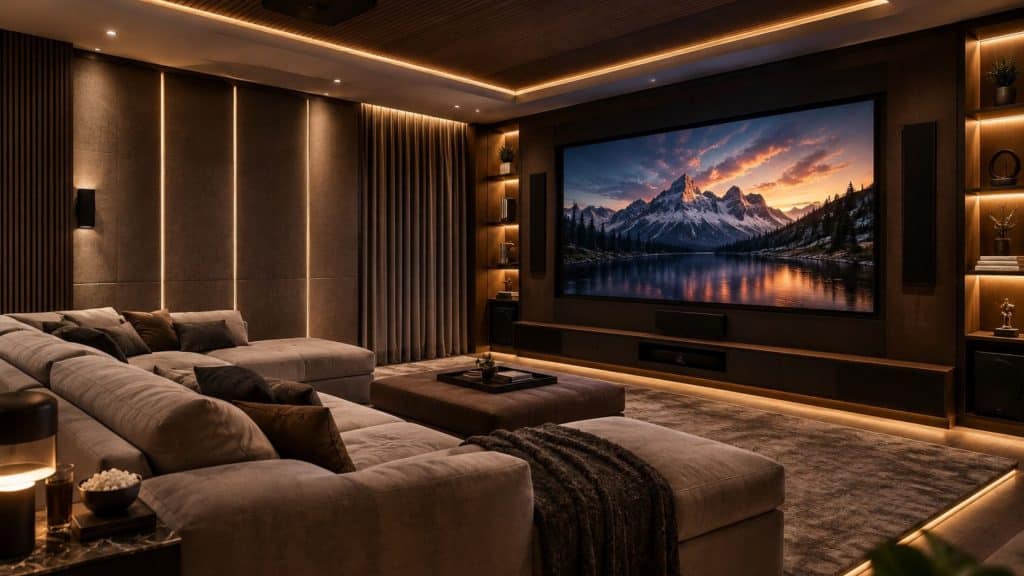
We do not approach brand selection as a fixed specification that applies to every residence. The technology has to suit the homeowner, the space and the wider design intent. Reliability, functionality, compatibility and support are important considerations alongside how naturally the product can be integrated into the interiors.
AV and home entertainment are increasingly becoming part of the overall interior design. How do you approach integrating home theatres, speakers and displays into your projects? Which AV or home theatre brands do you commonly specify or recommend?
AV needs to be considered as part of the room rather than equipment that is introduced after the room has been designed. A dedicated home theatre has very different requirements from a television and audio system integrated into a living room, bedroom or entertainment area.
We consider the placement of displays and speakers alongside seating, furniture, lighting, ceiling design and the overall visual composition. The objective is to achieve the required experience without allowing the equipment to overwhelm the character of the space. Specialist AV requirements are coordinated with the relevant consultants or integrators.
In shared living spaces especially, residents increasingly want technology to remain visually discreet when it is not being used. That makes coordination between design and technology particularly important. Depending on the requirements of the project, brands we have worked with in AV and home entertainment include Denon, Sony, Yamaha and Focal.
Smart lighting can significantly influence the mood and functionality of a space. How are you using automated lighting, scenes and controls in your projects, and which lighting brands or solutions do you find particularly effective?
Lighting has always influenced how an interior is experienced, and smart controls give us greater flexibility in how the same space can respond to different situations.
A living and dining area, for instance, may need brighter functional lighting at one point and a softer setting when the family is entertaining or relaxing. Instead of treating each fixture independently, lighting scenes can allow different layers to work together. The important part is to keep the controls intuitive. Technology loses its value if performing a simple task becomes complicated.
We also look at smart lighting in relation to natural light, materials, decorative fixtures and the purpose of each space. Automation should support the lighting design rather than become the lighting design itself. Philips, Wipro and Scoop are among the brands we have worked with for smart lighting solutions across projects.
How important are switches, keypads, touch panels and other control interfaces from a design perspective? Which brands offer the right combination of aesthetics, functionality and technology for your projects?
They are more important than they may initially appear because they are among the few pieces of technology that residents physically see and interact with every day. In a carefully detailed interior, the proportions, finish, placement and visual language of a switch or keypad can make a difference.
At the same time, appearance cannot come at the expense of usability. A beautiful interface that requires several steps for a basic function will quickly become frustrating. We therefore look for controls that feel intuitive while also sitting comfortably within the material and colour palette of the space.
The right solution also varies by project. A highly integrated residence may require different interfaces from a home where the client prefers familiar physical controls. Legrand is one of the brands we have worked with for switches and controls, while the final selection is always made according to the design and functional requirements of the project.
As homes continue to get smarter, how do you see the role of architects and designers evolving, from designing physical spaces to shaping the overall technology and user experience?
I think designers will increasingly have to consider the digital experience of a home alongside its physical experience. That does not mean architects and interior designers need to become technology specialists.
It means we need to understand technology well enough to ask the right questions, plan for it early and collaborate effectively with the people responsible for delivering it.
The challenge will be to prevent smarter homes from becoming unnecessarily complicated homes. Technology should adapt to people, not force people to adapt their lives around technology.
For designers, that makes understanding the resident even more important. We need to think about what they want to automate, what they prefer to control manually, how visible they want technology to be and how those preferences may evolve.
The future is not simply about putting more technology into homes. It is about integrating the right technology in a way that supports the people living there.