
Is the smart home ecosystem genuinely expanding, or simply riding a wave of buzz? Smart Home World brings together perspectives from leading industry associations and top brand experts, analysing what’s really driving this rapidly evolving landscape, and where the true opportunities lie.
Market Research Companies project a clear picture of growth, which is not the challenge; the smart home sector is on a strong upward trajectory. Adoption continues to gain momentum, fuelled not just by first-time users but increasingly by existing consumers who are expanding and upgrading their ecosystems, signalling a maturing and evolving market.
Elizabeth Parks, President and CMO, Parks Associates, says, “Smart home growth continues, exceeding expectations for year-end 2025. Video devices led category growth has increased 7 percentage points for video doorbells, 6 points for smart cameras, and 4 points for floodlight and spotlight cameras. This growth reflects a broad range of product introductions across price tiers, along with the integration of more advanced features, including AI-driven functionality.

As the market moves into 2026, maintaining growth will require balancing entry-level and premium offerings while meeting a higher baseline for features. AI is emerging as a standard expectation rather than a differentiator.
She further adds, “Interoperability is improving through Matter, enabling consumers to use their preferred platforms more easily. However, platform competition is increasingly shaped by AI strategy. Amazon’s consistent approach has supported its leadership position, while Apple has been constrained by delays in AI rollout.
Consumers are raising expectations for AI performance and data security. Competitive differentiation will depend on delivering reliable, accurate intelligence alongside seamless and easy-to-use experiences.”
Three leading brand heads offer their perspective on how their solutions are evolving to meet changing market demands, and the ways in which they are addressing key challenges around integration, reliability, and user experience.
Adam Merlino, Vice President and General Manager-Asia Pacific, ADI
What are the biggest challenges you face in scaling smart home adoption – product-related or ecosystem-related?
The biggest challenge in scaling smart home adoption is ecosystem complexity, not individual products.

A growing issue is the way many IoT devices are positioned as core infrastructure, when in reality, they are often disposable edge devices. Consumer-grade IoT products may deliver quick wins, but they are typically dependent on cloud services, short development cycles, and the financial health of the manufacturer. When a vendor exits the market or discontinues a platform, devices can quickly lose functionality or become unusable altogether, creating risk for homeowners, developers, and integrators.
A true smart home scale depends on recognising the difference between infrastructure and peripherals. Core systems, including control platforms, networking, power management, and security architecture, must be built on long-term, professionally supported foundations. Edge devices can evolve, but the underlying platform must remain stable, secure, and supported for years, not just product cycles.
Fragmentation compounds this challenge. Loosely integrated devices, inconsistent software updates, and unverified integrations all increase the likelihood of failure over time. This is why certified integration ecosystems are critical. They ensure devices are thoroughly tested, maintained, and updated as platforms evolve.
There is also a skills and execution gap. Modern smart homes are software-driven environments requiring professional design, robust networking, cybersecurity awareness, and lifecycle planning. Adoption scales fastest when systems are deployed by skilled integrators who select reputable manufacturers and design for experience, longevity, and trust, not just initial functionality.
Ultimately, smart home growth will be driven less by the number of connected devices and more by durable platforms, credible vendors, and ecosystems designed to still work long after installation day.
How can the industry address issues around after-sales service and reliability? As a brand, what advantages do you provide?
After-sales service and reliability must be designed into the platform, not managed reactively.
The industry is moving towards service-led smart homes, where cloud-backed architectures handle remote monitoring, diagnostics, security updates, and operating system improvements throughout the system’s lifecycle. This reduces downtime, limits site visits, and ensures systems improve rather than degrade over time.
Control4 was built with this lifecycle approach in mind. Through Control4 Connect subscriptions, systems receive ongoing software updates, security enhancements, and platform improvements that keep installations current and secure long after deployment. OvrC extends this further by enabling integrators to proactively monitor networks, power, AV systems, and connected devices remotely, often resolving issues before homeowners are even aware of them.
Reliability is also reinforced through certified integrations. While Control4 remains open and device-agnostic, certified drivers ensure third-party products are thoroughly tested for stability, security, and long-term compatibility. This dramatically reduces the risk associated with unverified integrations and protects system performance as platforms evolve.
Our advantage lies in delivering a unified Control4 ecosystem, combining control, networking, audio visual, surveillance, and power management, supported by professional tools, subscription services, and rigorous certification standards. Just as importantly, we invest heavily in integrator training and enablement, because even the strongest platform depends on the quality of its deployment and ongoing support.
The result is a smart home experience that is not only powerful on day one, but reliable, secure, and serviceable for years, building the confidence needed to accelerate adoption at scale.
Juan B. Mogollon, Group CEO, Nice
What are the biggest challenges you face in scaling smart home adoption—product-related or ecosystem-related?
Scaling smart home adoption today is no longer primarily a product challenge; it is an ecosystem challenge.
From a technological standpoint, the industry has made significant progress. Devices are more reliable, more affordable, and increasingly user-friendly. However, consumers do not adopt technologies; they adopt experiences. And too often, that experience is still fragmented.

One of the main barriers is that the market’s attention remains largely focused on individual products. Single devices are easier to understand, easier to sell, and often more accessible from a price perspective. However, this approach limits the perceived value of smart home solutions. The real benefit emerges only when devices are part of a connected ecosystem, working together to deliver tangible outcomes such as comfort, security, and energy efficiency. As awareness grows, this product-centric mindset will naturally evolve toward a more holistic understanding of the ecosystem’s value.
A second major challenge is interoperability. The market remains highly fragmented, with multiple standards, platforms, and levels of integration. While initiatives like Matter are an important step toward unification, achieving a truly seamless, cross-brand experience is still a work in progress. End users expect simplicity: one interface, one logic, one coherent system. When this expectation is not met, adoption slows down.
At Nice, we have always approached this challenge with a mindset of openness. It is part of our DNA. Our products and platforms are designed to integrate, not isolate, enabling compatibility with broader ecosystems while maintaining a consistent and high-quality user experience. We believe that openness is essential to scale.
Beyond technology, there is also a structural challenge linked to the professional ecosystem. The transition from traditional installations to connected, software-driven systems requires a new set of skills and a different mindset. The industry still faces a shortage of trained professionals, and bringing them on board is not always straightforward. This makes education and training a critical lever for growth. Installers are evolving from product specialists into solution and experience providers, and they need the right tools, support, and guidance to succeed in this transition.
Finally, there is the overarching need for simplicity. As systems become more advanced, the user experience must become more intuitive, not more complex. This applies to every stage: selection, installation, configuration, and everyday use. Technology should not be visible; it should simply work.
This is why we believe the industry must evolve from the concept of “smart home” to what we define as Smart Living. It is not about adding more connected devices, but about creating environments that seamlessly improve everyday life.
Ultimately, scaling smart home adoption will depend on the industry’s ability to move beyond isolated products and deliver integrated, user-centric ecosystems that simplify complexity and ensure seamless interoperability. At Nice, this vision has long been at the core of our strategy. We have built our portfolio around openness and integration, continuously investing in technologies that connect the home inside and out, while elevating the overall user experience. By combining ecosystem thinking, innovation, and a strong focus on simplicity, we are not only addressing today’s challenges but actively shaping the future of Smart Living.
How can the industry address issues around after-sales service and reliability? As a brand, what advantages do you provide?
After-sales service and reliability are not standalone topics, but an essential part of the overall customer experience.
In the smart home industry, the relationship with the customer does not end at the moment of purchase or installation. On the contrary, that is where the real journey begins. Systems evolve, user needs change, and expectations increase over time. This is why the industry must adopt a truly customer-centric approach, where every phase, from discovery to installation to long-term usage, is designed as one continuous, coherent experience.
In an ideal scenario, the need for after-sales intervention should be minimal. This is why the first priority must be simplicity. Smart home solutions should reduce complexity, not introduce it. From installation to daily use, every interaction should be intuitive, seamless, and frictionless. When systems are designed correctly, they require less support and deliver a more consistent experience over time.
At the same time, after-sales should evolve from a reactive function into a proactive and continuous dialogue with the customer. At Nice, we use communication not only to resolve issues, but also to educate users, collect feedback, and anticipate evolving needs. This ongoing dialogue enables us to improve our solutions and stay aligned with market expectations continuously.
While mass-market products may offer quick access and initial simplicity, they often fall short when it comes to long-term performance, system stability, and data protection. True differentiation lies in the ability to guarantee durability, consistency, and trust over time.
This requires continuous investment in rigorous testing, internationally recognised certifications, and robust cybersecurity frameworks. As homes become more connected, protecting data, ensuring system integrity, and preventing vulnerabilities are no longer optional.
At Nice, this is a core part of our commitment. With 13 R&D centers worldwide, we invest significantly in developing solutions that are not only innovative but also certified, secure, and built to last. This allows us to deliver consistent performance over time, offering a level of reliability and protection that goes far beyond basic connectivity.
At the same time, we are moving forward with a straightforward product convergence roadmap to build more integrated and user-friendly ecosystems across access control, sun shading, security, audio/video, and smart home categories. By cutting down on fragmentation and making sure devices work smoothly together, our reliability becomes not only about preventing issues but also about providing peace of mind through secure, consistent, and future-proof experiences.
I believe that the brands that will lead this industry are those that can combine technological excellence with certified quality, strong cybersecurity, and a deep understanding of the customer, transforming smart systems into trusted, long-term companions in everyday living.
Michael Short, VP, Marketing Operations & Residential, Crestron

What are the biggest challenges you face in scaling smart home adoption, product-related or ecosystem-related?
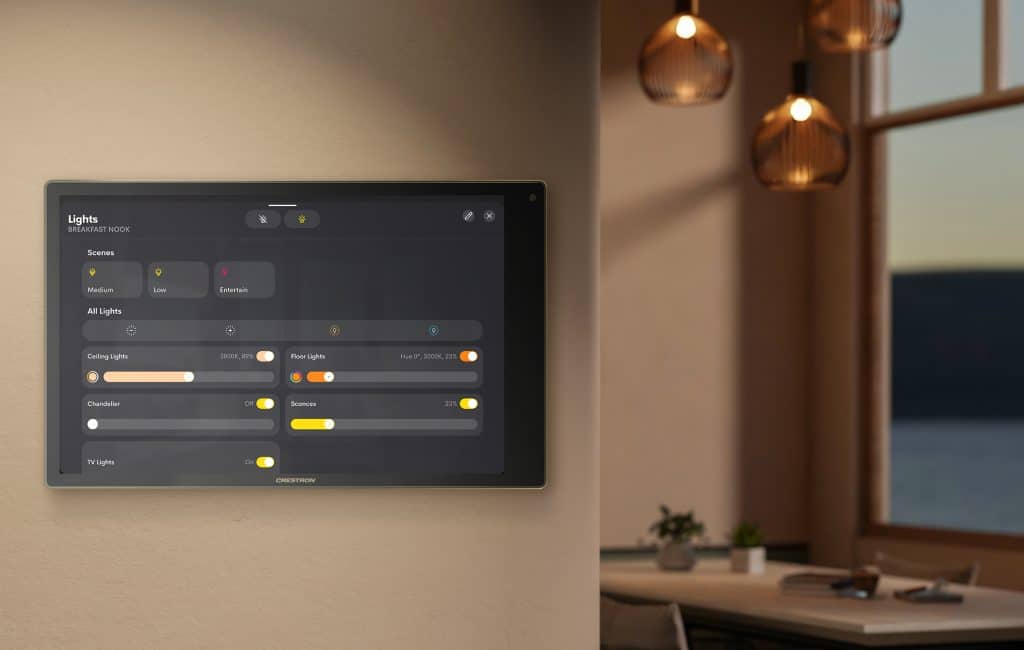
Interoperability remains a key challenge across the industry, with many standards and ecosystems to choose from. This fragmentation can create compatibility issues and confusion for both homeowners and integrators. However, Crestron works hard to help mitigate this by offering a flexible platform. The Crestron Home OS natively supports a wide range of partner solutions. Meanwhile, our extensive Driver and Extension ecosystem allows many third‑party technologies to be brought into a single, cohesive experience.
Another industry‑wide challenge is the perception of smart home solutions that might be faulty or not perform as expected. DIY products are often an important entry point, which helps to grow the category and build customer awareness of what smart home technology can offer.
However, some of these solutions often fall short of delivering a truly connected and seamless experience. While they may not always deliver the full experience a homeowner ultimately expects, they shine a light on what’s possible and show them what their limitations are with those solutions. That often becomes the moment when they may look to seek out a professional integrator. And this opens the door to them relying on our industry to provide a more reliable, scalable, and personalised smart home experience.
How can the industry address issues around after-sales service and reliability? As a brand, what advantages do you provide?
Crestron’s after‑sales service and product reliability are foundational, not an afterthought. Our solutions are built to last. These are enterprise‑grade systems designed for mission‑critical installations, where performance and dependability are essential. Our products undergo robust testing, and we stand firmly behind the quality of everything we deliver.
Support is a crucial part of our True Blue commitment. We maintain strong relationships with our dealers and trust them to support their clients. And our customers are always backed by Crestron’s award‑winning True Blue support team. Our team provides direct, expert-level assistance from people who deeply understand our systems and the environments where they operate.
Ultimately, Crestron earns trust through reliable products, a strong integrator ecosystem, and unmatched long-term support.
Interoperability: The Industry’s Turning Point
If ecosystem complexity is the challenge, interoperability is the direction the industry is rapidly moving toward. Leading associations, such as the Connectivity Standards Alliance and the Z-Wave Alliance, share their perspectives on how standardisation and collaboration can shape a more connected and cohesive smart home ecosystem.
Tobin Richardson, President and CEO, Connectivity Standards Alliance

How is Connectivity Standards Alliance Advancing Interoperability?
The Alliance and its members are behind Matter, the open-source, royalty-free smart home and connectivity standard. Matter aims to unify smart home devices and increase their compatibility across various ecosystems, backed by major tech companies like Amazon, Apple, Google, Samsung, and dozens of other leading smart home and technology brands around the world. Matter simplifies IoT device development by providing a unified approach to connectivity, enabling devices to communicate and interact regardless of manufacturer, and enabling true choice for consumers of their platform of choice and smart home brands.
The Alliance took an open-source approach to Matter’s development, leveraging best-in-class contributions from market-tested smart home technologies. This accelerates the protocol’s development and delivers benefits to manufacturers and consumers faster.
Matter’s greatest strength lies in eliminating ecosystem lock-in — users can mix devices from different manufacturers without worrying about compatibility issues. This flexibility extends to future purchases, as Matter certification guarantees interoperability across supported platforms. Consumers are no longer forced to choose devices based on ecosystem compatibility, opening up significantly more product options
In a little over three years, Matter’s development and momentum is staggering for a new, global technology standard. Matter now supports all major categories of smart home devices and billions of devices are shipping globally with Matter support. Consumers are taking advantage of the use cases and interoperability and we’re seeing the approach paying dividends as the adoption of smart devices in people’s homes and the use cases they enable is spiking.
The commitment from the hundreds of companies involved in Matter remains as strong as ever, with more companies joining the effort all the time as we expand the scope and use cases. This group is working all the time to improve the overall experience, add new features, make bringing Matter products to market easier and quicker, and raise awareness in the market and among consumers. We are committed to a multiple-times-per-year release schedule, a mix of minor and major updates, and we’ve been successful in sticking to this schedule since Matter first launched in the late fall of 2022. Each new release of matter is designed to reinforce the standard’s core goals: secure local control, reliable interoperability, and simplified development across brands and ecosystems.
What is your outlook for the smart home market over the next 3–5 years, and what role will global standards like Matter play in shaping its growth?
This year and into 2027, the Alliance and its members are focused on the standard’s continued evolution. This includes filling in the product categories, adding new ones, adding new features and capabilities, fostering new use cases, and expanding where Matter can have an impact. We see big opportunities for Matter in areas including energy management and sustainability, professional home and building, multi-dwelling buildings, commercial and industrial applications, and digital health and wellness.
A major trend shaping the next phase of smart home growth is the advancement of AI and voice control, which are transforming residences into more intuitive environments. Systems are leveraging context-aware automation for predictive maintenance alerts and personalized user profiles, going far beyond simple commands. AI-enabled experiences across connected devices and ecosystems will now be possible, with Matter providing the foundational dataset to train the models, and consumers will benefit by having the flexibility to run these new experiences locally, at the edge, or in the cloud, or a combination of all three. These experiences will make people’s lives better. It’s still early, but we’re seeing a lot of positive developments in this space.
Continued industry collaboration and innovation is key. Matter, along with our new standard Aliro and Zigbee, have proven that global open standards are the right approach to breaking down barriers, moving technology forward, and fostering innovation. Standards benefit consumers, but also the entire IoT value chain as they are able to focus on building and innovating on top of them — unlocking new possibilities and having a positive impact on the world.
The Alliance’s strategy is both structural and expansive: by anchoring the IoT industry to Matter as a universal, open, and royalty-free standard, we are systematically dismantling the proprietary silos that have historically frustrated consumers and limited market growth and innovation. With a consistence and robust release cadence, a powerful, global certification program, and industry-wide backing from over 900+ member companies, the Alliance is building the foundational trust layer for the entire IoT ecosystem and intelligent, LLM-powered world over the coming decade.
Avi Rosenthal, Chairman of the Board, Z-Wave Alliance

How is Z- Wave contributing to improving interoperability and reducing fragmentation in the smart home ecosystem?
Z-Wave’s approach to interoperability is rooted in something the organization has prioritized since day one of the Z-Wave Alliance: rigorous certification. In that respect, Z-Wave is contributing to improving interoperability by sticking to the playbook that has helped the technology succeed globally. For over two decades, certification has not been simply a checkmark for Z-Wave, it’s a requirement.
Every Z-Wave device that enters the market must first pass a comprehensive certification process that validates a number of key aspects such as interoperability, security, and adherence to standardised command classes. Additionally, as new and exciting features (such as Z-Wave Long Range) are added to the standard, certification processes and requirements are also updated.
Strict adherence to the certification program is one of the core reasons Z-Wave has been able to scale into a global ecosystem featuring thousands of certified products and devices from hundreds of different manufacturers across multiple silicon providers. For customers, whether those be integrators, service providers, installers, or consumers, that level of dedication translates into predictable, reliable performance and devices that behave as expected, regardless of brand.
As the market continues to evolve and expand into more complex, multi-device and even multi-protocol environments, Z-Wave will continue to prioritize certification. With such an established base, a key benefit of the Z-Wave technology is that new products do not enter the market in search of a platform, they plug directly into one that already exists. To this end, the Z-Wave Alliance regularly revisits its certification programs and specifications to support new device categories, new security requirements, and emerging use cases.
What is your outlook for the smart home market over the next 3–5 years, and what role will global standards like Z-Wave and Matter play in shaping its growth?
As we look towards the next several years, the wireless standards that support the smart home will play an increasingly critical role in enabling the data-driven home. As AI moves deeper into residential homes and commercial environments, platforms such as Z-Wave are uniquely positioned to reliably and securely collect the sensor data that these intelligent systems depend on.
At the same time, globally recognised standards will continue to function as the backbone for the industry’s forecasted growth. It is these standards that create and drive the interoperability and consistency required for devices from across a diverse ecosystem of companies and manufacturers to work together seamlessly and securely. By working to reduce overall friction for both developers and end users, these globally recognised standards cultivate an environment where innovation is permitted to thrive and accelerate.
Put simply, AI systems are only as effective as the data they receive. Without secure (i.e. encrypted) and reliable data, those systems fall short of their true potential. In this scenario, Z-Wave’s strength with particular evident. With over two decades of real-world performance and a proven cadence of updates, new features, and innovation, Z-Wave is more than capable of delivering the reliability and resilience required for large-scale, sensor-driven environments.
In an era defined by AI, the standards that will succeed are those that already combine key core elements such as reliability, cybersecurity, and seamless integration. In the context of Z-Wave’s role within AI systems, the technology empowers the extraction of more meaningful insights from the surrounding environment. Advanced insights lead to greater outcomes that improve convenience and enhance safety within the home. It is the core attributes that have defined Z-Wave for the past 20+ years that will ultimately help power the future to come.
Training and Best Practices
Training and certification play a critical role in ensuring smart home systems are not only installed correctly but also perform reliably over time. As solutions become more complex and software-driven, skilled professionals are essential to design, integrate, and maintain systems that meet evolving client expectations. A strong foundation in best practices and continuous learning ultimately translates into better performance, consistency, and trust in smart home deployments.
Daryl Friedman, CEDIA Global President and CEO

How critical is professional training and certification in ensuring successful smart home deployments?
Training and certification are essential to ensure smart home systems are installed correctly, perform reliably, and meet client expectations
CEDIA’s globally recognised certifications are designed to demonstrate proven competence in the knowledge and skills required to deliver high-performing systems. Technicians must pass proctored exams, commit to a code of ethics, and maintain their skills through ongoing education, ensuring they stay current in a rapidly evolving technology landscape.
CEDIA Certification ensures:
- Credibility & trust – Certification signals to clients and partners that the integrator meets recognised industry standards.
- Technical competence & best practices – Installers are trained to design, install, and troubleshoot systems correctly the first time.
- Reliability & performance – Certified professionals understand infrastructure (like networking), which is critical to system stability.
- Consistency across projects – Standardised training reduces variability in outcomes and supports repeatable success.
Is the current talent pool of installers and system integrators sufficient to meet the growing demand? If not, what steps is CEDIA taking to address this gap?
The smart home industry continues to experience rapid growth, and many CEDIA members report ongoing challenges in finding qualified technology integrators to join their team. To help address this gap, CEDIA has implemented a multi-layered workforce development strategy, with the CEDIA Foundation playing an increasingly central role.
Established in 2024, the CEDIA Foundation was created to support education, certification, and career development through scholarships and grants. In 2025, the Foundation launched the 100 Techs in 100 Days initiative, a fast-track program designed to recruit, train, and place new technicians into the workforce at no cost to participants. The program was an overwhelming success, with multiple graduates securing employment upon completion.
In addition to training new talent, CEDIA provides resources to support local workforce development efforts. The NextGen Toolkit is available free to the industry and includes professionally produced videos targeted towards young people, ready-to-use presentations, graphics, one-sheets, and outreach materials to help members engage their local schools and communities to raise awareness of career opportunities.
Finally, CEDIA is working to broaden awareness of the industry by engaging adjacent trades and increasing consumer-facing outreach and SEO efforts, helping more people discover and pursue careers in smart home technology.
In conclusion, as experts across associations and brands highlight, interoperability, robust infrastructure, and certified integration are becoming critical to delivering reliable, scalable solutions. Efforts led by organisations like the Connectivity Standards Alliance, Z-Wave Alliance, and CEDIA are helping lay the foundation for a more unified and professionalised industry.
At the same time, brands are shifting toward lifecycle-driven approaches, focusing on long-term performance, service, and user experience. As AI and data-driven intelligence continue to evolve, the real measure of success will be how seamlessly these technologies integrate into everyday life. Ultimately, the future of smart homes lies in making complexity invisible and delivering environments that are not just connected, but truly intuitive and dependable.